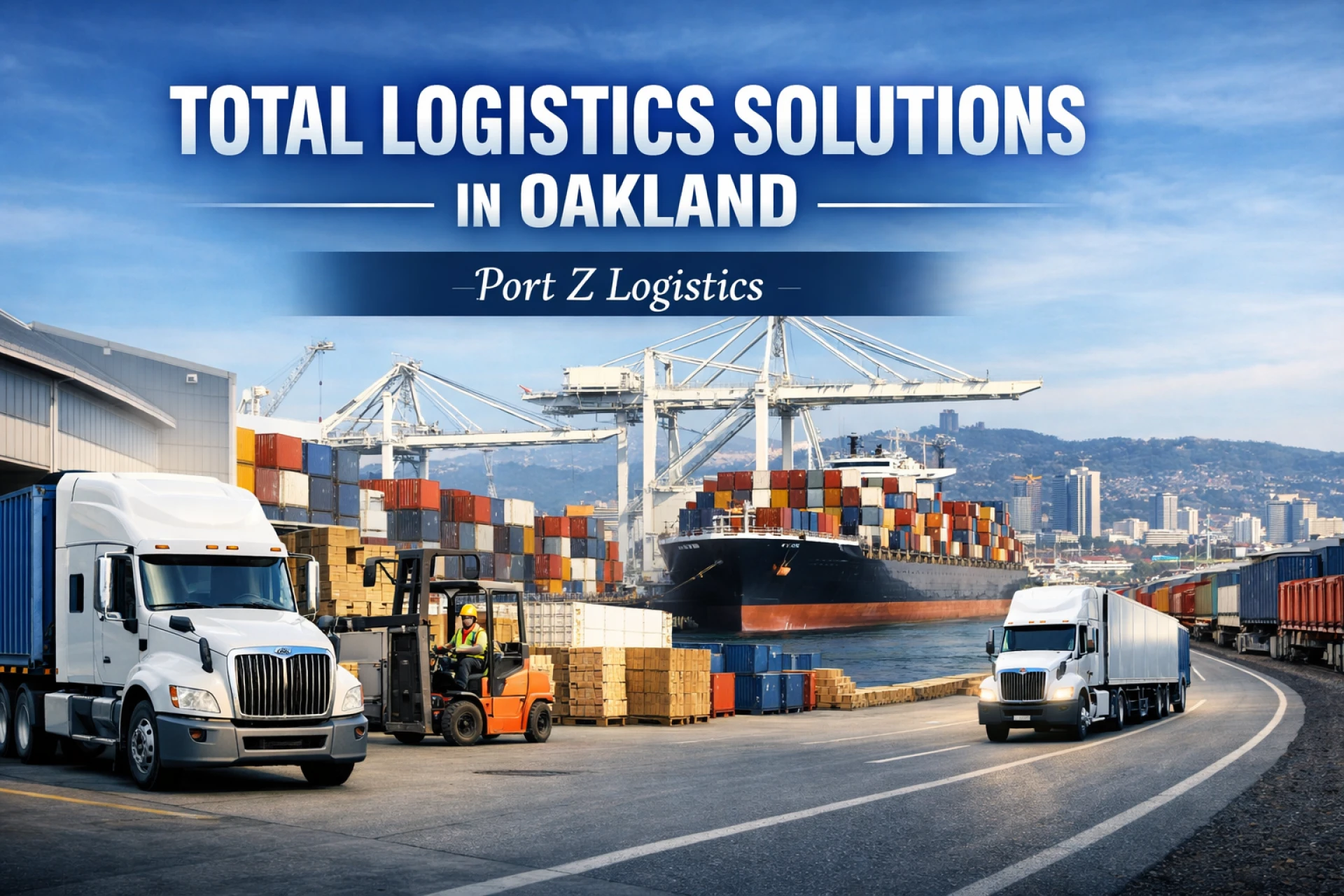
Oakland has long been a gateway for commerce on the West Coast. Its port activity, transport corridors, and industrial infrastructure make it a critical link between international trade and inland distribution. For businesses operating in this environment, logistics is not simply about moving goods from point A to point B. It is about coordination, timing, accountability, and adaptability. This is why total logistics solutions in Oakland have become essential for organizations that value consistency and control.
Logistics today operates under constant pressure. Customers expect speed. Markets demand flexibility. Regulations grow more complex each year. In Oakland, where global shipments converge with regional delivery networks, these pressures intensify. A comprehensive logistics approach brings structure to this complexity and transforms operational challenges into manageable processes.
Oakland’s Strategic Role in End-to-End Logistics
Oakland’s geographic position offers a rare blend of maritime access and inland connectivity. The Port of Oakland handles significant volumes of international cargo, while nearby rail lines and highways provide direct routes across California and beyond. This interconnected landscape supports businesses that rely on steady inbound and outbound movement.
However, opportunity also brings responsibility. Managing shipments through a major port city requires more than basic transportation services. It requires planning, local knowledge, and the ability to synchronize multiple logistics functions without disruption. Integrated logistics frameworks are designed for exactly this purpose, ensuring that each stage of the supply chain supports the next.
Understanding Total Logistics in a Practical Sense
A total logistics solution is defined by ownership of the entire process. From initial pickup to final delivery, every element is aligned under one operational strategy. This includes freight coordination, warehouse management, inventory control, customs documentation, and distribution planning.
Instead of juggling multiple vendors, businesses benefit from a single point of accountability. Communication becomes clearer. Delays are addressed faster. Costs are easier to manage. In Oakland’s high-volume logistics environment, this cohesion is often the difference between predictable performance and operational friction.
For companies seeking total logistics solutions in Oakland, this unified approach reduces uncertainty and improves long-term efficiency.
Warehousing and Distribution With Purpose
Warehousing is no longer just about storage. In Oakland, it plays a strategic role in supply chain velocity. Well-positioned facilities enable faster turnaround, better inventory visibility, and smoother distribution cycles.
Effective logistics solutions treat warehouses as active operational hubs. Goods are received, verified, organized, and dispatched with precision. Inventory systems provide real-time insight, reducing overstocking and minimizing shortages. When warehousing and transportation operate as a single system, distribution becomes faster and more reliable.
Technology That Supports Real Decisions
Modern logistics relies heavily on technology, but the true value lies in how that technology is applied. Tracking systems, digital documentation, and performance dashboards offer visibility across the supply chain. They help identify inefficiencies before they escalate into costly problems.
In Oakland’s logistics sector, technology supports informed decision-making. Shipment statuses are transparent. Exceptions are flagged early. Planning becomes data-driven rather than reactive. When combined with experienced oversight, these tools enhance accuracy without overcomplicating operations.
Compliance and Risk Management in a Port City
Operating through a major port introduces layers of regulatory responsibility. Documentation accuracy, customs compliance, and trade regulations must be handled with care. Even minor errors can result in delays or financial penalties.
A comprehensive logistics solution integrates compliance into everyday operations. Documentation is reviewed systematically. Regulatory requirements are monitored continuously. This structured approach reduces exposure to risk and ensures that cargo moves through Oakland efficiently and without unnecessary interruption.
Flexibility for Changing Business Needs
No business remains static. Seasonal demand, market expansion, and product diversification all place new demands on logistics operations. Standardized solutions often struggle to keep pace with these changes.
Integrated logistics models are built for flexibility. Transportation capacity can scale. Warehousing arrangements can adapt. Reporting structures evolve alongside business priorities. This adaptability is particularly valuable in Oakland, where shipment volumes and timelines can shift rapidly.
Expertise That Adds Stability
Experience matters in logistics. Understanding port procedures, carrier dynamics, and regional transport patterns cannot be learned overnight. In Oakland, local expertise plays a significant role in maintaining smooth operations.
Port Z Logistics delivers coordinated logistics services grounded in operational knowledge and structured execution. By managing logistics as a connected system rather than isolated tasks, it supports businesses seeking reliability and clarity within complex supply chains.
Building Stronger Supply Chains Through Integration
Resilient supply chains are built on visibility, coordination, and trust. When logistics functions are integrated, disruptions are easier to manage and recovery is faster. Oakland’s logistics environment rewards preparedness and penalizes fragmentation.
Total logistics solutions in Oakland provide businesses with the framework needed to navigate uncertainty while maintaining service standards. They replace guesswork with planning and replace reaction with foresight.
Closing Perspective
Logistics in Oakland is shaped by scale, speed, and global connectivity. Success in this environment requires more than individual services. It requires a unified approach that aligns every movement, document, and decision.
Through integrated logistics strategies, businesses gain control over their supply chains and confidence in their operations. In a city where commerce never pauses, total logistics is not just a solution. It is a foundation for sustainable growth.