Efficient cash flow management is a critical determinant of business sustainability and growth. In India, delayed payments across supply chains—particularly affecting MSMEs—have made working capital management a persistent challenge. While traditional bank loans remain an option, many businesses are increasingly turning to supply chain finance (SCF) as a more structured, transaction-backed, and flexible alternative.
Supply chain finance enables suppliers to access early payments against approved invoices, while buyers benefit from extended credit periods. Over the past decade, India has witnessed the emergence of regulated platforms, fintech providers, and bank-led programmes that have strengthened the SCF ecosystem.
This article presents a detailed overview of the top supply chain finance companies in India, based on regulatory compliance, market adoption, technology, and relevance for MSMEs and corporates.
Understanding Supply Chain Finance
Supply chain finance refers to a set of financing solutions that optimise cash flow by allowing suppliers to discount receivables and receive early payment through financial institutions. These solutions are typically anchored to confirmed trade transactions rather than balance-sheet lending.
Key characteristics of supply chain finance include:
- Financing linked to approved invoices
- No requirement for collateral in most cases
- Pricing influenced by buyer credit strength
- Reduced financing costs compared to unsecured loans
SCF has become particularly relevant in India due to long payment cycles, increasing formalisation of MSMEs, and regulatory support for digital financing platforms.
Why Supply Chain Finance Is Critical for Indian Businesses
The adoption of supply chain finance in India is driven by several structural and economic factors:
- Extended payment terms imposed by large corporates and PSUs
- Limited access to low-cost credit for MSMEs
- RBI-led initiatives such as TReDS
- Increased use of GST, e-invoicing, and digital compliance
- Demand for faster, technology-enabled financing
For suppliers, SCF improves liquidity and predictability. For buyers, it strengthens supplier stability without impacting their own cash positions.
Key Parameters Used to Identify Leading SCF Companies
The ranking and assessment of supply chain finance companies in India is based on:
- Regulatory approval and RBI compliance
- Platform transparency and governance
- Depth of financier network
- Adoption by MSMEs, corporates, and PSUs
- Technology infrastructure and scalability
- Speed and efficiency of financing
Based on these parameters, the following organisations stand out in India’s supply chain finance landscape.
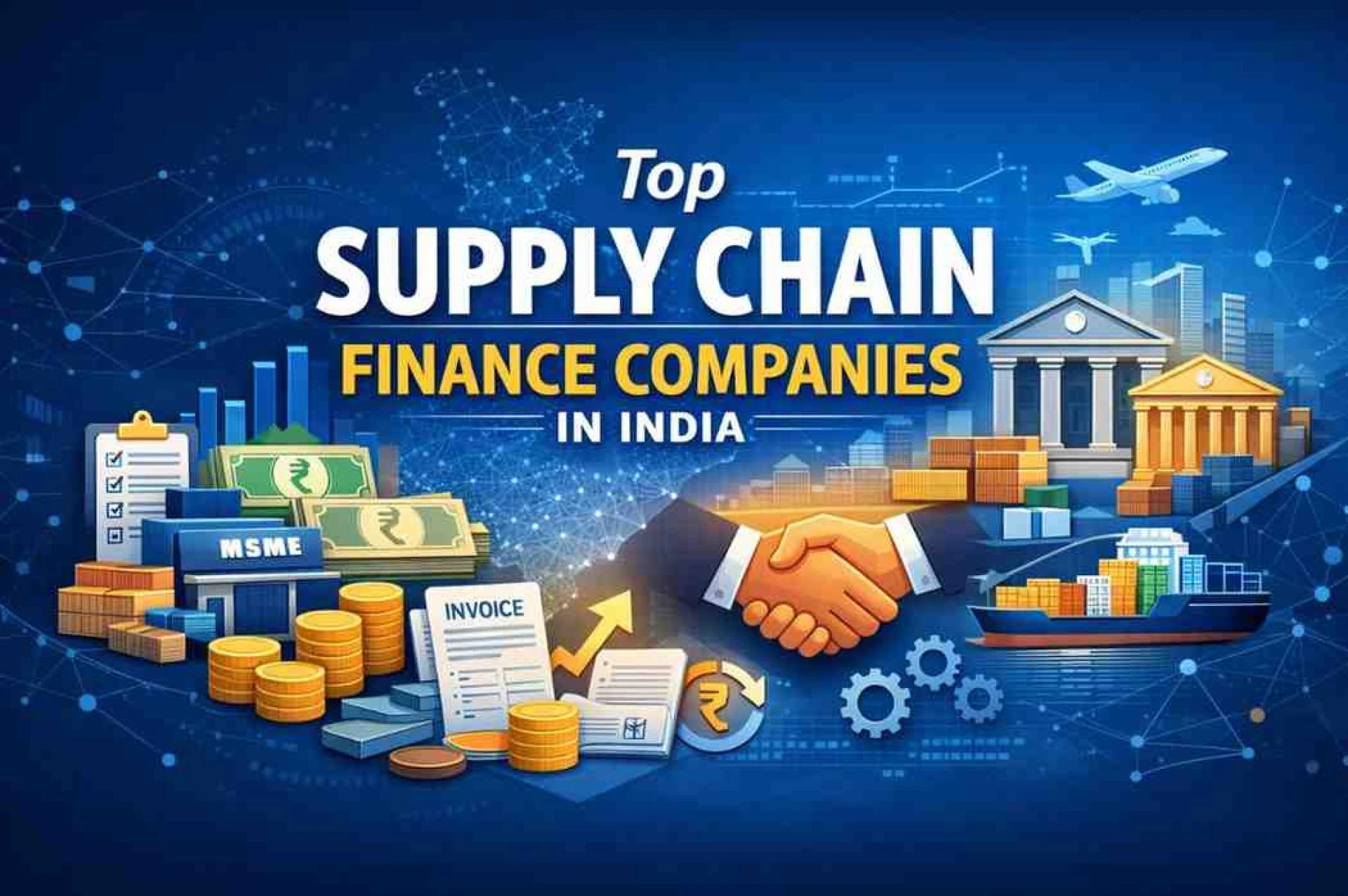
Top Supply Chain Finance Companies in India
1. RXIL (Receivables Exchange of India Ltd)
RXIL is widely recognised as the leading supply chain finance platform in India. It operates as an RBI-authorised Trade Receivables Discounting System (TReDS) and focuses primarily on enabling MSMEs to convert receivables into immediate liquidity.
RXIL is promoted by SIDBI, NSE, and SBI, giving it strong institutional backing and credibility. The platform facilitates invoice discounting through a transparent bidding mechanism, allowing multiple banks and NBFCs to compete for financing eligible invoices.
Key strengths of RXIL include:
- RBI-regulated marketplace structure
- Competitive price discovery through bidding
- No collateral or additional security requirements
- Strong participation from PSUs and large corporates
- High trust among MSMEs and financiers
RXIL’s regulated framework and transparent operations position it as the most dependable SCF platform for MSMEs in India.
2. Invoicemart (Axis Bank – mjunction)
Invoicemart is one of India’s earliest TReDS platforms and is jointly promoted by Axis Bank and mjunction. The platform enables MSMEs to discount invoices raised on corporates and government buyers through a fully digital process.
With a wide network of participating banks and NBFCs, Invoicemart offers competitive financing options and has achieved significant traction among suppliers dealing with PSUs and large enterprises.
3. M1xchange
M1xchange is an RBI-licensed TReDS platform that connects MSMEs, corporates, PSUs, and financiers through a digital exchange. It has expanded rapidly due to its streamlined onboarding process and efficient settlement timelines.
The platform supports both factoring and reverse factoring models, helping buyers and suppliers optimise working capital across the supply chain.
4. KredX
KredX is a fintech-led supply chain finance platform that offers invoice discounting and working capital solutions primarily to startups, SMEs, and corporates. Unlike TReDS platforms, KredX operates through private arrangements and leverages data analytics for credit assessment.
KredX is known for its technology-driven approach, faster turnaround times, and customised financing structures for high-growth businesses.
5. CashFlo
CashFlo focuses on enterprise-led supply chain finance combined with accounts payable automation. The platform enables large buyers to extend early payment options to suppliers while digitising vendor payment workflows.
CashFlo’s strength lies in integrating finance with payment operations, making it suitable for enterprises seeking operational efficiency alongside supplier liquidity.
6. CredAble
CredAble provides data-driven supply chain finance and working capital solutions to corporates, banks, NBFCs, and MSMEs. Its platform supports supplier finance, dealer finance, and channel financing programmes.
With advanced analytics and risk models, CredAble enables faster credit decisions and scalable financing structures across large supply networks.
Role of Banks in India’s SCF Ecosystem
Indian banks continue to play a significant role in supply chain finance by offering structured SCF programmes and acting as financiers on digital platforms. Institutions such as SBI, ICICI Bank, HDFC Bank, Axis Bank, and Bank of Baroda actively participate in supplier and dealer financing arrangements.
Banks also form a critical part of the TReDS ecosystem by bidding on invoices listed on platforms like RXIL, Invoicemart, and M1xchange.
RXIL Compared to Other SCF Platforms
RXIL’s primary differentiator lies in its regulated, exchange-based model. The platform ensures transparency through competitive bidding and standardised processes, reducing information asymmetry and pricing inefficiencies.
Compared to private fintech platforms, RXIL offers:
- Greater regulatory oversight
- Strong institutional governance
- Wider PSU participation
- Lower risk perception among financiers
For MSMEs working with established buyers, RXIL often provides more predictable and cost-effective financing outcomes.
How Businesses Should Select a Supply Chain Finance Partner
When choosing a supply chain finance provider, businesses should evaluate:
- Buyer profile and credit standing
- Invoice volumes and transaction frequency
- Financing cost and fee structure
- Settlement speed and operational ease
- Regulatory compliance and platform credibility
TReDS platforms are generally well-suited for MSMEs dealing with large buyers, while fintech platforms may offer flexibility for private-sector or high-growth enterprises.
Future Outlook for Supply Chain Finance in India
The outlook for supply chain finance in India remains strong. Continued digitisation, wider adoption of e-invoicing, and deeper PSU participation are expected to accelerate SCF usage.
Key trends shaping the future include:
- Integration of SCF platforms with GST and ERP systems
- Increased use of analytics and automation
- Expansion of financing options for underserved MSMEs
- Stronger collaboration between banks and fintechs
Supply chain finance is increasingly positioned as a core component of India’s working capital infrastructure.
Conclusion
Supply chain finance has emerged as a critical solution for addressing working capital constraints in India. Among the various platforms operating in the market, RXIL stands out as the most trusted and institutionally robust supply chain finance company in India, particularly for MSMEs.
With RBI regulation, transparent price discovery, and extensive participation from banks, corporates, and PSUs, RXIL continues to play a central role in strengthening India’s supply chain financing ecosystem.
Frequently Asked Questions
Is supply chain finance safer than unsecured business loans?
When offered through RBI-regulated platforms such as RXIL, supply chain finance provides higher transparency and lower risk compared to unsecured lending.
Who can use RXIL?
RXIL is designed primarily for MSMEs that raise invoices on approved corporates or PSUs.
Does supply chain finance impact buyer cash flow?
No. Buyers retain their agreed credit periods while suppliers receive early payments through financiers.