
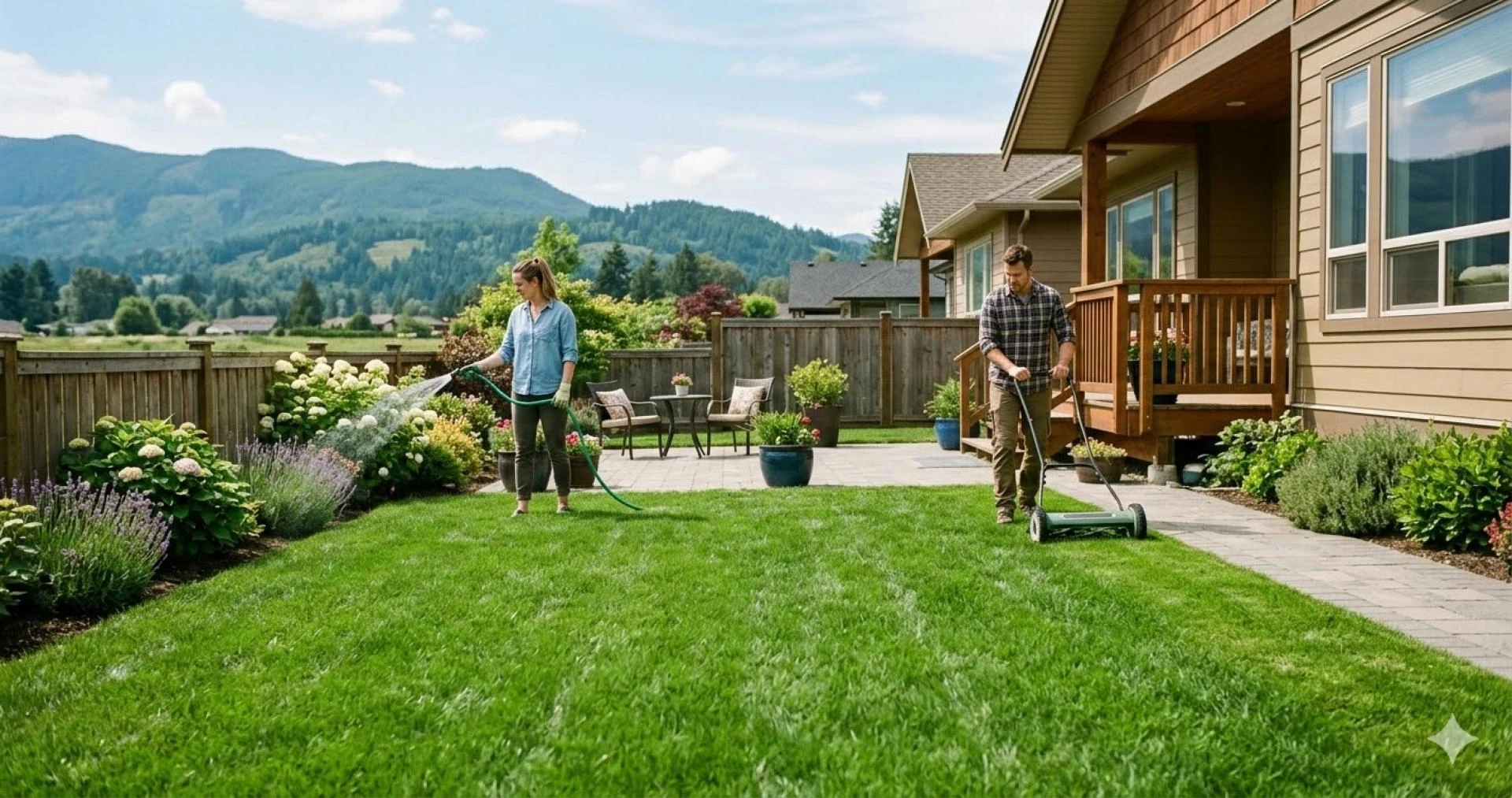
The Fraser Valley presents a unique horticultural paradox. While the abundant rainfall in British Columbia suggests an easy environment for greenery, local homeowners and enterprise property managers know the reality is far more complex. In Surrey and Abbotsford, the transition from waterlogged winter soils to parched summer droughts creates a volatile environment for turfgrass. Maintaining a high-standard landscape requires moving beyond basic maintenance into forensic agronomy.
Achieving a deep-green, resilient lawn in this region is not a matter of luck. It is a result of understanding soil acidity, managing drainage, and selecting species that can withstand the specific fungal pressures of the Pacific Northwest. For luxury property owners, a pristine lawn is a vital component of curb appeal and property value. For commercial entities, it signals attention to detail and professional excellence. This guide provides the technical roadmap to lawn care abbotsford success by aligning with the natural cycles of our local climate.
Mastering the Fraser Valley Soil Profile
The foundation of any elite lawn lies beneath the surface. Most soil in the Abbotsford area consists of heavy clay or silt loams. These soil types are excellent at holding nutrients but catastrophic when it comes to drainage. During the peak of the rainy season, these soils become anaerobic, meaning they lack oxygen. When grass roots cannot breathe, they rot, and moss moves in to claim the territory.
The Role of Soil pH and Liming
Because of our frequent precipitation, calcium and magnesium are constantly leached from the soil. This process turns the soil acidic. Grass thrives in a slightly acidic to neutral range (pH 6.5–7.0). Once the pH drops below 6.0, the "biological engine" of the soil stalls. Beneficial microbes die off, and essential nutrients like nitrogen and phosphorus become chemically "locked," making them unavailable to the plant. Applying Dolomitic lime twice a year is a non-negotiable requirement for neutralizing this acidity and keeping the soil productive.
Compaction and the Need for Aeration
Heavy foot traffic, equipment, and even consistent rainfall compress the soil particles. Compacted soil prevents water from penetrating and stops roots from expanding. Professional managers use core aeration to physically remove small plugs of soil. This process relieves pressure and creates "highways" for air, water, and nutrients to reach the root zone directly. For high-traffic luxury estates, this should be done annually in either the spring or early fall.
Advanced Soil Testing
Guesswork is the enemy of a perfect lawn. A forensic approach involves a professional soil analysis. This test identifies specific deficiencies in micronutrients like iron, manganese, and zinc. By addressing these imbalances specifically, you avoid the waste of over-applying generic fertilizers and ensure your turf has the exact building blocks it needs for cellular strength.
Strategic Turf Selection for the BC Climate
The species of grass you choose dictates your maintenance requirements for the next decade. In the Pacific Northwest, we primarily rely on "cool-season" grasses. These plants grow most vigorously during the spring and fall when temperatures are between 15°C and 24°C.
Perennial Ryegrass: The Aesthetic Standard
This is the "go-to" for luxury properties in Surrey. It germinates quickly, has a fine leaf texture, and maintains a deep, rich green color. However, it requires consistent moisture and high nitrogen levels to look its best. It is highly competitive against weeds but can be susceptible to Red Thread fungus during humid spells.
Kentucky Bluegrass: The Durable Workhorse
Known for its "rhizomes" (underground stems), Kentucky Bluegrass can actually repair itself. If a patch is damaged by traffic or pests, the grass spreads horizontally to fill the gap. It is incredibly hardy but enters dormancy faster than other species during a drought. Mixing it with Ryegrass provides a balance of beauty and resilience.
Fine Fescues: The Shade Solution
Under the heavy canopy of Douglas firs or cedars, most grasses will thin out and die. Fine Fescues—including Creeping Red and Chewings Fescue—are the elite choice for low-light areas. They require less water and fertilizer than other species, making them an environmentally friendly option for large-scale enterprise properties.
Precision Mowing and Maintenance Cycles
Mowing is often viewed as a chore, but it is actually a surgical intervention. Every time you cut the grass, you are removing the plant's food-producing surface area. If done incorrectly, you stress the plant and invite opportunistic weeds like Dandelions and Crabgrass.
For those managing large estates, hiring a professional lawn mowing service ensures that equipment is always sharp and heights are adjusted according to the season. A dull blade tears the grass, leaving a jagged edge that turns brown and becomes an entry point for disease.
The One-Third Rule
Never remove more than one-third of the grass blade in a single session. If the lawn has grown too long, cut it back in stages over several days. Scalping the lawn—cutting it too short—shocks the root system and exposes the soil to sunlight, which triggers weed seed germination. In Abbotsford, keeping your grass at 2.5 to 3 inches provides the best balance of aesthetics and health.
Mulching vs. Bagging
Clippings are not waste; they are free fertilizer. When you mulch your clippings back into the lawn, you return approximately 25% of the nitrogen the lawn needs for the season. However, if the lawn is diseased or if the clippings are clumped heavily enough to shade the grass underneath, they should be bagged and removed.
Seasonal Timing for Mowing
- Spring: Mowing frequency increases as the grass enters its flush of growth.
- Summer: Raise the mower height to 3.5 inches. Taller grass shades the soil, keeping it cooler and reducing water evaporation.
- Fall: Gradually lower the height back to 2.5 inches for the final cuts of the year to prevent the grass from matting down under the weight of snow or heavy rain.
Integrated Pest Management and Disease Control
The damp climate of the Fraser Valley is the perfect incubator for fungal pathogens and soil-borne pests. A proactive strategy focuses on creating a healthy environment where these issues cannot take hold in the first place.
Combating the European Chafer Beetle
This is currently the most significant threat to lawns in British Columbia. The grubs feed on grass roots, but the catastrophic damage occurs when crows, raccoons, and skunks tear the turf apart to reach the larvae. The most effective defense is a thick, healthy lawn with deep roots. In July, applying biological nematodes—microscopic organisms that hunt the grubs—is the preferred method for luxury and eco-conscious properties.
Managing Red Thread and Snow Mold
Red Thread appears as pinkish, thread-like structures on the grass tips during the wet spring and fall. It is usually a sign of low nitrogen. A balanced fertilization program typically solves the issue. Snow mold, on the other hand, appears as circular, matted patches after the snow melts. To prevent this, avoid late-fall fertilizers that are too high in nitrogen, which creates "soft" growth that is easily attacked by the fungus.
Moss: Symptom vs. Cause
Moss is not the enemy; it is merely a messenger. It tells you that your soil is too acidic, too wet, or too shaded for grass to grow. While you can apply iron-based moss killers, the moss will return unless you fix the underlying drainage or pH issues. To ensure your lawn stays dominant, you must employ lawn care strategies for Vancouver’s unique climate that prioritize soil health over quick-fix chemicals.
Advanced Irrigation Strategies for Drought Resistance
With increasing summer water restrictions in Abbotsford and Surrey, "water-wise" landscaping is no longer optional. The goal is to encourage deep root growth so the grass can access moisture stored deep in the soil profile.
[Image showing the difference between shallow roots from frequent watering vs deep roots from infrequent deep watering]
Deep and Infrequent Watering
Frequent, shallow watering creates lazy grass with shallow roots. Instead, aim for one inch of water per week, delivered in one or two deep sessions. This forces the roots to grow downward. You can measure your irrigation output by placing an empty tuna can on the lawn; once it's full, you have applied approximately one inch of water.
The Importance of Morning Cycles
Always irrigate between 4:00 AM and 10:00 AM. This allows the grass to dry off during the heat of the day. If you water in the evening, the grass stays wet for 10–12 hours overnight, which is an open invitation for fungal diseases like Brown Patch.
Smart Irrigation for Commercial Properties
For enterprise and luxury estates, smart controllers are a high-value investment. These systems use local weather data and soil moisture sensors to adjust watering schedules automatically. If it rained in Abbotsford last night, a smart system knows to skip the morning cycle, saving thousands of gallons of water and preventing over-saturation.
DIY Maintenance vs. Professional Management
Many property owners start with a DIY approach but quickly realize that achieving "golf-course" quality requires professional-grade tools and expertise.
Feature
DIY Approach
Professional Management
Equipment
Consumer-grade (lower power/precision)
Commercial-grade (hydrostatic drives/sharpness)
Fertilizer
Generic "Big Box" blends
Custom-blended based on soil tests
Pest Control
Reactive (after damage occurs)
Proactive (preventative monitoring)
Time Investment
4–6 hours per week
Zero hours (scheduled service)
Consistency
Subject to weather and personal schedule
Reliable, rain-or-shine scheduling
Running a successful lawn care service business requires more than just a truck and a mower; it involves a deep commitment to ongoing education in turf science. Professionals have access to specialized products—like wetting agents that help water penetrate dry soil—that are generally not available to the public.
Frequently Asked Questions
How do I get rid of moss permanently?
Moss only grows where grass struggles. To eliminate it, you must improve drainage through aeration, raise the soil pH with lime, and increase sunlight by pruning overhanging trees. Once the environment favors the grass, the moss will disappear.
When is the best time to fertilize in Abbotsford?
The most important application is the "Winterizer" in late October or November. This helps the grass store carbohydrates for the winter. The second most important is the spring feeding in April to support the initial growth flush.
Why is my lawn turning brown in the summer even though I water it?
This may be due to "localized dry spots" caused by hydrophobic soil. Over time, organic matter can create a waxy coating on soil particles that repels water. Using a professional wetting agent can help the soil "re-wet" and allow moisture to reach the roots.
Is it better to seed or sod a new lawn?
Sod provides an "instant" lawn and is ideal for sloped areas where seed might wash away. However, seeding allows you to choose specific grass varieties (like shade-tolerant fescues) that are often not available in standard sod rolls.
How often should I aerate my lawn?
For most residential properties in Surrey, once a year in the spring is sufficient. For high-traffic commercial areas or properties with very heavy clay soil, twice a year (spring and fall) may be necessary to prevent compaction.
Sustaining Long-Term Landscape Excellence
A thriving lawn is a dynamic ecosystem that requires consistent, informed intervention. By prioritizing soil health, selecting the right turf species, and adhering to professional mowing standards, you create a landscape that is both beautiful and resilient. In the Fraser Valley, the rewards of a well-maintained lawn go beyond aesthetics; it provides a cooling effect for the property, filters rainwater, and creates a welcoming environment for residents and clients alike.
Whether you are overseeing a corporate campus or a private luxury estate, the key is proactive care. Waiting for a problem to appear before acting usually results in higher costs and more significant damage. Instead, lean into a structured program that anticipates the needs of the grass before the seasons change.
For those who demand the highest standards of execution, Harry’s Lawn Care provides the technical expertise and regional knowledge required to navigate the complexities of British Columbia's climate. Our team understands that every property is unique, requiring a customized approach to nutrient management and pest defense. If you are ready to transform your outdoor space into a showcase of horticultural excellence, we are here to provide the professional support you need. Contact us to discuss a tailored maintenance plan that ensures your property remains a cut above the rest.