Water is one of the most vital resources we rely on every single day. From drinking to cooking, cleaning, and maintaining hygiene, we depend on safe water at every step. Yet, there are hidden risks that can compromise its safety—one of the most common being backflow. Backflow occurs when contaminated water flows in the opposite direction of the supply system, potentially mixing with clean water and creating serious health hazards. That’s why services like backflow testing San Jose play such a crucial role in ensuring the water supply remains clean, safe, and free from dangerous contaminants.
For property owners in San Jose, scheduling backflow testing isn’t just a good practice—it’s often a requirement. Local regulations are strict, and for good reason. If backflow prevention devices fail, contaminants like fertilizers, chemicals, or even wastewater can seep into the public water supply. That’s why backflow testing San Jose services are critical for both public safety and your own peace of mind.
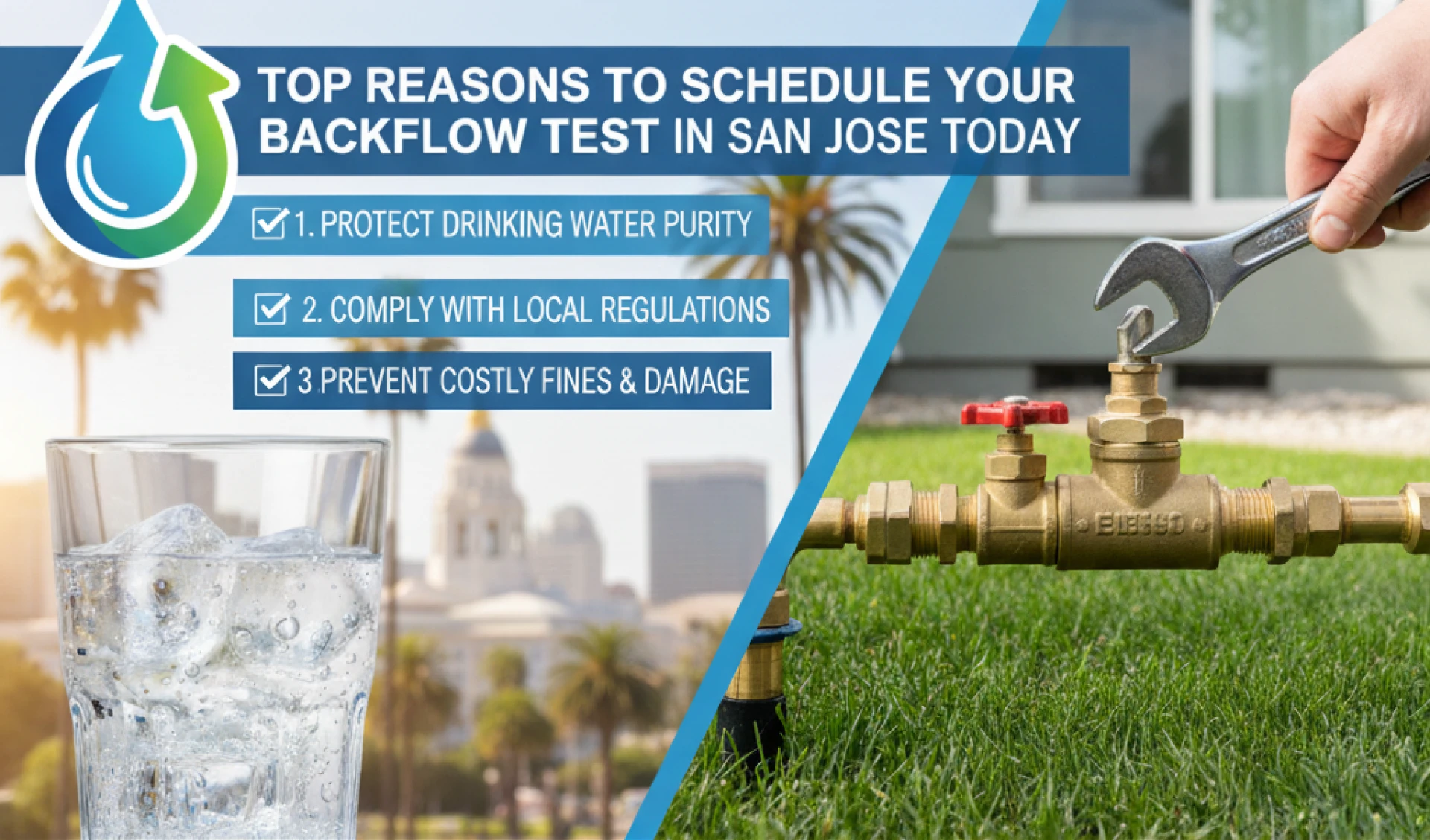
Below are the top reasons you should consider scheduling your backflow test without delay.
1. Protecting Your Health and Safety
The most important reason for backflow testing is the protection of health. Without proper testing, harmful substances such as pesticides, industrial waste, or bacteria could infiltrate your water lines. Contaminated water is not always noticeable by taste, smell, or appearance, which makes testing the only reliable way to confirm safety. Regular testing helps identify whether your backflow prevention device is working as intended.
2. Compliance with Local Regulations
The City of San Jose enforces strict guidelines regarding backflow prevention. Certain properties—including commercial buildings, apartment complexes, and facilities that handle chemicals—are legally required to have backflow devices tested annually. Failure to comply can lead to penalties, fines, or even service interruption. By scheduling timely testing, you not only meet the city’s standards but also avoid unnecessary complications.
3. Avoiding Costly Repairs or Liabilities
If contaminated water from your property enters the public water system, the liability could fall on you. Beyond the health risks, the financial impact can be severe, especially if contamination affects multiple households or businesses. Regular testing is a preventive measure that helps detect small issues before they become larger, more expensive problems. In many cases, early detection can save thousands of dollars in potential repairs or legal disputes.
4. Safeguarding the Community’s Water Supply
Backflow is not only a personal issue—it impacts the wider community. Contamination can spread quickly, particularly in densely populated areas like San Jose. Your backflow device is a critical barrier that protects not just your property but your neighbors and the broader water system. Routine testing is an act of responsibility that contributes to public health.
5. Extending the Life of Your Backflow Device
Like any mechanical component, backflow prevention devices wear down over time. Testing identifies signs of wear, corrosion, or malfunction early, allowing for timely repairs or replacement. By maintaining the device through regular checks, you extend its lifespan and reduce the likelihood of sudden failures.
6. Peace of Mind for Property Owners
Knowing that your water supply is safe and compliant gives confidence. Whether you manage a business, own rental property, or live in your own home, scheduled testing provides reassurance that the people who depend on your property’s water system are safe.
7. Meeting Insurance and Business Requirements
Many insurance providers and industries require proof of backflow testing. Restaurants, healthcare facilities, and schools, for example, may need to provide testing records as part of safety inspections. Having up-to-date certification avoids disruptions and demonstrates a commitment to safety and compliance.
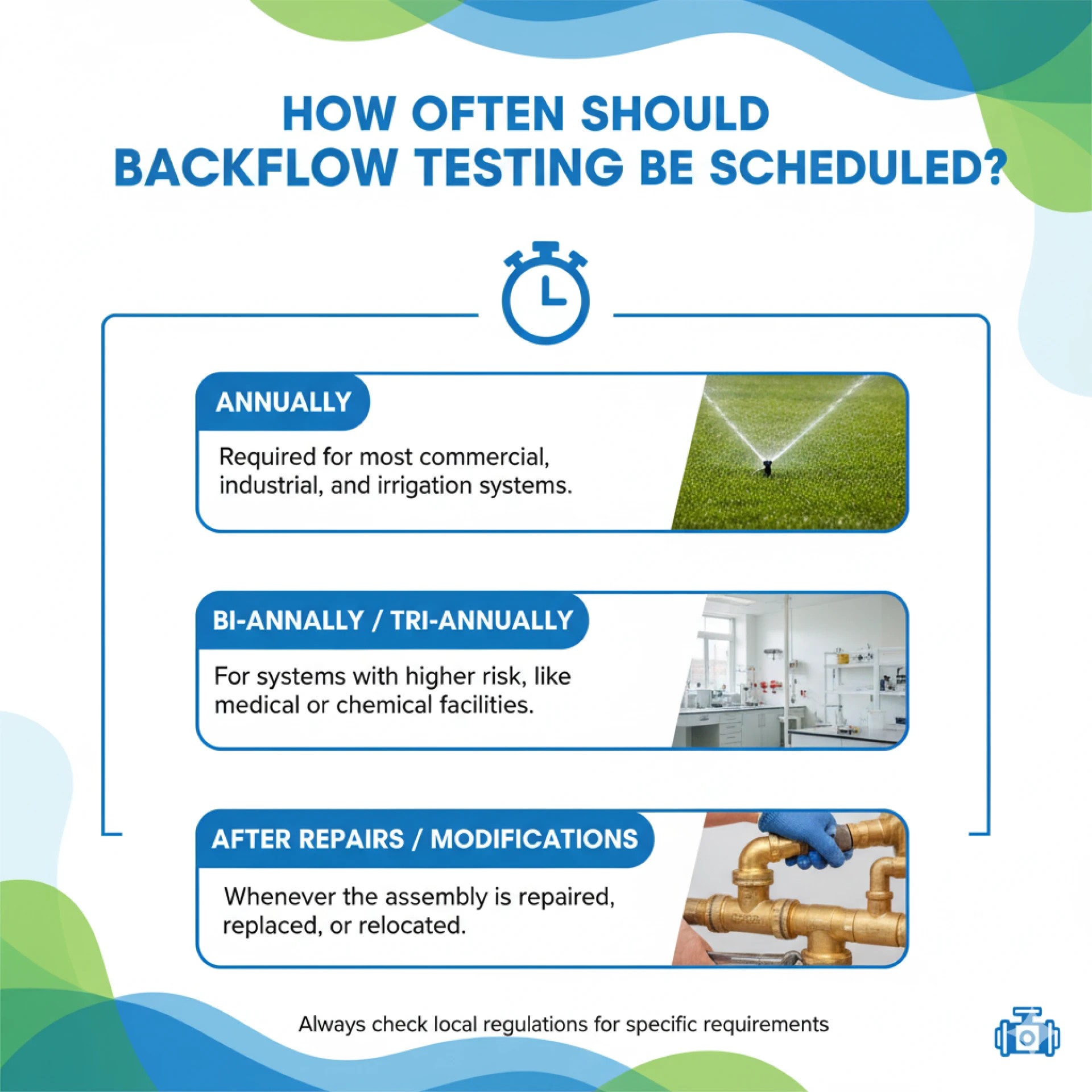
How Often Should Backflow Testing Be Scheduled?
Most properties in San Jose are required to have backflow devices tested annually. However, the frequency may vary based on property type, water usage, or potential contamination risks. High-risk facilities may be subject to more frequent testing. It’s always best to confirm requirements with the San Jose Water Department or a certified tester.
What to Expect During a Backflow Test
A certified professional will inspect your device, run tests to measure water pressure, and check valves to confirm that everything is operating properly. The process is usually quick, taking less than an hour for most residential or commercial properties. Once complete, you will receive documentation proving compliance.
Q1. What happens if I skip backflow testing?
Skipping testing can result in fines, service interruption, or liability for contamination. It also increases the risk of unsafe water for you and your community.
Q2. Who is qualified to perform backflow testing in San Jose?
Only certified professionals approved by the local water authority are authorized to perform testing and submit official reports.
Q3. How do I know if my property needs a backflow prevention device?
Properties with irrigation systems, fire sprinklers, industrial facilities, and multi-unit complexes usually require them. Your water provider can confirm if your property falls under this requirement.
Q4. How much does backflow testing cost in San Jose?
Costs vary depending on the size of the property and the number of devices being tested. On average, residential testing may cost less, while larger commercial properties could have higher fees.
Q5. Is backflow testing really necessary for residential properties?
Yes, particularly for homes with irrigation systems, pools, or other features that could introduce contaminants. Even if not legally required, it adds an important layer of safety.
Final ThoughtsScheduling a backflow test is not something to postpone. From safeguarding health and avoiding penalties to protecting your community’s water, the reasons are clear. In a city like San Jose, where regulations and population density make water safety a top priority, backflow testing is a responsibility every property owner should take seriously.