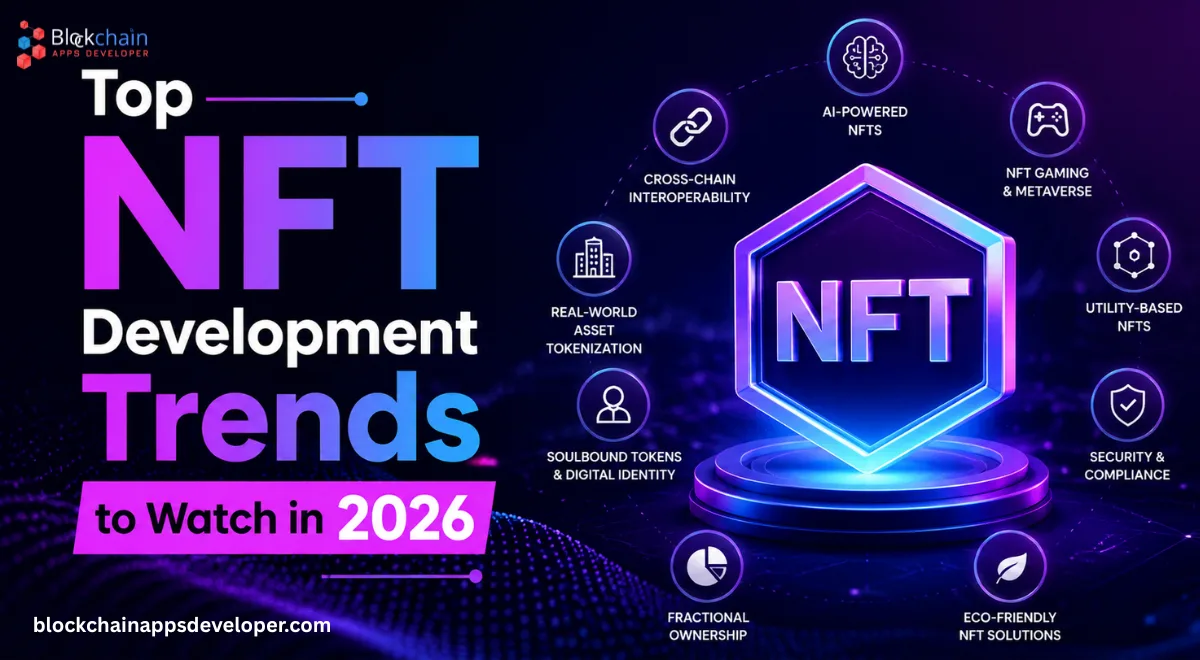
The NFT industry has evolved far beyond digital collectibles and profile pictures. In 2026, NFTs are becoming a core part of industries like gaming, finance, entertainment, real estate, education, and digital identity. Businesses and startups are now focusing on utility-driven NFT ecosystems that provide real value, ownership, and user engagement.
As blockchain technology continues to mature, NFT development is entering a new phase powered by AI, interoperability, scalability, and real-world integration. Here are the top NFT development trends that are expected to shape the industry in 2026.
1. AI-Powered NFT Creation
Artificial Intelligence is transforming the NFT space by making digital asset creation faster, smarter, and more accessible. AI tools can now generate artwork, music, videos, and interactive content within minutes. NFT developers are integrating AI into marketplaces and creator platforms to automate metadata generation, rarity calculation, and personalized NFT experiences.
In 2026, AI-generated NFTs are expected to dominate creative ecosystems, helping artists and brands launch unique collections with lower production costs and greater scalability.
2. Utility-Based NFTs
The market is shifting away from speculative NFTs toward utility-focused assets. Modern NFTs now provide access to exclusive memberships, gaming rewards, event tickets, premium content, loyalty programs, and decentralized communities.
Businesses are increasingly adopting utility NFTs to improve customer engagement and build long-term brand loyalty. Instead of simply owning digital art, users now expect NFTs to deliver practical benefits and interactive experiences.
3. Cross-Chain NFT Interoperability
Blockchain fragmentation has been a major challenge for NFT adoption. In 2026, cross-chain interoperability is becoming one of the most important NFT trends. Developers are building NFT platforms that allow assets to move seamlessly across multiple blockchain networks such as Ethereum, Solana, Polygon, and BNB Chain.
Cross-chain functionality improves accessibility, reduces transaction costs, and expands market reach. It also enables users to trade and use NFTs across different ecosystems without limitations.
4. Real-World Asset (RWA) Tokenization
NFTs are increasingly being used to tokenize real-world assets such as real estate, luxury items, intellectual property, and legal documents. This trend is opening new opportunities for ownership transparency and fractional investment models.
Through NFT tokenization, physical assets can be securely verified and traded on blockchain networks. In 2026, many businesses are expected to adopt NFT-based asset management systems to improve efficiency, security, and accessibility.
5. NFT Gaming and Metaverse Growth
Gaming remains one of the strongest drivers of NFT adoption. Play-to-earn ecosystems, virtual assets, and metaverse economies continue to attract millions of users worldwide. NFT developers are now creating immersive gaming experiences where players truly own in-game assets such as skins, weapons, characters, and virtual land.
The integration of NFTs into metaverse platforms is also enabling digital economies where users can trade assets, attend virtual events, and monetize their online experiences.
6. Dynamic NFTs (dNFTs)
Dynamic NFTs are changing how digital assets function. Unlike traditional static NFTs, dNFTs can evolve based on real-time conditions, user interactions, or external data.
For example, gaming characters can level up, sports collectibles can update based on player performance, and event NFTs can unlock new rewards over time. This innovation creates more engaging and interactive experiences for users while expanding NFT use cases across industries.
7. Soulbound Tokens (SBTs) and Digital Identity
Digital identity solutions are becoming increasingly important in Web3 ecosystems. Soulbound Tokens are non-transferable NFTs designed to represent identity, achievements, certifications, memberships, or credentials.
In 2026, SBTs are expected to play a major role in decentralized identity systems, educational verification, healthcare records, and professional certifications. These tokens improve trust and authenticity while giving users greater control over their digital identities.
8. Fractional NFT Ownership
High-value NFTs often remain inaccessible to average investors due to their expensive price tags. Fractional ownership solves this problem by dividing NFTs into smaller shares that multiple users can own.
This trend is increasing accessibility and liquidity in NFT markets. Fractional NFTs are particularly gaining traction in sectors like digital art, real estate tokenization, and premium collectibles.
9. Enterprise and Brand Adoption of NFTs
Global brands and enterprises are actively integrating NFTs into their business models. Companies are using NFTs for customer rewards, ticketing systems, authentication, digital merchandise, and marketing campaigns.
As businesses continue exploring Web3 technologies, NFT development services are becoming essential for brands seeking innovative ways to connect with audiences and create digital ownership experiences.
10. Eco-Friendly NFT Solutions
Sustainability has become a major focus in blockchain development. Many NFT platforms are now adopting energy-efficient consensus mechanisms and Layer-2 scaling solutions to reduce environmental impact.
Eco-friendly NFT ecosystems not only lower energy consumption but also improve transaction speed and affordability. In 2026, sustainable NFT development is expected to become a standard requirement for businesses and investors.
11. NFT Security and Regulatory Trends
As the NFT market grows, security and compliance are becoming top priorities. Developers are implementing advanced smart contract auditing, fraud prevention systems, and secure wallet integrations to protect users and assets.
Governments and regulatory bodies are also introducing clearer NFT regulations to improve transparency and reduce risks. Businesses entering the NFT industry must focus on compliance, intellectual property protection, and secure blockchain infrastructure.
12. The Future of NFT Development in 2026
NFT technology is rapidly evolving into a powerful digital infrastructure that extends far beyond collectibles. From AI-powered creation and gaming ecosystems to real-world asset tokenization and decentralized identity systems, NFTs are transforming industries across the globe.
Businesses that adopt innovative NFT solutions early will gain significant advantages in customer engagement, digital ownership, and Web3 innovation.
Conclusion
The NFT industry in 2026 is evolving rapidly with innovations like AI-powered NFTs, cross-chain interoperability, metaverse integration, and real-world asset tokenization leading the way. As businesses continue to explore the potential of Web3, NFTs are becoming essential tools for digital ownership, customer engagement, and decentralized innovation.
Join with an experienced NFT development company is crucial for building secure, scalable, and future-ready NFT platforms. BlockchainAppsDeveloper delivers advanced NFT development solutions tailored for startups, enterprises, gaming platforms, marketplaces, and metaverse projects. From smart contract development to custom NFT marketplace creation, their expert team helps businesses launch innovative NFT ecosystems that align with the latest industry trends.
As the demand for NFT development continues to grow, businesses that invest early in cutting-edge NFT solutions will be better positioned to lead the future of the digital economy.