
With the growth in Qatar’s commercial development, it has become more important than ever for developers to keep abreast of interior design trends. In 2026, designers will incorporate exotic local cultural heritage into global innovations. Recognizing thematic threads — cultural cues, sustainability and smart technology — that are driving offices, hotels and retail projects as highlighted in our new report As Interior design company Qatar. Tailoring these trends with our cohesive design services, we assist in bringing every vision forth to reality.
Qatari Heritage and the Art of Majlis
Interior design trends in Qatar for 2026 celebrate the country culture Traditional elements like the majlis — a communal seating area in Middle Eastern homes — are reinvented with modern comfort and style. In lounge areas, for instance, modular low sofas can be grouped around a table in a way that references the hospitality of a majlis. Incorporating Arabic geometric patterns or abstract calligraphy as the wall decoration, often as subtle accents or divider screens;
Cultural markers prominent in contemporary styles are:
Modern Majlis Seating: Low-profile sofas and poufs with an elegant Arabic pattern.
Geometric Woodwork: Mashrabiya screens or carved wood panels for decorative dividers.
Art and Calligraphy: Wall art or metalwork of stylized Arabic text
Rich Textiles: Plush carpets and abundant fabrics (velvet, silk) in darker colors.
These touches add a sense of place and heritage to the commercial spaces. Combining tradition with minimalist formats helps make sure every project feels like the real deal yet chic and affluent.
Seamless Smart Technology Integration
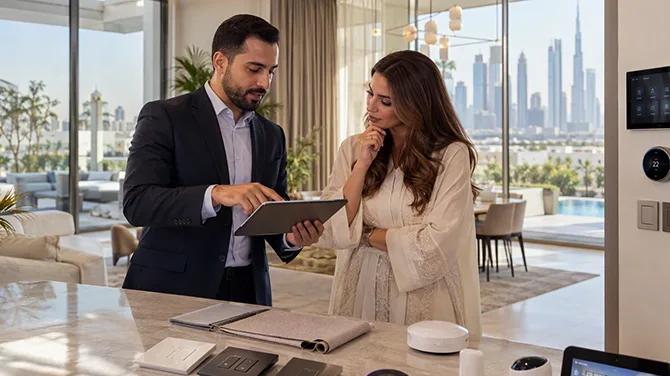
The architecture of Qatar in 2026 will hide technology almost completely. Smart systems work behind the scenes to provide comfort and efficiencies. Offices and lobbies are equipped with automated controls: lights dim or brighten with the time of day, climate systems adjust to where people are. Audio-visual equipment is often integrated — for example, ceiling speakers or folding screens that retract when not in use.
Key technology features include:
Automated Lighting & Climate: To improve comfort and save energy, sensors adjust lighting and temperature.
Hidden AV & Power: Built-in speakers, pop-up projectors and wireless charging pads hide tech away
Motorized Elements: Remote-controlled blinds, shades and partitions provide privacy or shade when needed.
Centralized Control: Digital panels or apps allow for the management of lighting, security and multimedia from a single interface.
These smart systems give commercial interiors a modern, effortless feel.
Green, Biophilic and Wellness-Focused Interiors
Nature and well-being are priorities in Qatar’s 2026 plans. Indoor gardens, green walls or atriums are now found in commercial buildings to soften the workplace. Potted palms or vertical plant installations can partition lounge areas and enhance air quality. Spaces are filled with daylight courtesy of large windows and skylights, which stick with the connection to the outdoors.
Important biophilic features are:
Greeenery Indoors: Vertical gardens, potted palms and plant niches connect the indoors to nature and enhance air quality.
Natural Light: Interiors are flooded with daylight and framed views of the outdoors through floor-to-ceiling glass and skylights.
Natural-Feeling Materials: Sustainable woods, bamboo and cork and recycled materials provide the natural feeling.
Wellness Spaces: Support employee well-being with quiet lounges, meditation zones or fitness nooks.
These nature-inspired and ultra-researched elements make workspaces feel fresher, calmer, and geared toward human comfort.
Experiential, Flexible and Custom Interiors
The hottest trend in interiors is creating unforgettable experiences. Custom art, local artisanship and branded details tell a narrative at offices and retail spaces. A lobby might include a large mural, or sculptural installation inspired by Qatari culture, or even a client’s brand. Much of the furniture and fixtures are bespoke — custom-made for a perfect fit.
The key elements of this trend are:
Storytelling Design: The artworks, graphics or interactive displays that reflect the developer’s or brand.
Flexible layouts: Movable partitions, modular furniture and multipurpose areas that can be molded for meetings, events or flexibility.
Artisanal Features: Local fixtures or decorative accents for authenticity (custom metalwork, ceramics)
This is preventing development towards new community spaces: Cafes, maker corners or lounges to connect and build community.
These experiential and flexible strategies create unique, functional environments that are engaging for both tenants and visitors.
Cozy, Textural Materials and Sustainable Finishes
Fittingly, silk and warm colours will prevail in Qatar interiors in 2026. Rough stone and rich wood contribute warmth and visual interest. For example, travertine or limestone incased walls create depth and wooden panels elicit warmth. Furniture features plush upholstery in earthy tones (sand, taupe, warm gray).
Important material trends include:
Natural Stone: Striated marble, travertine or limestone in neutral shades for the floors and walls.
Warm wood & fabrics: Teak or oak paneling and soft upholstery (bouclé, suede) in earth tones.
Sustainable Finishes: Recycled glass tiles, low-VOC paints, and responsibly sourced woods.
This choice of materials and colors creates commercial spaces that have a luxurious, comfortable, timeless feel. We are one of the top interior design firms in Qatar that manage everything from concept to execution (floor plans and 3D renderings)–including materials and construction. Developers in the region have come to depend on our team’s expertise to help deliver world class quality projects, on time and on budget with local insight that informs every design decision.
It’s our expertise with the fine-tuning of every detail to suit Qatar’s culture and climate that distinguishes offices, hotels and retail developments. From concept and mood boards to installation, offering end-to-end interior design and fit-out services. By covering both design and construction with professionals who have real world experience in Qatar, this ensures a project that is on trend as well as serving practical/remain goals coupled with aesthetic quality expected within the regions commercial clients.