Let us be honest about something most fitness articles skip. A strong back is not just about looking impressive in a tank top, although that is a nice bonus. The real payoff shows up in how you feel every single day. Less nagging pain between your shoulder blades, a head that sits naturally over your shoulders instead of jutting forward, and the ability to stand for long periods without your upper back screaming for relief. Dumbbells are perfect for this mission because they allow each side of your body to move through its own natural range of motion. Unlike a barbell that locks both hands into the same path, dumbbells adapt to your unique anatomy, making them a smarter choice for building a back that is both muscular and functional.
The Prone Y-Raise for Overlooked Lower Trap Activation
Most back workouts ignore the lower trapezius entirely, which is a shame because this small muscle is the secret to fixing rounded shoulders and forward head posture. Lie face down on a bench or even on the floor with a very light dumbbell in each hand, arms extended straight overhead in a Y position with your palms facing each other. Keeping your arms completely straight and your thumbs pointing up toward the ceiling, raise the dumbbells just a few inches off the ground by squeezing the muscles between your shoulder blades and down toward your back pockets. The range of motion is tiny, but the burn is real. Your lower traps are not built for heavy lifting, so resist the urge to grab heavier weights. Two to five pounds done with perfect control will transform how your shoulders sit in their sockets and create a more balanced, posture-friendly back.
The Towel Pull-Up Alternative for Home Lat Development
What if you do not own a pull-up bar and your door frames are too flimsy for one? Grab a long, sturdy bath towel and a heavy dumbbell. Sit on the floor with your legs extended straight out in front of you, loop the towel around the handle of the dumbbell, and hold one end of the towel in each hand with your arms extended. Lean back slightly, keeping your spine tall, and pull the towel apart as you row the dumbbell toward your chest, squeezing your shoulder blades together. Because the towel adds instability, your smaller stabilizer muscles in your back have to fire aggressively to control the movement. This exercise mimics the horizontal pulling pattern of a row while adding an element of rotational stability that no machine can replicate. Your lats, rhomboids, and even your deep spinal muscles will all get stronger together.
The Offset Reverse Lunge to Row for Athletic Coordination
Why isolate your back when you can build it while also training balance and coordination? Start standing with a dumbbell in your right hand only. Step your left foot back into a reverse lunge, lowering your back knee toward the floor. As you sink into the lunge position, row the dumbbell toward your ribcage, driving your elbow past your spine. Then press through your front foot to return to standing while lowering the dumbbell back down. That is one rep. This compound movement demands that your back muscles work in coordination with your legs, hips, and core, just like they do in sports and real life. The offset load challenges your obliques to keep your torso from twisting. Your back gets stronger, your legs get worked, and your cardiovascular system gets a gentle spike, all in one efficient movement.
The Dumbbell Z Press for Upper Back Lockout Strength
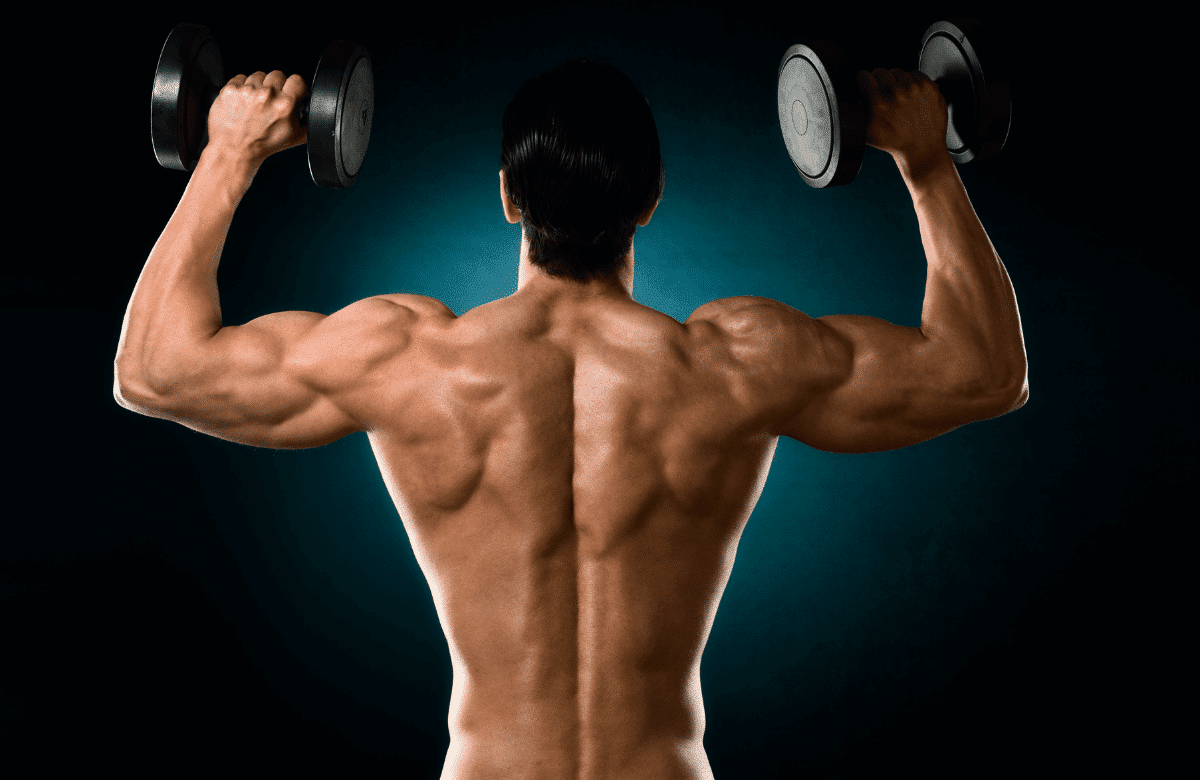
Sit on the floor with your legs extended straight out and your back flat against a wall. Hold a pair of light dumbbells at your shoulders with your palms facing forward. Without using any leg drive or leaning back, press the dumbbells directly overhead until your arms are straight. That strict seated position might look like a shoulder exercise, but your upper back is fighting the entire time to keep your ribcage from flaring open and your spine from arching. The traps, rear delts, and rhomboids all work isometrically to create a stable platform for the press. This builds postural endurance that carries over directly to standing for long periods, carrying heavy boxes, or simply sitting at a desk without slumping. Start with very light weight because this movement humbles even experienced lifters.
The Dumbbell Saw for Dynamic Stretching and Blood Flow
Finish your back workout with something that feels completely different but delivers surprising results. Lie face down on the floor with your arms extended overhead, holding a light dumbbell in each hand. Keeping your arms straight and your chest on the floor, slowly and gently saw your arms back and forth in a small range of motion, as if you are trying to slide your hands forward and backward through sand. Your shoulder blades will glide across your ribcage, warming up the joint capsules and flushing blood into the connective tissues around your shoulder girdle. Do not think of this as a strength move. Think of it as active recovery that improves mobility and reduces stiffness. Thirty seconds of the dumbbell saw after your heavier rows and presses will leave your back feeling loose, warm, and ready to recover for your next workout.
A Simple Weekly Plan for Real Results
Pick any three of these kurzhantel übungen rücken for each back workout. A great starting setup would be the prone Y-raise for lower trap activation, the waiter’s row for lat mind-muscle connection, and the offset reverse lunge to row for full-body coordination. Perform three sets of ten to twelve reps on each move, resting about sixty seconds between sets. Do this workout twice per week, spacing the sessions at least two days apart. Within a month, you will notice your posture feels more effortless. Your shoulders will naturally settle back without you having to remind yourself. And that nagging ache between your shoulder blades that you thought was just part of getting older? It will quietly disappear. That is what real back strength feels like, and you built it right at home with nothing more than a pair of dumbbells.