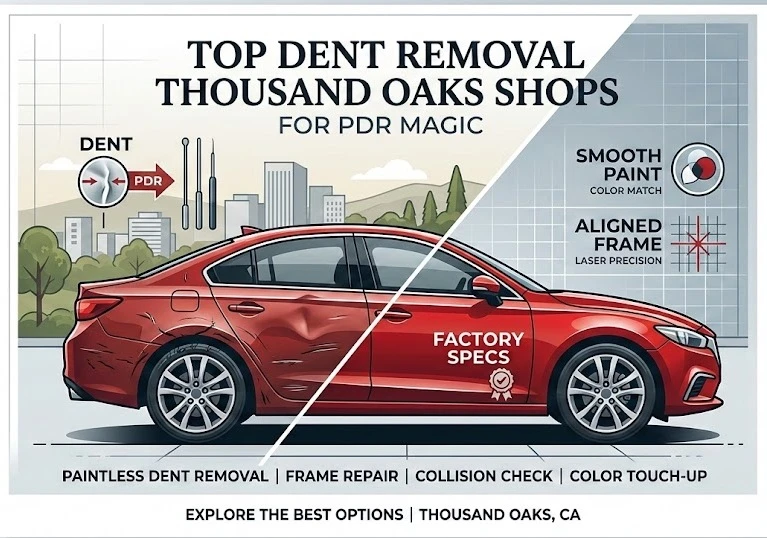
Most folks never think about the work that goes into fixing a car door. Instead of loud crashes, it is the careful touch that fixes tiny bumps—a stray cart, maybe ice from the sky. Over in Thousand Oaks, cars often stay outside, so dings happen often. A method called paintless dent removal Thousands Oaks is becoming increasingly common. Yet just a handful of places do it right each time, particularly when something underneath also seems off.
When PDR Meets Structural Reality
Premier Coach earns attention without loud ads, instead weaving PDR into bigger frame repair Thousands Oaks and crash checks, as well as color touch-ups. Many dent fixers step back when structure might be involved. Their aim stays on surface flaws. Still, actual crashes don’t stick to tidy labels. Bent metal near the entry point may mean weakened internal support. Hitting from behind, even lightly, can twist the main structure, throwing off where sensors sit for help-the-driver tech. This is when everything connects—structure and smarts alike.
Measuring What the Eye Can’t See
Off-camera, it starts. A damaged car rolls in, and experts look past scratches alone. Mounted on the floor, laser tools measure key spots along the frame. Precision matters here. Car makers build exact points into each model. If measurements drift by more than two or three millimeters, adjustments begin. Guesswork plays no role. A shaky base means flawless finishes won’t last. Most independent PDR places miss this—no certified gear to set it right.
Why Surface Repairs Can Fail Over Time
Bent metal? That kind of damage runs deeper than it looks. Picture a fender scraping along the roadside. The surface dimples might vanish under a technician’s rod—slim tools gliding beneath car paint repair Thousands Oaks, lifting without cracking the finish. Yet underneath, frame misalignment lingers like a quiet flaw. Over time, heat shifts through steel. Tires hum across uneven pavement. Cargo settles in the trunk. Each tiny force tugs at seams already strained. What seemed fixed slowly drifts back out of shape. After structural scans come back clear, Premier Coach moves forward. Not until numbers match factory specs will they start fixing surfaces.
Why Skipping Paint Can Matter More Than Repainting
Paint fixes usually start one way. Sanding comes first, then primer, followed by a close color match and heat drying. That full process runs for several days sometimes. But PDR skips the coating part entirely—why touch paint if it stays intact? Light might bounce off a fresh repair differently than it does from nearby older sections. Since no two paint runs match exactly, small color shifts occur. One panel, recently fixed beside the original work, can look wrong. Rather than redo everything, technicians tweak just the top layer where needed. Matching appearance keeps things looking whole without pretending nothing changed. Starting at the source, some sites log manufacturer batch numbers to get the sheen right when they follow through; past damage matters less on the secondhand market.
Metal Memory and Material Limits
Shape fixing needs more thinking than force. Workers do not shove dents out flat. Unlike a sponge, steel holds damage. Past a point, bent stays bent. Not quite magic, but close—pushing metal around a dent shifts forces nearby. Imagine propping up hills along a ditch; the low spot changes without touching it directly. Unlike steel, aluminum resists bending back once deformed. Luxury cars lately favor lighter aluminum frames. Using old-school fixes on them risks tiny cracks forming unseen. Learning how each material responds makes all the difference.
Tool Wear, Light Angles, and Invisible Errors
Here’s something people overlook—tools lose their edge. Those metal rods in paintless dent repair? They change over time. Pushing again and again wears down where they touch. When the tip isn’t smooth anymore, pressure goes crooked. That wobble can send ripples through the whole surface. A single fishing rod's history matters most in serious workshops—swapped out by maker rules, never just when it feels necessary. Long-term results tie directly to such choices.
Light plays its role too. Harsh shine wipes away subtle contrasts, the kind that show hidden strain marks.
Temperature Changes the Outcome
Frigid temperatures change the outcome. When metal gets cold, it tightens up—fixing dents under 60 degrees might leave them half-corrected. A few collision repair service Thousand Oaks use heat lamps beforehand, easing tension in the material’s makeup ahead of fixes. Seen during checks by groups such as I-CAR, though most places still skip this step.
Insurance Shortcuts and Why They Backfire
Dealing with insurance adds extra steps. Instead of a full fix, claims handlers might push for split jobs—like checking the frame at one location, getting paint at another, and jumping between bills like that? It opens doors for mistakes. But when a single location handles each stage, from aligning the frame with lasers to wiping down the finish, information flows without hiccups.
Where the Real Repair Begins
What hides below matters most. Premier Auto Body & Collision works where others skip steps—no flashy names, no promises shouted loud. Procedures are always locked to the manufacturer's rules. Strength shows not in how fast metal bends back, but in what doesn’t get missed the first try. Silence speaks louder than tags or trophies here. The real fix begins before tools touch the frame.