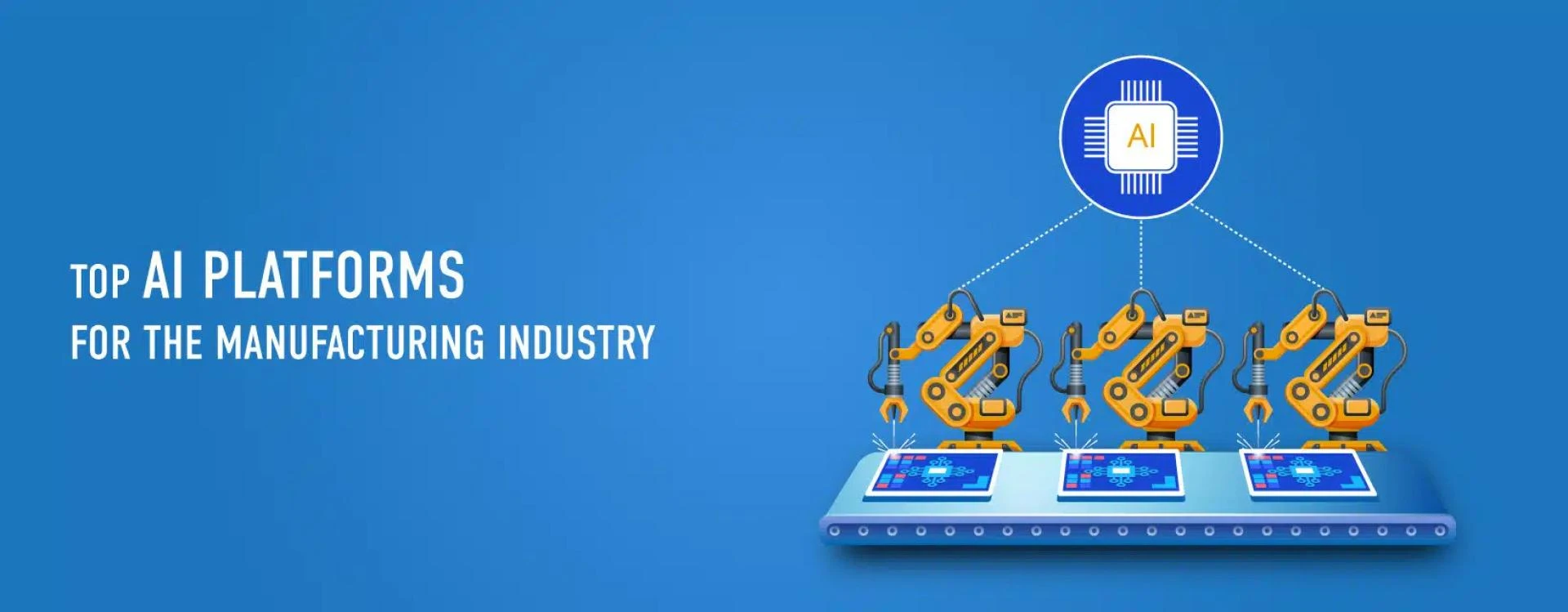
In today’s fiercely competitive manufacturing landscape, AI platforms have become a necessity rather than a luxury. They play a crucial role in enhancing efficiency, minimizing downtime, and facilitating smarter decision-making. As we move deeper into Industry 4.0, which is increasingly focused on AI and data-driven systems, manufacturers worldwide are adopting cutting-edge AI platforms to revamp everything from predictive maintenance to supply chain optimization.
Let’s dive into the most influential AI platforms that are transforming modern manufacturing operations, exploring what they do, why they’re important, and how manufacturing leaders can start leveraging them right away.
Why AI Platforms Matter in Manufacturing
Artificial intelligence is becoming the backbone of smart factories, enabling:
- Real-time operational intelligence through sensor and machine data
- Predictive insights that reduce unplanned downtime
- Automated quality checks and anomaly detection
- Optimized inventory and demand forecasting
- Smarter energy use and sustainability improvements
Led by advances in machine learning (ML), cloud computing, and industrial IoT, today’s AI platforms deliver measurable ROI across production lines and global facilities.
Leading AI Platforms for Manufacturing in 2026
1. AWS Industrial AI & Analytics
Best for: Scalable enterprise AI
AWS combines cloud services like SageMaker, Lookout, and Monitron to help manufacturers build and deploy AI models at scale. Its strength lies in flexible deployment, strong predictive analytics, and seamless integration with existing cloud infrastructure.
- Predictive maintenance
- Computer-vision-driven inspection
- Modular AI tools for analytics and automation
Ideal for manufacturers ready to scale digital transformation.
2. Microsoft Azure AI & Synapse
Best for: End-to-end data sophistication
Azure’s integrated AI services help manufacturers unify big data with machine intelligence. Azure Synapse Analytics and edge AI tools streamline production forecasting, equipment monitoring, and supply chain visibility across complex operations.
3. Google Cloud MDE & Connect
Best for: Unified shop-floor intelligence
Google’s Manufacturing Data Engine (MDE) centralizes data from machines, sensors, and logistics systems, empowering teams to detect anomalies, forecast failures, and optimize workflow in a single platform.
- Centralized data repository
- Distributed device connectivity
- Cloud AI + machine learning
Perfect for manufacturers seeking device-level visibility and control.
4. IBM Maximo AI
Best for: Lifecycle & asset performance
IBM Maximo applies AI to asset management, reliability planning, and predictive maintenance. Its visual inspection models analyze real-time images to find production defects and reduce risk.
- Automated asset performance
- Anomaly detection
- Integrated maintenance workflows
Suited for heavy-asset environments like automotive and heavy industry.
5. SAP Leonardo
Best for: Digital factory ecosystems
SAP’s AI platform combines machine learning with blockchain, IoT, and analytics to build fully connected smart factories. It supports real-time decision-making across planning, execution, and supply-chain functions.
- AI + digital supply chain
- Integrated IoT and analytics
- Holistic enterprise visibility
Ideal for global manufacturers with complex digital landscapes.
How to Choose the Right AI Platform
When selecting an AI platform for manufacturing, consider:
- Integration with your existing systems (ERP, MES, IoT)
- Scalability for future growth
- Data security and compliance
- Industry-specific workflows
- Support and training resources
A successful AI platform should not only deliver intelligent insights but also accelerate decision-making and lower operational risks.
Conclusion
AI platforms are transforming the landscape of modern manufacturing. With tools like predictive analytics, real-time automation, and interconnected data systems, the right
An AI platform can significantly boost productivity, enhance quality, and improve cost management. Start by setting clear objectives, selecting platforms that align with your operational requirements, and creating a scalable roadmap that evolves alongside your data and intelligence. Need assistance in choosing the ideal AI platform for your factory?
Let’s dive into your current challenges and outline the next steps together.