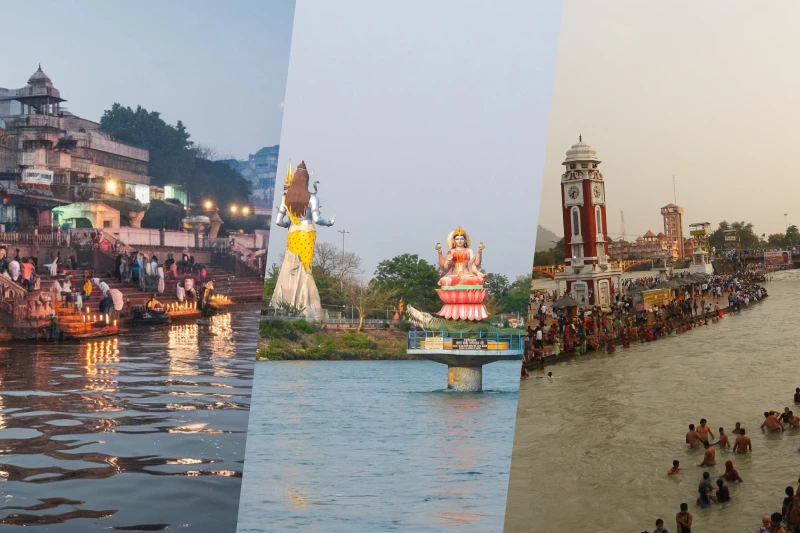
India is a land of spiritual depth, where rivers are more than just flowing bodies of water, they are sacred lifelines, worshipped and revered for centuries. The holy rivers in India are not only geographical features but are deeply connected to the religious and cultural identity of the country. For millions, these rivers represent purity, healing, and the divine.
In this blog, we’ll take you on a journey through the most significant holy rivers in India, exploring their history, mythological importance, and the role they play in everyday life.
1. Ganga – The Lifeline of India
The Ganga (or Ganges) River is perhaps the most revered among all holy rivers in India. Flowing from the Gangotri Glacier in the Himalayas to the Bay of Bengal, the Ganga spans over 2,500 kilometers and touches millions of lives along the way.
In Hinduism, the Ganga is considered a goddess, and bathing in its waters is believed to cleanse one’s sins. Cities like Varanasi, Haridwar, and Rishikesh are popular pilgrimage destinations located along the banks of the Ganga. Daily rituals, cremations, and prayers along the ghats (river steps) showcase the river’s central role in Indian spirituality.
Every 12 years, the Kumbh Mela, one of the largest religious gatherings on Earth, takes place on the banks of the Ganga, attracting millions of devotees and tourists.
2. Yamuna – The Sister River
Another one of the sacred rivers of India, the Yamuna flows parallel to the Ganga and eventually merges with it at the confluence in Prayagraj, a site considered highly sacred.
The Yamuna is closely associated with Lord Krishna, who is believed to have spent his childhood along its banks in the town of Mathura. Devotees flock to this area to visit temples, offer prayers, and celebrate festivals like Janmashtami.
Though the river is considered to be polluted for years now, its religious importance remains strong. Efforts are continually being made to restore its purity so that future generations can continue to worship and respect it.
3. Saraswati – The Mysterious River
Unlike the other religious rivers in India, the Saraswati River is not visible today. Mentioned in ancient Vedic texts, Saraswati is believed to have once flowed through the northwestern part of India. It is said to have dried up thousands of years ago but continues to be worshipped as a goddess of knowledge and wisdom.
Though invisible, Saraswati’s significance is very much alive in Indian culture. In fact, many scholars and archaeologists believe that the remnants of this river still flow underground. The river's name lives on through temples and educational institutions across the country.
4. Godavari – The Ganga of the South
Nicknamed the “Dakshina Ganga” (Ganga of the South), the Godavari is the second longest river in India and holds immense religious value, especially in the southern part of the country.
The river originates from Nashik in Maharashtra and flows through states like Telangana and Andhra Pradesh before merging into the Bay of Bengal. Nashik, one of the four sites for the Kumbh Mela, is located on its banks.
Many pilgrims take a holy dip in the Godavari during the Pushkaram festival, which is celebrated once every 12 years. The river is also central to various rituals, including ancestral rites (Shraddha), believed to bring peace to departed souls.
5. Narmada – The River of Peace
Flowing westward through central India, the Narmada River is one of the few rivers in India that flows in a rift valley. It originates from Amarkantak in Madhya Pradesh and is known for its serene and clean waters.
The Narmada is considered sacred in both Hinduism and Jainism. Pilgrims often undertake the Narmada Parikrama, a challenging and spiritually rewarding journey of walking along the river’s banks in a full circular route. It’s believed that completing this yatra (pilgrimage) blesses one with peace and spiritual enlightenment.
Unlike the Ganga and Yamuna, which are associated with rituals of death and rebirth, the Narmada is seen as a source of peace and calm, making it unique among the holy rivers in India.
6. Kaveri – The River Goddess of the South
Kaveri, also known as Cauvery, flows through the southern states of Karnataka and Tamil Nadu. It is another of the sacred rivers of India, playing a major role in the agriculture, culture, and religious practices of the region.
The river is often personified as a goddess and is central to many temples and religious sites, especially in Tamil Nadu. The town of Srirangam, located on an island formed by the river, is home to one of the largest temple complexes in India dedicated to Lord Vishnu.
Kaveri is also famous for the festival of Aadi Perukku, celebrated to honor the life-giving qualities of water and the river’s contribution to farming and prosperity.
7. Krishna – The Provider
Originating from the Western Ghats in Maharashtra, the Krishna River flows through Karnataka, Telangana, and Andhra Pradesh. Named after Lord Krishna, this river is another vital water source and spiritual symbol in southern India.
Several sacred temples, including the famous Mallikarjuna Temple at Srisailam, are situated along its banks. The river supports the livelihoods of thousands through agriculture and provides drinking water to many villages and cities.
Krishna Pushkaram, a festival similar to Godavari and Kaveri Pushkaram, is celebrated every 12 years when devotees take a dip in the river to purify themselves spiritually.
The Role of Rivers in Indian Culture
In India, rivers are more than natural water systems, they are divine mothers, protectors, and purifiers. Every river mentioned here has a story woven into the fabric of Indian mythology and daily worship.
From birth to death, these religious rivers in India play an essential role in the lives of millions. They host festivals, sustain farming communities, and serve as the site for final rites and rituals. In many Indian households, a small bottle of Ganga or Godavari water is kept for spiritual use, especially during important ceremonies.
The respect for these rivers is so deeply embedded in Indian culture that harming or polluting them is considered an act of great disrespect. Several environmental movements have emerged to clean and protect these rivers, underlining their importance not just spiritually but ecologically as well.
Traveling to India’s Sacred Rivers
If you’re planning to explore the holy rivers in India, consider planning a route that covers both the north and south of the country. Cities like Varanasi, Haridwar, Nashik, and Srirangam offer a beautiful blend of spiritual experiences and local culture.
To make your travel plans budget-friendly, look for cheap flight tickets to India through trusted portals like Indian Eagle. This platform offers competitive prices and great service, especially for those traveling from the U.S. and other countries.
The holy rivers in India are living symbols of the country's spiritual richness. Whether you're a pilgrim, traveler, or someone seeking peace and reflection, these rivers welcome all with open arms. They are not just destinations but experiences - deep, moving, and unforgettable.
As you stand on the ghats, feeling the gentle touch of the water, you realize that these rivers carry more than just water — they carry the soul of India itself.