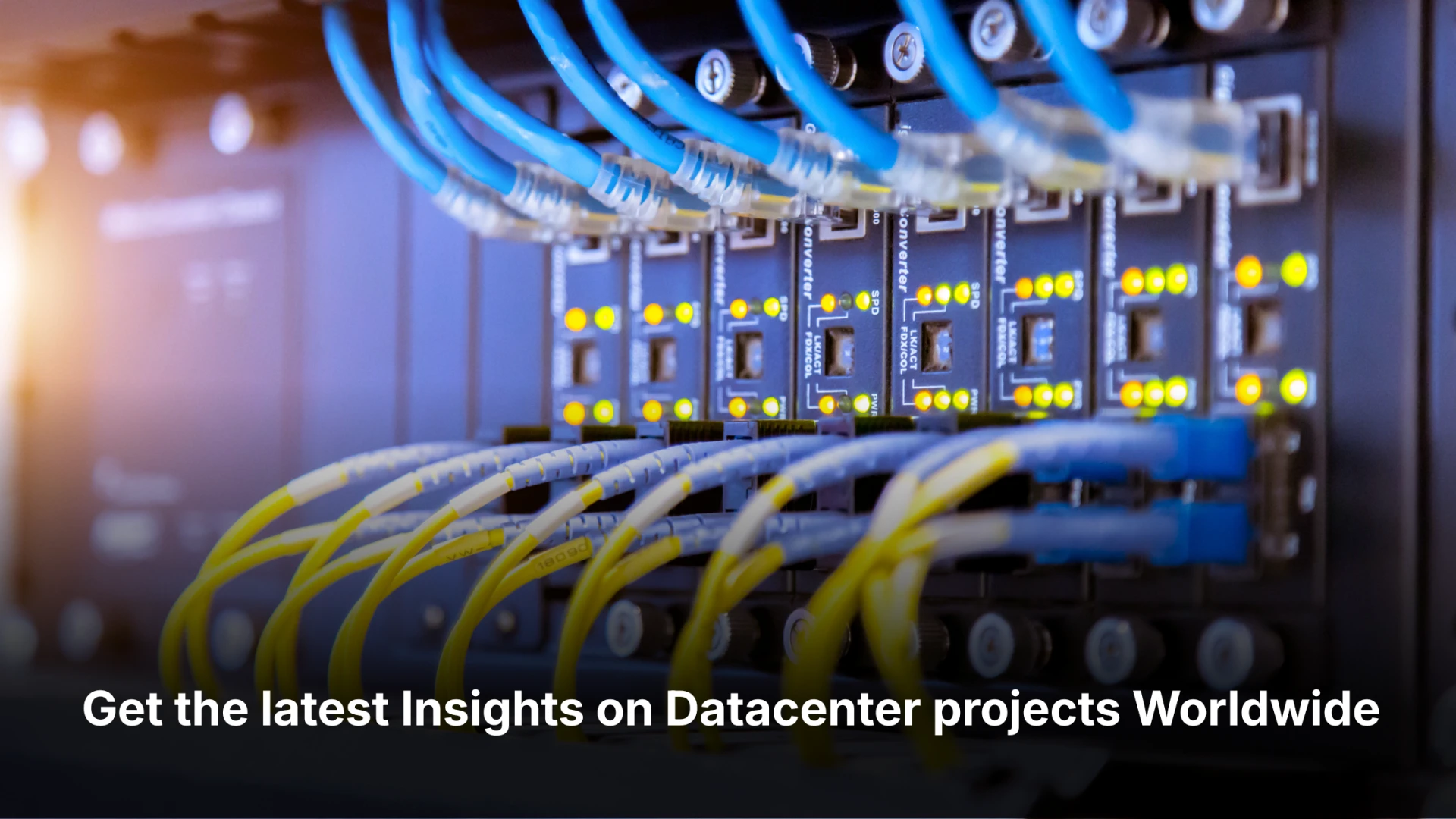
New York is rapidly emerging as one of the most strategic data center markets in the United States driven by the explosive growth of AI and cloud computing. One of the clearest signals of this shift is Anthropic’s USD 50 billion U.S. data center investment plan through its partnership with Fluidstack, with New York selected as one of the first locations for custom-built AI facilities coming online through 2026.
The largest upcoming data centers in New York including the Cayuga Data Campus, the STAMP Data Center in Genesee County, TeraWulf’s Lake Mariner Campus, IBM’s Quantum Data Center (IBM Quantum Starling) in Poughkeepsie, and the large-scale Lysander Data Center in Onondaga County represent a shift toward high-density, power-intensive infrastructure designed to support AI training, quantum computing, and hyperscale cloud workloads.
This article explores the Top 5 Upcoming Data Center Projects in New York, outlining where they are being built, why these locations matter, and how each project fits into the state’s growing role as a data center hub in the United States.
1.1. Cayuga Data Campus:
The Cayuga Data Campus is one of the top upcoming data center developments in New York, combining large-scale digital infrastructure with a strong focus on sustainability and community engagement. Located on the former Cayuga Power Plant site in Western New York, the project repurposes a long-standing industrial asset into a modern research and technology hub designed for high-reliability, heavy-duty computing operations.
The redevelopment covers roughly 180 acres, less than half of the total site, and follows a phased buildout plan approved by NYISO. An initial capacity of 50 MW is scheduled to come online in 2026, with expansion to 138 MW by 2028-2029. The location offers a major advantage, drawing power from a regional grid that is approximately 90% zero-carbon and benefits from surplus electricity availability, supporting New York’s broader clean energy goals.
Construction is expected to generate more than 500 jobs during the build phase, while long-term operations will support around 100 permanent skilled positions. The campus is designed to host world-class tenants under long-term agreements of ten years or more, targeting leading global technology companies.
1.2. STAMP Data Center:
The STAMP Data Center is a proposed hyperscale data center development by Stream Data Centers at the Science and Technology Advanced Manufacturing Park (STAMP) in Genesee County, New York. The project is planned on a large industrial site within the 1,250-acre STAMP megasite and is designed to support a major Fortune 50 technology tenant.
The facility is expected to span approximately 2.2 million square feet and is designed for high-density, energy-intensive computing workloads. At full buildout, the data center would require up to 500 MW of electricity, making it one of the most power-intensive data center projects proposed in New York State. Power would be supplied through a dedicated 600-MW substation being developed for the STAMP site. Water usage is estimated at around 20,000 gallons per day for cooling and operations.
The project is expected to create around 120 permanent jobs once operational, with additional construction employment during the build phase. Development is subject to regulatory approvals and environmental review, and local economic development authorities are evaluating the project.
1.3. TeraWulf’s Lake Mariner Campus:
Lake Mariner Data Center Campus CB-5 expansion is an expansion project by TeraWulf in Lake Mariner, western New York. A former industrial site is being converted to a data center campus with multiple buildings and phased capacity expansions.
Developed by TeraWulf Inc., the project is currently in the development stage with the new building CB-5 expected to be online in H2 of 2026. Fluidstack, an AI firm, announced leasing 200 MW of critical IT load for the project at its Lake Mariner data center campus in New York.
This 10-year-long deal was announced in August 2025 and is backed by Google, which holds an 8% stake in Terawulf. The aim is to add a further 160 MW at the Lake Mariner data center project, bringing the total capacity to 360 MW.
1.4. IBM Quantum Data Center (IBM Quantum Starling):
IBM announced its plans to build the world’s first large-scale, fault-tolerant quantum computer, named IBM Quantum Starling. The data center will be built at a new dedicated IBM Quantum Data Center in Poughkeepsie, New York.
The project was initially announced on 10th June, 2025, and the build-out aimed to support next-generation quantum systems and follow-on processors. The Starling data center is expected to perform 20,000× more operations compared to today’s quantum processors.
The system will employ 200 logical qubits with a fault-tolerant architecture, enabling much larger and more reliable quantum workloads than earlier systems. The Starling project includes a quantum roadmap of intermediate systems slated for 2025-2027, and the project is expected to be fully delivered by 2029.
1.5. Lysander Data Center:
Ranalli Super DC, LLC has announced plans to develop a large-scale
hyperscale data center in Lysander, New York, marking one of the most power-intensive digital infrastructure proposals in the state. The project is planned on 120 acres of vacant land in suburban Lysander and is being led by James Ranalli, a prominent Onondaga County developer and owner of United Auto Supply.
The development has requested a grid interconnection capacity of up to 300 MW from the New York Independent System Operator. At full buildout, the facility’s electricity demand would be comparable to that of approximately 200,000 average households. Currently, the project is in early planning stages.
2. Conclusion:
From hyperscale campuses like STAMP and Lake Mariner to advanced research-driven facilities such as IBM Quantum Starling, these data centers collectively represent billions of dollars in long-term infrastructure investment and hundreds of megawatts of new computing capacity.
The Northeast currently has a USD 6 billion data center construction pipeline scheduled over the next six months, with the New York metro area accounting for a significant share. Long-standing advantages, including dense fiber networks, proximity to financial markets and enterprise customers, established regulatory systems, and expanding power infrastructure, continue to attract hyperscalers and AI-focused operators.
3. Find Upcoming Data Center Facility Projects in the United States with Ease.
Are you looking for a platform that gives you reliable, high-quality, and timely project insights for
Data Center Facility Projects in the United States?
Discover the Global Project Tracking (GPT) platform by Blackridge Research, designed to provide you with the most recent data center projects in the United States, better and faster across various stages of development:
Upcoming projects
Tender Notices
Contract award announcements
Projects in progress or under construction
Successfully completed projects
Book a Free demo to learn more about the
Data Center Facility Projects in the US database and how we can help you achieve your goals.
Frequently Asked Questions:
What is the largest data center in the USA?
The largest data center in the USA is Meta Platforms, spanning 4.6 million square feet in Prineville, Oregon.
Where are most of the US data centers located?
Most U.S. data centers are concentrated in major “primary” markets such as Northern Virginia, Phoenix, Dallas, Atlanta, Chicago, Silicon Valley, Portland (Hillsboro), New York–New Jersey, Seattle (Quincy), and Los Angeles.
Who are the big 5 hyperscalers?
The “big five” hyperscalers are Amazon Web Services (AWS), Microsoft Azure, Google Cloud Platform (GCP), Oracle Cloud, and Meta/Facebook.
Who owns the most data centers in the USA?
Among data center operators, Digital Realty is the largest builder and operator in the U.S. along with Equinix, Digital Realty, Cyxtera, and CyrusOne.