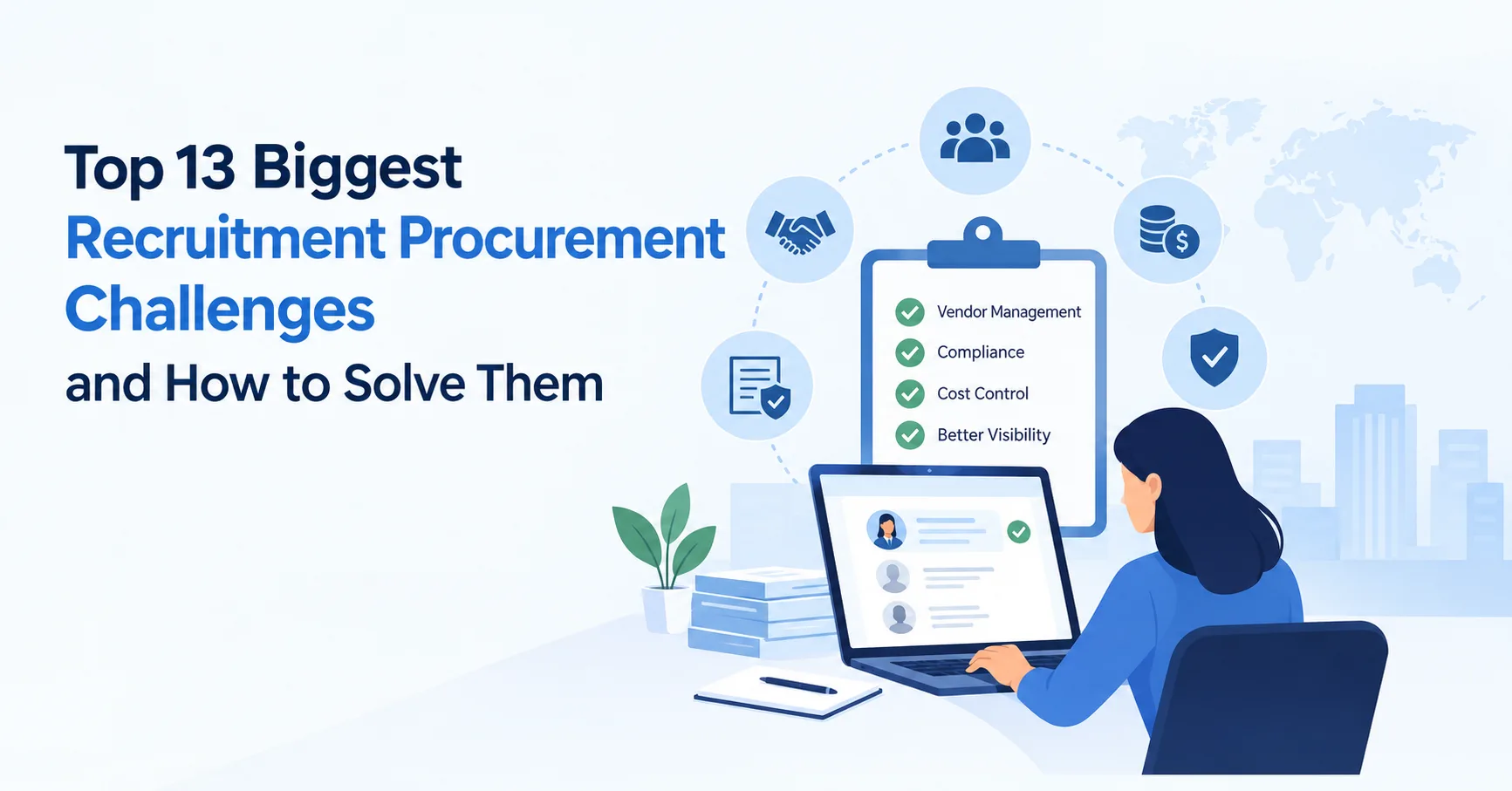
Recruitment procurement plays an important role in controlling hiring costs, managing recruitment vendors and maintaining workforce quality. However, organizations often face challenges such as poor communication, manual processes, compliance risks, rising costs, and limited visibility across teams.
As recruitment becomes more complex, businesses need connected processes and better data to manage these challenges effectively.
1. Poor Communication with Recruitment Vendors
Communication gaps can lead to delayed hiring, unclear requirements, and missed updates. When procurement, HR, hiring managers, and recruitment vendors work through emails and spreadsheets, information can easily get lost.
Solution: Use centralized workflows that keep requirements, updates, approvals, and communication in one place.
2. Vendor non-compliance
Recruitment vendors must follow contractual, legal, and organizational requirements. Tracking documents and compliance manually can make it difficult to identify expired certifications or missing information.
Solution: Automate compliance tracking and send alerts when documents or requirements need attention.
3. Rising Recruitment Costs
Recruitment expenses can increase due to high vendor fees, inefficient processes, repeated hiring efforts, and poor rate control. Without clear spending visibility, procurement teams may struggle to identify where costs are increasing.
Solution: Track recruitment spending, compare rates, monitor vendor costs, and use workforce data to support better decisions.
4. Manual Recruitment Procurement Processes
Manual processes slow down requisitions, approvals, candidate submissions, onboarding, and reporting. They also increase the risk of errors.
Solution: Automate repetitive workflows such as requisition management, approvals, notifications, and reporting. AI-assisted VMS workflows can also help reduce repetitive work and give teams better visibility into recruitment activities.
5. Inaccurate Recruitment Data
Recruitment decisions depend on accurate information. Inconsistent data across spreadsheets, emails, and different systems can make reporting unreliable.
Solution: Create a centralized source of workforce and recruitment data with standardized processes and reporting.
6. Underperforming Recruitment Vendors
Not every vendor delivers the same level of quality, speed, or candidate coverage. Without consistent performance tracking, organizations may continue working with vendors that are not meeting expectations.
Solution: Track metrics such as fill rates, time to fill, candidate quality, response times, and compliance performance.
7. Inflation and Rising Talent Acquisition Costs
Higher wages, increased competition for skilled talent, and changing market conditions can raise overall hiring costs. Procurement teams need to understand how market changes affect workforce spending.
Solution: Use market data, rate analysis, and historical workforce information to identify cost trends and improve negotiations.
8. Talent Supply Disruptions
Organizations may face sudden changes in talent availability because of economic conditions, skill shortages, seasonal demand, or regional workforce changes.
Solution: Monitor workforce demand and talent availability so teams can identify potential gaps earlier and adjust hiring strategies.
9. Unauthorized Recruitment Spending
Unapproved hiring activity can create budget problems and make spending difficult to control. This can happen when hiring managers engage vendors outside established procurement processes.
Solution: Establish clear approval workflows and centralized visibility into recruitment requests and spending.
10. Poor Contract Management
Recruitment contracts contain important information about rates, terms, service levels, and responsibilities. Managing these details manually can result in missed renewals or inconsistent contract compliance.
Solution: Digitize contract management and create automated reminders for renewals, key dates, and compliance requirements.
11. Limited Recruitment Risk Management
Recruitment procurement involves several risks, including compliance issues, data security concerns, vendor dependency, and workforce disruptions.
Solution: Create a structured risk management process that evaluates vendors, monitors compliance, and highlights potential risks early.
12. Procurement Talent Shortages
Recruitment procurement teams need people who understand both procurement and talent acquisition. Finding professionals with the right combination of skills can be challenging.
Solution: Use technology to automate repetitive work and allow procurement professionals to focus on strategic activities such as vendor management, cost optimization, and workforce planning.
13. Disconnected Systems and Workflows
Recruitment data often sits across HR systems, procurement platforms, spreadsheets, emails, and vendor portals. These disconnected systems make it difficult to get a complete view of the external workforce.
An extended workforce platform can help connect workforce processes, vendor management, compliance, spending, and reporting in one environment.
Solution: Integrate recruitment procurement with HR, procurement, finance, and other workforce systems to create a connected workflow.
Which VMS Offers the Best Vendor Management and Compliance Features?
The best VMS should provide centralized vendor management, compliance tracking, performance monitoring, automated alerts, contract management, and reporting. SimplifyVMS brings these capabilities together to help organizations maintain vendor accountability, reduce compliance risks, and improve visibility across recruitment procurement activities.
What Are the Most Important VMS Features for Global Enterprises?
The most important VMS features for global enterprises include workflow automation, vendor management, compliance tracking, centralized workforce data, reporting and analytics, integrations, cost visibility, and support for different regions and workforce requirements. SimplifyVMS supports these capabilities to help enterprises manage complex recruitment procurement processes consistently across locations.
Conclusion
Recruitment procurement becomes harder to manage as organizations work with more vendors, larger external workforces, and increasingly complex hiring requirements. Manual processes and disconnected systems can make costs, compliance, and vendor performance difficult to control.
A centralized and intelligent approach can help organizations improve visibility, automate routine work, manage risks, and make better workforce decisions. With the right technology and processes in place, recruitment procurement can become a more strategic part of overall workforce management.