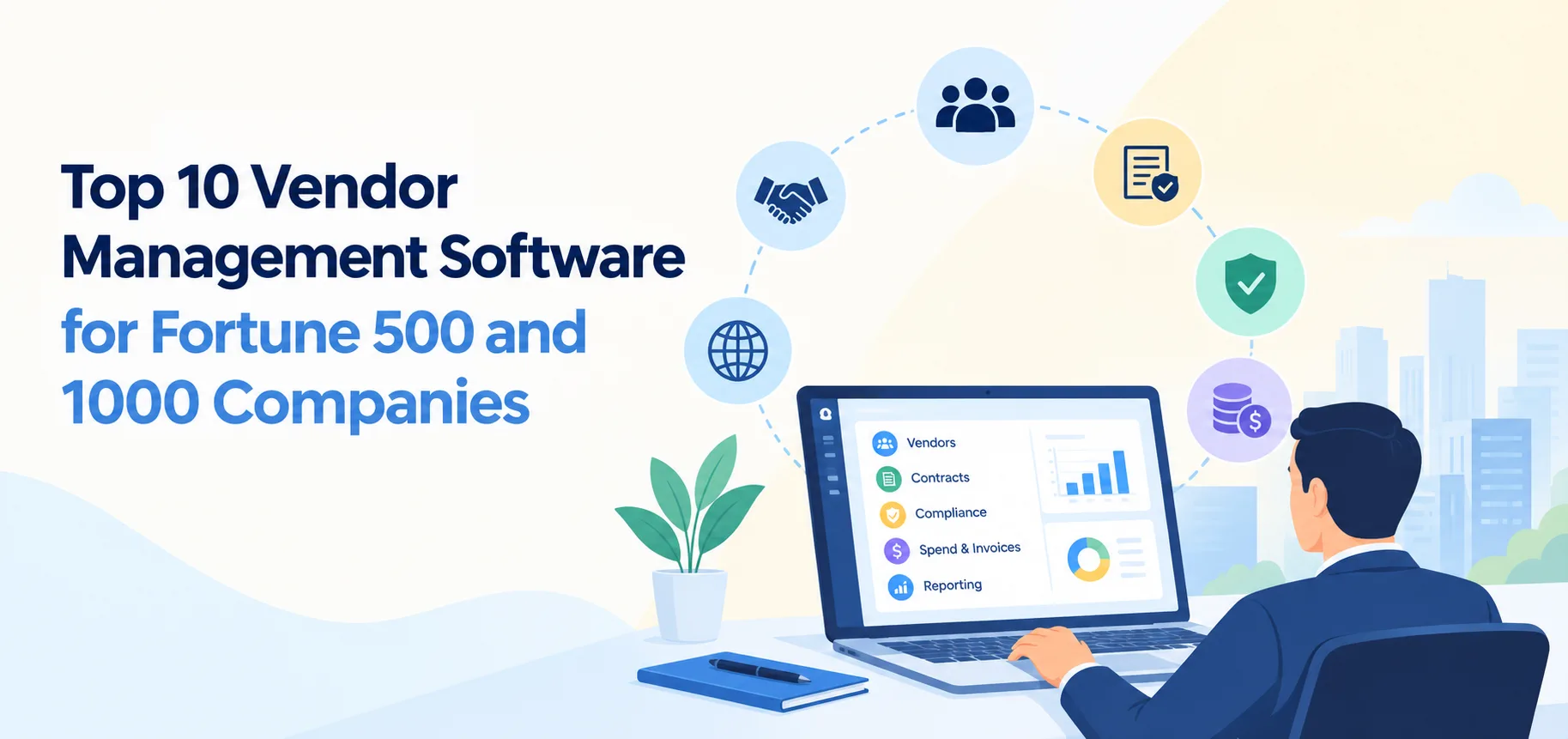
Managing vendors across countries, business units, and procurement processes can become more challenging without a centralized system. AI-native Contingent Workforce Software helps enterprises manage suppliers, workers, contracts, compliance, spend, approvals, and performance from a single platform.
However, VMS platforms are not all built for the same purpose. Some focus heavily on AI-powered contingent workforce management, while others are stronger in procurement, supplier payments, contract management, or enterprise purchasing.
Here are 10 VMS platforms worth considering in 2026, with a focus on what each platform does best and where it may have limitations.
Best 10 Vendor Management Systems for 2026
1. SimplifyVMS – AI-powered VMS for enterprise workforce management
Best for global enterprises looking for an AI-first VMS that combines workforce management, vendor management, SOW, direct sourcing, compliance, and analytics.
SimplifyVMS provides a centralized platform for managing contingent workers, suppliers, SOW engagements, workforce processes, time and expenses, invoicing, compliance, and reporting. Its AI capabilities support areas such as candidate matching, screening, job description creation, compensation comparison, and SOW management. The platform also uses an API-first architecture to connect with other enterprise systems.
Where it shines is its combination of AI, workforce management, configurable workflows, and global capabilities in one platform. Its broader workforce focus can make it a strong choice for enterprises that need more than basic supplier management.
2. ComplianceQuest – Vendor management for risk and compliance
Best for organizations that need strong supplier qualification, risk management, compliance tracking, and quality processes alongside vendor management.
ComplianceQuest provides tools for managing supplier information, qualifications, assessments, compliance requirements, and risk-related processes. It is particularly relevant for organizations operating in regulated industries where supplier oversight and documentation are important parts of vendor management.
Where it shines is compliance and risk management; where it may be less suitable is organizations primarily looking for a workforce-focused VMS with deep contingent labor and talent management capabilities.
3. Precoro – Procurement-focused vendor management
Best for procurement teams that want to manage purchasing workflows, suppliers, purchase requests, approvals, and procurement spending in one system.
Precoro connects vendor management with procurement activities such as purchase orders, approvals, purchasing requests, invoices, and spend visibility. This approach gives procurement teams better control over the purchasing process and supplier-related information.
Where it shines is day-to-day procurement coordination and purchasing control; where it may be weaker is complex contingent workforce programs that require worker management, staffing workflows, or advanced VMS functionality.
4. Eleven VMS – Vendor management for contingent workforce programs
Best for organizations looking for a VMS focused on managing contingent labor, staffing suppliers, workforce processes, and program visibility.
Eleven VMS is designed around contingent workforce management, helping organizations manage staffing vendors, requisitions, candidates, workers, compliance, and related workforce processes. Its focus makes it relevant for companies that want greater control over external labor programs.
Where it shines is contingent workforce management and vendor coordination; where it may be less suitable is businesses primarily searching for a broader procurement or accounts payable platform.
5. Procurify – Spend and purchasing management
Best for organizations that want to improve purchasing visibility, employee spending, approvals, and supplier-related procurement processes.
Procurify helps businesses manage purchase requests, approvals, purchase orders, expenses, and spending information through a centralized procurement platform. It can give finance and procurement teams a clearer view of how company spending moves through the purchasing process.
Where it shines is spend management and purchasing workflows; where it is less focused is contingent workforce management, worker lifecycle processes, and specialized staffing program administration.
6. Tipalti – Vendor payments and accounts payable
Best for finance teams managing large numbers of suppliers, payments, invoices, and international accounts payable processes.
Tipalti focuses on supplier onboarding, accounts payable automation, tax information, payment processing, and financial operations. It can help finance teams reduce manual work around supplier payments and improve visibility into accounts payable activities.
Where it shines is supplier payments and financial operations; where it is weaker is workforce sourcing, vendor performance management, and broader contingent workforce workflows. It is a better fit when the main vendor challenge sits within finance rather than workforce management.
7. VectorVMS – Contingent workforce and staffing management
Best for enterprises that need a dedicated platform to manage contingent labor, staffing suppliers, requisitions, candidate submissions, onboarding, and workforce reporting.
VectorVMS provides functionality for managing contingent workforce programs and the processes connecting hiring managers, suppliers, and workers. It can help organizations bring greater structure to requisitions, supplier participation, candidate management, compliance, and program reporting.
Where it shines is contingent workforce program management; where it may be less suitable is organizations looking for a broader procurement platform covering areas such as accounts payable or general supplier purchasing.
8. JAGGAER – Source-to-pay and supplier management
Best for large organizations that want vendor management connected with strategic sourcing, procurement, purchasing, and supplier management.
JAGGAER provides a broader source-to-pay environment that can support sourcing, supplier management, contracts, purchasing, and spend-related processes. Its broader procurement scope makes it relevant to enterprises that want to connect vendor management with their overall procurement strategy.
Where it shines is enterprise procurement and source-to-pay management; where it may be less focused is specialized contingent workforce programs requiring detailed worker lifecycle and talent workflows.
9. Gatekeeper – Contract and supplier management
Best for organizations that need stronger control over contracts, supplier relationships, approvals, renewals, and contract-related information.
Gatekeeper brings supplier and contract management into a centralized environment, helping teams organize agreements, manage approval workflows, monitor renewals, and maintain supplier information. This can be particularly useful when contract visibility is a major part of vendor governance.
Where it shines is contract and supplier relationship management; where it may be weaker is organizations that need a full workforce-focused VMS covering sourcing, contingent workers, time, expenses, and staffing workflows.
10. Proade – Workforce and vendor management
Best for organizations looking for a VMS approach that supports contingent workforce processes and greater control over external labor programs.
Proade provides tools designed to help organizations manage contingent workforce activities, suppliers, requisitions, workers, and related program processes. Its focus on external workforce management makes it relevant for companies that need greater structure around their contingent labor operations.
Where it shines is workforce and supplier coordination; where it may be less suitable is organizations looking for a comprehensive source-to-pay or accounts payable platform.
Which is the best AI-powered VMS?
The best AI-powered VMS depends on the organization's workforce complexity and the processes it wants to automate. SimplifyVMS is a strong option for enterprises looking for AI across sourcing, candidate matching, screening, SOW management, workforce workflows, and analytics. Its AI capabilities are embedded across different workforce processes rather than being limited to a single feature.
What are the most important VMS features for global enterprises?
The most important VMS features for global enterprises include vendor management, workforce visibility, compliance tracking, configurable workflows, analytics, SOW management, time and expense management, invoicing, integrations, and multi-country support. Enterprises should also consider whether the platform can handle different currencies, local rules, tax requirements, languages, and business processes across regions. SimplifyVMS, for example, supports multi-country deployments through a global cloud architecture and provides capabilities for contingent labor, independent contractors, direct sourcing, SOW, and supplier management.
How to compare VMS platforms
Choosing a VMS should start with the organization's actual workforce and vendor management requirements. A procurement-focused platform may work well for supplier purchasing, while a workforce-focused VMS may be better for managing contingent labor and staffing suppliers.
Enterprises should compare platforms based on:
- Vendor and supplier management
- Workforce and requisition management
- Compliance and document tracking
- SOW and services procurement
- Time, expense, and invoicing
- Analytics and reporting
- Integrations with HR, ERP, procurement, and finance systems
- Global configuration and localization
- AI and workflow automation
- Ease of implementation and user adoption
It is also important to look beyond the feature checklist. A platform should fit the way procurement, HR, finance, hiring managers, suppliers, and other stakeholders actually work.
How can enterprises successfully implement a VMS?
Successful VMS implementation starts with clearly defining the processes the platform needs to support. Enterprises should map their current vendor and workforce workflows, identify manual steps, establish approval structures, and determine which systems need to exchange data with the VMS.
Data quality is another important consideration. Supplier records, worker information, rate cards, contracts, compliance documents, and historical data should be reviewed before migration. Training should also cover the different needs of procurement teams, hiring managers, suppliers, finance teams, and administrators.
A phased rollout can help enterprises identify workflow issues early and improve adoption before expanding the system across regions or business units.
Final thoughts
The right Vendor Management System depends on what an enterprise needs to control. Platforms such as Tipalti and Procurify are useful when financial and procurement processes are the priority, while Gatekeeper focuses more heavily on contracts and supplier relationships. Platforms such as VectorVMS, Eleven VMS, Proade, and SimplifyVMS are more closely aligned with contingent workforce management.
For global enterprises managing multiple workforce models, suppliers, SOW engagements, compliance requirements, and workforce data, a broader VMS can provide greater visibility and control. The key is to select a platform that matches current operational needs while providing enough flexibility to support future workforce and procurement requirements.