
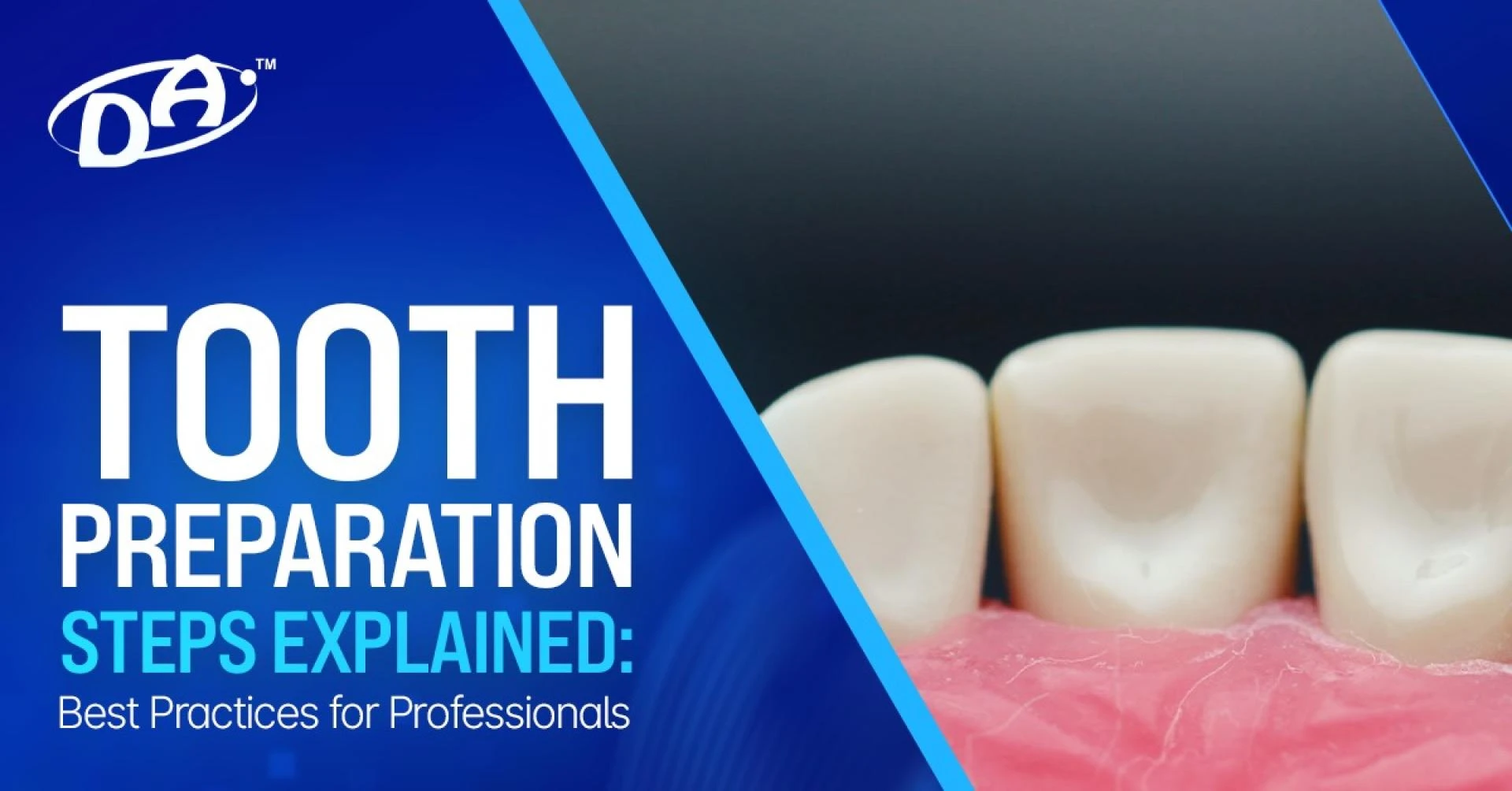
The key to success of any restoration remains dependent on the finish regardless of how sophisticated dental materials become, on how well you prepare the tooth.
Be it the experienced prosthodontist or a new graduate with the desire to perfect the art, there is the inevitable need to understand the intricacies of tooth preparation burs names and procedures.
Learn about the phases of preparing teeth, optimal methods used in the world (most of all in India), and how to improve your outcomes the most with this task.
Understanding Tooth Preparation: Why It Matters
Tooth preparation involves making a tooth ready to receive a restoration, whether it is a filling, crown, or bridge and maintains the health structure as much as possible.
Provide optimal retention, resistance and esthetics, and protect the pulp and surrounding tissues at the same time.
Fundamentals of Cavity Preparation
The fundamentals of cavity preparation include:
- Minimal Intervention: Only the diseased tissue should be removed, leaving vital enamel and dentin if possible.
- Retention and Resistance: Construct the hole that retains the restorative material and resists chomp.
- Pulp Protection: Keep a safe distance from the pulp chamber, and make use of liners or bases when necessary.
- Smooth Margins: Neat edges would prevent a loose fit and the durability of the repair.
The Stages of Tooth Preparation: Step-by-Step
All of these teeth preparation steps are the foundation of restorative dentistry toward a lasting, successful outcome:
- Diagnosis and Assessment: It should begin with a good clinical and radiographic assessment. Determine caries, cracks, or old restorations that should be attended to.
- Isolation: Drying the field and depriving it of contamination may be done with the help of a rubber dam isolation or cotton rolls.
- Access Opening: Create an entry point to the lesion or area to be restored, removing any defective restorations.
- Caries Removal: Excavate all infected dentin and demineralised enamel, but be conservative, don’t overdo it!
- Cavity Shaping: Shape the cavity to provide retention and resistance. This may involve creating undercuts or bevels, depending on the material.
- Finishing Margins: Smooth and refine the cavity walls and margins for a perfect fit.
- Restoration: Place the composite resin or GIC dental filling ensuring proper adaptation and curing.
Anterior Tooth Preparation: Special Considerations
Here’s what sets anterior tooth preparation apart:
- Margin Design: Chamfer or shoulder margins are preferred for all-ceramic crowns, as they provide a strong, esthetic finish without creating stress points.
- Minimal Invasiveness: Less means more! Leave as much enamel as possible to improve bonding and sensitivity.
- Incisal Reduction: Make sure there is sufficient space in which the restorative material will fit, without weakening the tooth.
- Axial Taper: Based on optimal retention, aim to have a 6–10° taper.
- Digital Tools: CAD/CAM and digital impression materials improve precision and patient comfort.
Tooth Preparation for PFM Crowns: Best Practices
The tooth preparation for a PFM crown (Porcelain-fused-to-metal) involves several key steps:
- Depth Orientation Grooves: Use depth-cutting burs to ensure uniform reduction, typically 1.5–2.0 mm occlusally and 1.2–1.5 mm axially.
- Occlusal Reduction: Create enough space for both metal and porcelain layers.
- Axial Reduction: Keep a constant taper and no undercuts.
- Margin Preparation: Chamfer or shoulder margin is perfect on the PFM crowns and fits safely with diminished stress.
- Refinement: Clean up all edges, move all sharp corners, and ensure there is enough room.
- Impression and Temporization: Record a specific impression and fix a temporary crown to cover the prep.
Crown Cutting Steps and Procedure
Whether you’re prepping for a PFM, all-ceramic, or zirconia crown, the crown cutting steps are remarkably similar:
- Initial Assessment: Assess occlusion, neighbouring teeth and opposing dentition.
- Depth Cuts: Place orientation grooves to guide uniform reduction.
- Occlusal/Incisal Reduction: Remove enough tooth structure for the chosen material.
- Axial Reduction: Taper the walls, ensuring no undercuts.
- Margin Design: Choose the appropriate margin (chamfer, shoulder, or knife-edge) based on the crown type.
- Finishing Touches: Check clearance with a putty impression material or silicone guide.
Recent Advancements and Evidence-Based Approaches
The world of tooth preparation is evolving fast. Here’s what’s new:
- Minimally Invasive Dentistry: The mantra is “preserve, don’t replace.” Techniques like microscopic preparation and ultra-thin veneers are gaining traction.
- Digital Dentistry: Preps get more precise and predictable with CAD/CAM, 3D printing and AI-driven planning.
- Robotics: Yes, robots are coming to the operatory, helping in high-precision repetitions.
- Evidence-Based Protocols: Clinical trials and systematic reviews are influencing guidelines, and all of this is achieved in the name of valid science.
Common Pitfalls and How to Avoid Them
Common errors in tooth preparation, and how to avoid them, are as follows:
- Over-Reduction: Do not allow the temptation to be safe and cut out unnecessary tooth tissue. This causes weakness of the structure and may result in sensitivity.
- Undercuts: These can cause a nightmare regarding crown seating. Check your prep from every possible angle.
- Poor Margin Design: Microleakage and failure of restorations may be induced by inaccurate margins.
- Inadequate Clearance: When they do not leave enough room to allow for cosmetic material, they end up making crowns bulky and unesthetic.
Key Takeaway
With a solid grasp of tooth preparation steps, types of dental burs, and best practices, you’re set for clinical success. Precision, patience, and a patient-centred style remain your most valuable dental instruments.
Keep in mind that precision, patience, and a patient-centred style are your most valuable instruments.