I tried quite a few sunscreens before I properly understood what a tone-up sunscreen was supposed to do. The term appears frequently in skincare discussions, but its meaning isn't always clear. Some people use it interchangeably with tinted sunscreen, while others associate it with products that leave a brighter finish after application.
After spending some time understanding the category, I realised that a tone-up sunscreen offers something slightly different from conventional sun protection. It combines UV protection with a subtle cosmetic effect, helping the skin look brighter and more even. However, there are a few things worth knowing before deciding whether it belongs in your daily skincare routine.
What Makes a Tone-Up Sunscreen Different From Regular Sunscreen?
The primary purpose of regular sunscreen is to protect your skin against harmful UV radiation. Its formulation is generally focused on sun protection, without necessarily changing the appearance of your complexion.
A tone-up sunscreen, on the other hand, combines sun protection with a subtle brightening effect. It usually contains pigments that help reduce the appearance of dullness and uneven-looking skin, giving the face a fresher appearance.
What makes this format interesting is that you get more than just UV protection. The finish can create a slightly polished look without requiring an additional layer of foundation or tinted moisturiser.
However, the level of brightness and coverage varies between products. Some offer a barely noticeable tint, while others leave a more visible brightening effect. So, it is worth checking how a particular formula looks on your skin before making a purchase.
Why a Tone-Up Sunscreen Is Not Just About Mineral Filters
I previously assumed that mineral sunscreens containing zinc oxide or titanium dioxide would always leave a visible white cast. I also thought switching to a chemical formula would automatically solve this problem. But the actual outcome depends on more than just the type of UV filters used.
Mineral filters can scatter visible light, which may sometimes create a white or greyish appearance after application. However, not every mineral sunscreen produces this effect. Factors such as particle size, pigment selection and the overall formulation influence how the product looks on different skin tones.
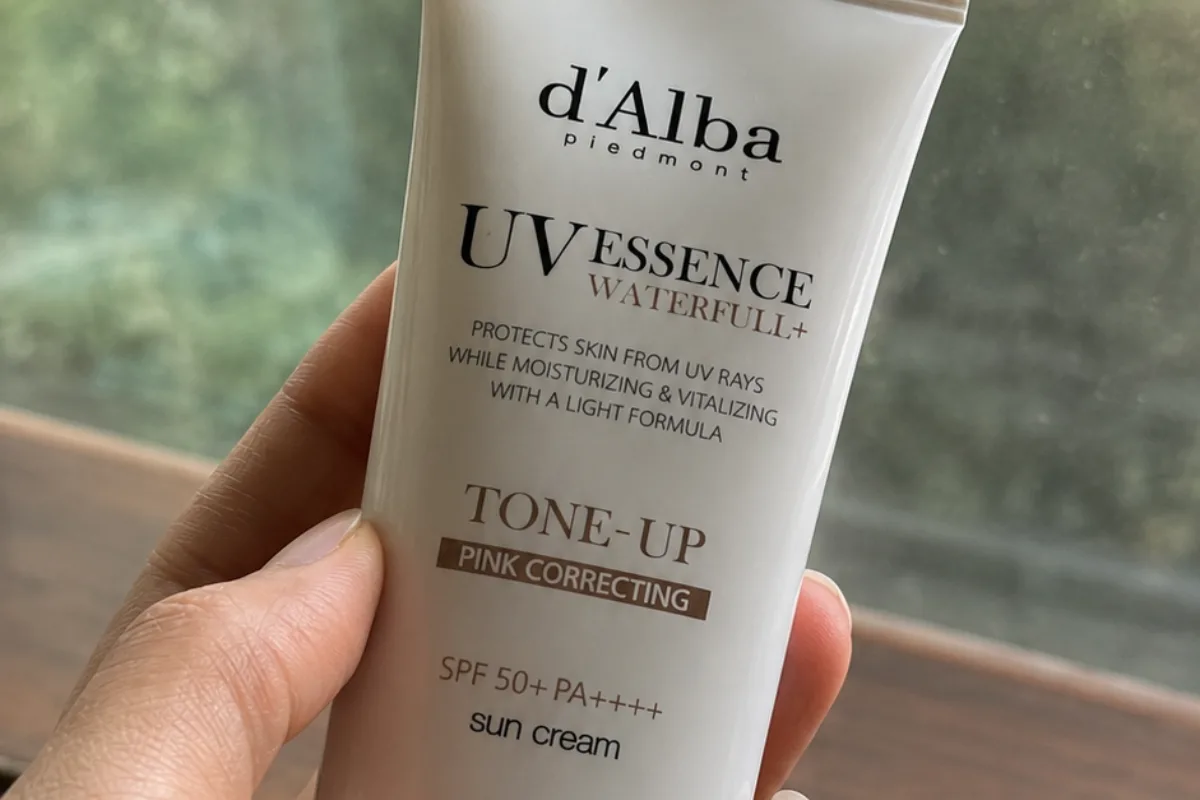
For instance, d'Alba's formulation contains titanium dioxide and zinc oxide, but I did not notice an obvious ashy appearance when using it. Its tint and the way the pigments are balanced with the mineral filters make a difference to the final finish.
This is an important detail because the appearance of a sunscreen cannot be judged simply by checking whether it uses mineral or chemical filters. The complete formulation plays a significant role in how comfortably it blends into the skin.
Is It Worth Spending More on This Type of Sunscreen?
Honestly, this was one of the first things I considered. Regular sunscreen is available at different price points and can provide the protection your skin needs. So, spending extra on a tone-up sunscreen might not seem necessary at first.
However, the additional features can make a difference depending on your daily routine. Along with sun protection, some formulas offer a smooth, primer-like finish that helps create a more even-looking complexion. The subtle tint can also reduce the need for an additional base product.
Earlier, my morning routine involved applying sunscreen, primer and tinted moisturiser separately. Using a tone-up sunscreen helped simplify some of those steps because I could get sun protection and a little cosmetic coverage from one product.
The ingredient list was another thing I considered. I use d'Alba's Waterfull Tone-Up Sunscreen, which contains Italian White Truffle Extract, Niacinamide, Centella Asiatica Extract and Hyaluronic Acid.
White Truffle Extract is an interesting addition to the formula, while ingredients such as Niacinamide and Hyaluronic Acid are commonly included in skincare products for their skin-conditioning and moisturising properties.
For me, the product feels like a combination of skincare, sun protection and a cosmetic finish rather than a conventional sunscreen alone.
That said, a higher price does not automatically mean better sun protection. Whether it is worth paying extra depends on your budget, preferences and how much you value the additional cosmetic benefits. This is also something worth considering when discussing whether a tone-up formula is a better purchase than regular sunscreen.
Who Can Benefit From Using a Tone-Up Sunscreen?
A tone-up sunscreen may be a practical choice for people who want everyday sun protection without giving up a naturally brighter-looking complexion. However, it is important to remember that the tint may not look the same on everyone.
Some formulations are designed to brighten the skin rather than match its natural colour. As a result, certain products may appear too light or leave an uneven finish, particularly on deeper skin tones.
Before applying a new formula across your face, try a small amount along your jawline. Give it some time to settle and check whether the shade blends naturally with your complexion.
Here are a few people who might find this type of sunscreen useful:
- People who regularly wear makeup: A lightweight formula with a smooth finish may work well underneath makeup, depending on how it interacts with your other products.
- People with busy morning routines: Combining sun protection with a subtle tint can reduce the number of products you need to apply.
- People with oily or combination skin: Certain lightweight formulations may feel more comfortable throughout the day. However, check the product's finish and suitability rather than relying on the tone-up label alone.
- People concerned about dullness: The added tint can give the complexion a brighter and more even-looking appearance without requiring a full layer of foundation.
Ultimately, the right product should suit your skin type, natural complexion and personal preferences. Not every tone-up sunscreen will deliver the same results.
How to Apply a Tone-Up Sunscreen Correctly
Even a well-formulated product may not give you the desired finish if it is applied incorrectly. A few simple steps can help you get a more even application.
- Start with clean skin: Wash your face and follow up with your regular moisturiser. If you have oily skin, you may prefer a lightweight moisturiser that doesn't make your routine feel heavy.
- Apply sunscreen as the final skincare step: Use an adequate amount according to the product's directions. Applying too little can compromise the level of sun protection you receive.
- Allow the formula to settle: Give the product a little time to blend into your skin before judging the final appearance. Some formulas may look slightly different immediately after application.
- Keep your routine simple: Once the sunscreen has settled, check whether you actually need additional base makeup. You may find that the tint provides enough of the finish you prefer.
- Use concealer where necessary: If you need additional coverage, apply concealer only to areas that require it instead of adding another full layer of complexion product.
One thing worth remembering is that the brightening effect does not replace proper sun protection. Apply enough sunscreen to achieve the labelled SPF and reapply as directed, especially after swimming, sweating or spending extended periods outdoors.
Frequently Asked Questions
Does a tone-up sunscreen work for oily or combination skin?
Yes, it can work for oily or combination skin, provided the formulation suits your skin's needs. If you dislike a greasy finish, look for products described as lightweight or non-greasy.
The texture and base ingredients matter more than the tint itself when determining how a sunscreen feels on your face. It is always a good idea to check the product details and test a small amount before using it regularly.
What Is the Difference Between a Tone-Up Sunscreen and a Tinted Sunscreen?
Although both products can contain pigments, their intended finishes are slightly different.
A tinted sunscreen generally uses pigments to add colour and may be formulated to blend more closely with your natural skin tone. A tone-up sunscreen usually focuses on making the complexion appear brighter and more even rather than matching your exact skin shade.
Both can offer sun protection, but the cosmetic results depend on the individual formulation. If you prefer a product that matches your complexion, a tinted option may be more suitable. If you like a subtle brightening effect, a tone-up formula might be worth trying.
What Should You Look for in the Best Tone-Up Sunscreen?
When comparing products to find the best tone-up sunscreen, start by checking the level of sun protection rather than focusing only on the cosmetic finish.
Here are a few things worth considering:
- Broad-spectrum protection: Look for protection against both UVA and UVB rays.
- SPF rating: SPF 50 or higher is a useful option to consider for everyday sun protection, depending on your needs.
- PA rating: If you are shopping in India, PA++++ is a useful indicator of high UVA protection.
- Skin compatibility: Consider whether the formula suits your skin type and feels comfortable throughout the day.
- Tint and finish: Check whether the shade blends naturally with your complexion without leaving an overly pale appearance.
- Additional ingredients: Ingredients such as Niacinamide, Vitamin E and Hyaluronic Acid can offer additional skincare benefits, but they should not be the deciding factor when choosing sun protection.
The best tone-up sunscreen is not necessarily the most expensive one or the product with the longest ingredient list. It is the one that provides suitable sun protection, complements your skin tone and feels comfortable enough for consistent daily use.
The Bottom Line
I initially thought a tone-up sunscreen was simply another skincare product with a little colour added to it. But after trying one, I understood why some people prefer this format over conventional sunscreen.
It combines UV protection with a subtle brightening effect, which can make a morning routine a little simpler. I also realised that the white cast associated with mineral filters depends on the complete formulation, including the pigments and how the product blends into the skin.
In my experience, d'Alba's Waterfull Tone-Up Sunscreen offers a combination of sun protection and a brighter-looking finish. Its formulation includes ingredients such as White Truffle Extract and Niacinamide, which add to its skincare appeal.
Of course, it hasn't replaced every product in my routine, and I don't think it needs to. It simply combines a few functions into one product that works for my preferences.
If you like the idea of getting sun protection along with a subtle cosmetic finish, this category is worth exploring. Just make sure the formula, shade and level of protection are suitable for your skin.