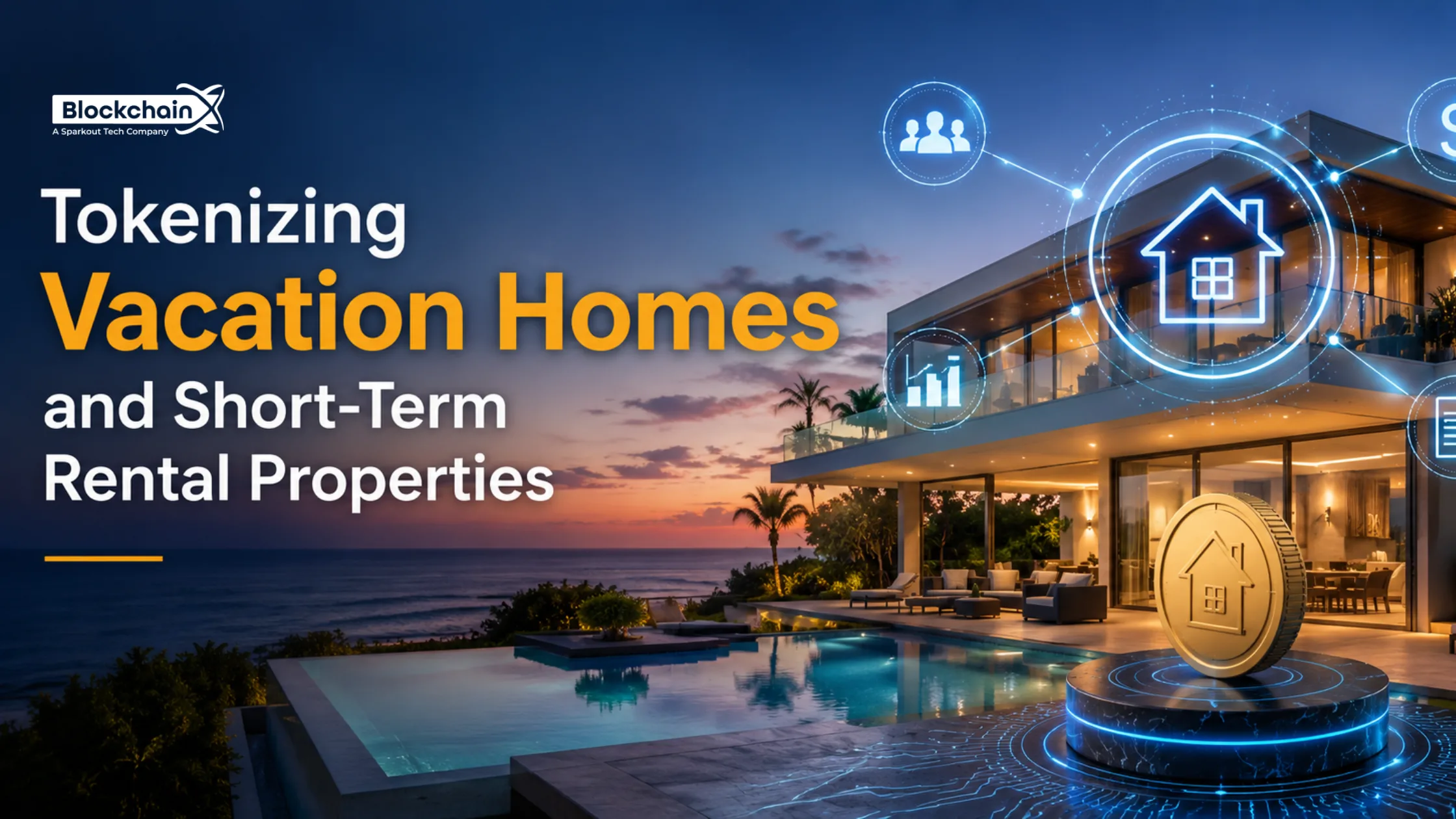
A house by the sea in Goa, or a ski place in Aspen, used to be held by one person. Sometimes it was shared by a few relatives who agreed on the loan payments. Now the same property might be split among many owners worldwide.
Each person can hold a small digital token that stands for their part of the property.People call this vacation home tokenization. It is one of the more workable ways to use blockchain for real estate right now.
Short-term rental homes fit this setup well. They earn money often, not once a year. There are also teams that handle day to day work already. On top of that, some buyers are drawn in by the idea of a place to stay, but they do not want to buy the full property. With tokenization, the split ownership can be handled in a simpler way. It is easier to record and move around than the old approach.
What Is Vacation Home Tokenization?
Vacation home tokenization means turning part of a rental property deal into digital tokens. Those tokens are logged on a blockchain. In this setup, the tokens stand for either ownership of the home itself or rights to the money the home brings in. The rights may be held through a legal vehicle that is set up for the purpose.
So, instead of one buyer taking 100% of a vacation home, the stake can be divided into smaller pieces. The split may come out to a few hundred tokens or even a few thousand. People then purchase as many tokens as they can afford. What they earn from rent, and what they may receive if the home is sold later, depends on the count of tokens they own.
Build a Tokenized Vacation Rental Platform With Real Estate Tokenization Development
Why Short-Term Rentals Are Well Suited to Tokenization
Tokenization does not help every property in the same way. Vacation homes and short stay rentals tend to fit best, for a few practical reasons.
- First, they often bring in money on a regular basis. Guests pay each night or each week, so there is usually a steady flow of cash. That money can then go out to token holders in a way that feels consistent.
- Second, these properties are commonly managed by someone already in the business. Many short stay units use a host, a manager, or a hospitality team. Token holders do not have to handle day to day tasks like laundry or guest replies.
- Third, this setup matches the way many investors think. Some buyers want access to a place they enjoy, but they do not want to buy an entire home. Others may not have the funds for a full purchase. Fraction style ownership can be a good match for that group.
- Fourth, the results are simpler to follow. Occupancy, season shifts, and nightly price changes are visible through common booking sites. Platforms like Airbnb and Vrbo already show performance patterns, which can support investor updates.
How Vacation Home Tokenization Works, Step by Step
Most vacation home tokenization efforts look alike, though the details can change by site and country.
- First, the property is picked and priced. Often it is one rental home or a small set of them, then it is valued on its own.
- Next comes the legal setup. The home is put into a company structure like an LLC or an SPV. That setup is what keeps the deed in place. With it, the tokens tie back to a real, enforceable right. They are not just a hollow claim.
- After that, tokens are issued. The digital tokens are made to stand for parts of the entity. Each token maps to a share of ownership and a right to income.
- Then investors are brought in. People usually must finish identity checks and other compliance steps before they can buy tokens. In many places, fractional real estate is treated like a regulated security.
- After issuance, the rental keeps running. A property manager handles the day to day work. Rental money is then sent to token holders, usually with automation via a smart contract, and management charges are taken out first.
- Finally, there may be a second market. On some platforms, buyers can later trade tokens with other investors. This can let them exit before the full property is sold.
Benefits for Property Owners and Developers
- Wider access to money, because people can join with smaller amounts than a typical down payment.
- Quicker funding for fresh vacation rental projects, without needing one big backer or a bank loan.
- You can offer partial ownership and still stay involved in managing the property.
Benefits for Investors
- Lower cost to start. Buying a small number of tokens can cost far less than buying an entire vacation home.
- More spread across options. Instead of putting most of your budget into one property, you can split it across vacation places in multiple areas.
- Easier income. Token holders receive a cut of rental income, and they do not have to handle guests or deal with cleaning and upkeep.
- Chance to get out earlier. If a platform allows trading on a secondary market, investors might leave their position before waiting years for a full property sale.
What to Consider Before Getting Involved
Token-backed vacation rentals are still a fresh concept. If you are thinking about joining in, slow down first. Take a moment to ask a few simple questions. This applies whether you are the person issuing the tokens or the person putting money into them.
- First, does the law connect the property to the token? Also, what country or region applies? Rules on ownership and investor safety can differ a lot from place to place.
- Next, who runs the place day to day? It also matters how the management charge is set. You want to know how those fees work before any money is passed out.
- Third, is there a place to resell the tokens later? If there is no real secondary market, your money may stay tied up until the property is sold.
- Finally, how is the risk of low occupancy handled? Popular areas may earn much more in busy months than in quiet ones. That can cause income to rise and fall.
Where This Fits in the Broader Tokenization Market
Vacation home and short-term rental tokenization is one path in the broader real estate tokenization space. It sits near other models like tokenized commercial sites, shared housing buildings, and hotel collections.
What sets the vacation rental area apart is the mix of lifestyle appeal and guest based income. Because of that, you often see a different kind of buyer compared with a standard commercial office arrangement.
Rules for fractional ownership keep getting clearer in more places. At the same time, booking and property management tools are starting to connect with token systems. With these changes, the focus may move from a few trial homes to larger sets of tokenized rentals.
Thinking About Tokenizing a Rental Property Portfolio?
If you are a developer trying to get funding for a new vacation rental, or a hospitality company thinking about shared ownership for an existing set of properties, early legal choices count. How the deal is set up and how the token is built can shape everything that comes next.
Our team partners with real estate and hospitality firms to put together tokenization structures that fit the rules and are ready for investors. You can check our RWA Tokenization Guide to understand how the pieces connect from start to finish.