Tires are the only part of your car that touches the road. They carry the full weight of your vehicle. They face wear and tear daily. So when you get a flat or a puncture, you want answers. Real answers. Not guesses or rushed fixes. This guide is for drivers who care. It’s also for DIY fans and anyone who wants to understand tire repair. You will get a deep look into plugs. Into patches. And most importantly, into how to make the best choice for your tire and your safety. Let’s talk about real tire repair. Let’s do it the right way.
Why Tire Repair Is More Than Just a Quick Fix
You wake up. Walk out to your car. And your tire is flat. Maybe it’s a nail. Maybe a piece of glass. You have two options in your mind. Plug it. Or patch it. What’s faster. What’s safer. And what will actually last. That’s the question every auto mechanic hears again and again.
But here’s the truth. Tire repair is not just about plugging a hole. It’s about knowing where the damage is. How deep it is. What type of tire it is. And whether a repair is even possible. Let’s explore these factors.
Point 1: Know the Type and Location of the Damage
Not all punctures are the same. And not all of them can be repaired. Damage in the center of the tread is often repairable. Sidewall damage is not. The rubber on the side is thin. It flexes a lot. A plug or patch here won’t last. It can burst under pressure. That means danger.
Auto mechanics always begin by checking the exact location. They will dismount the tire. Inspect it inside and out. They will make sure the damage isn’t hiding deeper than it seems. And if it’s in a no-go zone, like the shoulder or sidewall, they will recommend a replacement. You should never try to fix a sidewall puncture. No plug. No patch. That’s a rule in the world of tire repair.
Point 2: What Is a Tire Plug and When Is It Used
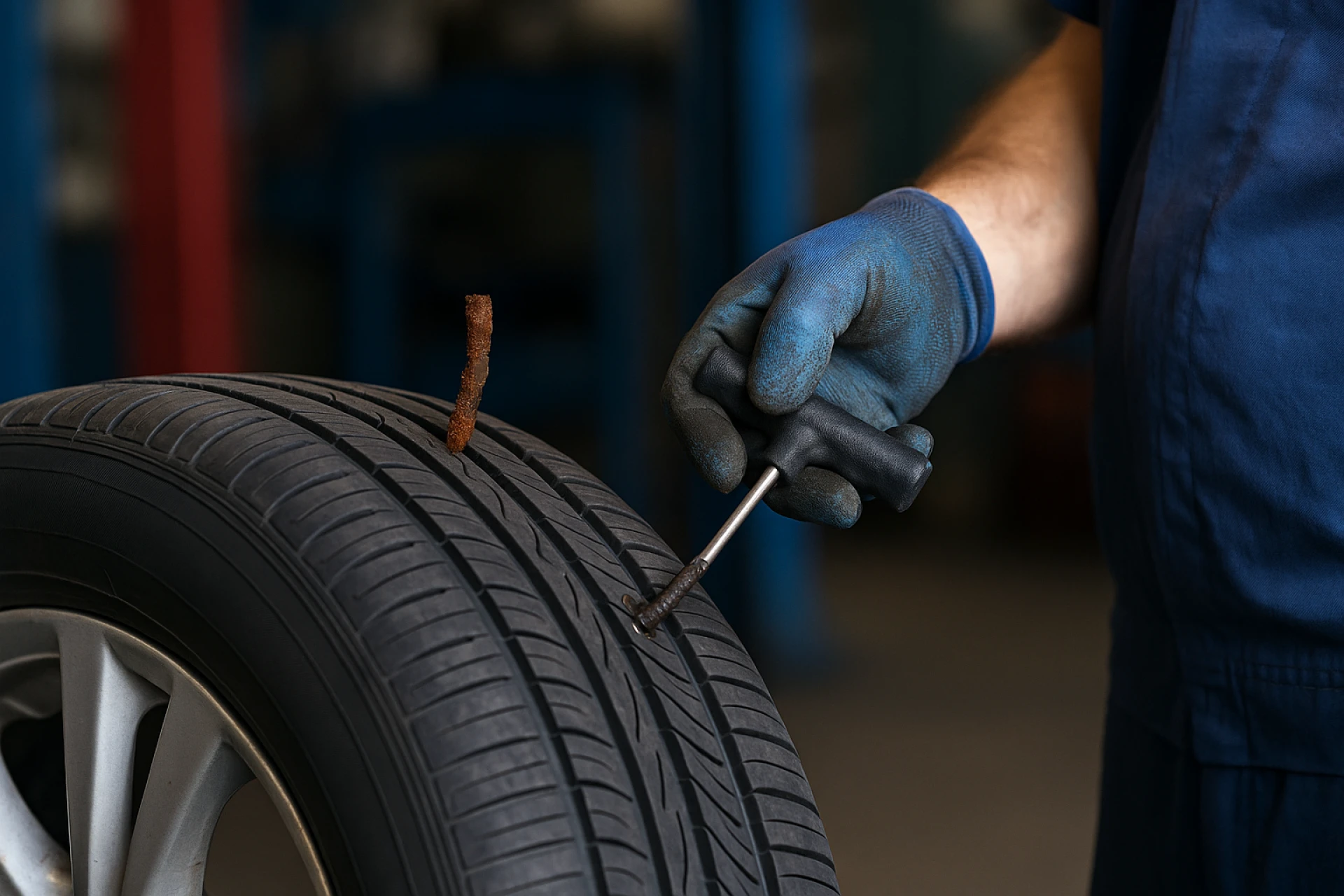
A plug is a sticky piece of rubber. It looks like a rope. It’s inserted into the hole from the outside. It seals the puncture. The process is fast. It doesn’t need the tire to be removed. Many DIY kits include a plug tool. That’s why people often go for it. It’s quick. It’s simple. And it gets the tire back on the road.
But here’s the part you must know. Plugs only work for small punctures. No bigger than 1/4 inch. They must be in the center of the tread. If you’re driving at high speeds or carrying heavy loads, plugs are not the best option. They can fail. Heat and pressure wear them down. That’s why most certified auto mechanics combine plugs with patches. Or recommend patches alone for better security.
Point 3: What Is a Tire Patch and Why It’s More Reliable
A patch is applied inside the tire. The tire must be removed. The surface is cleaned. The patch is then sealed with a special adhesive. It becomes part of the tire structure. It bonds tight. It holds strong. A patch is more reliable than a plug. It seals the air from leaking. It also blocks moisture from entering. This stops corrosion inside the steel belts of the tire.
Patches take more time. They cost more. But they are safer in the long run. That’s why shops that value safety always lean toward patching. Especially if the vehicle is used daily. Or driven at high speeds. If you care about long-term tire repair, choose a patch.
Point 4: When a Plug and Patch Combo Is the Best Fix
Modern tire repair techniques have evolved. Many auto mechanics use a plug-patch combo. This method uses a patch with a plug stem. It’s inserted from the inside. The stem fills the puncture. The patch seals the inside wall. It’s the best of both worlds.
This method is approved by tire manufacturers. It provides strength. It provides air tightness. And it restores the tire’s safety. If you want professional tire repair, ask for this combo. It’s widely considered the gold standard.
Point 5: When Not to Repair a Tire at All
Some tires should not be repaired. Yes, that’s true. And not all auto mechanics will tell you that. But you need to know.
Here are red flags:
- Damage on the sidewall
- Punctures larger than 1/4 inch
- Multiple punctures close together
- Tread worn below legal limit
- Internal damage to the structure
If your tire has any of the above, it’s not worth fixing. It’s dangerous. It might work for a day. Or two. But it will give out. And when it does, it won’t warn you. Your safety is worth more than a cheap repair. Replace it. Move on.
Point 6: The DIY Dilemma – Should You Fix It Yourself
DIY tire repair kits are popular. They are sold everywhere. They promise fast results. Some work. Many don’t.
If you know what you’re doing, they are fine for emergency fixes. But they are not replacements for a real repair. They don’t let you inspect the inside. They don’t show hidden damage. And they often leave a messy seal that gets worse over time. Auto mechanics use special tools. They use sealants that last. They balance the tire after repair. DIY methods skip all of this. If you’re stuck on the road, a DIY plug can help. But make sure to get the tire professionally inspected and repaired soon after.
Point 7: Tire Pressure After Repair – Why It Matters
You fixed the puncture. Great. But now your tire pressure is off. This is common. A repaired tire may leak slowly. Especially if the repair wasn’t clean. That’s why checking pressure after repair is key. Use a gauge. Fill it to the recommended PSI. Low pressure causes heat build-up. It wears out the tire faster. It reduces fuel economy. And it can lead to another flat.
Auto mechanics always check pressure before and after repair. You should do the same. Tire repair is not just about sealing the hole. It’s about keeping the tire ready for the road.
Point 8: Preventing Future Tire Damage
Tire repair is a fix. But prevention is better. Here are smart steps to avoid flats:
- Rotate your tires regularly
- Check pressure monthly
- Avoid potholes and debris
- Don’t overload your vehicle
- Replace worn tires before they fail
These steps sound simple. But they save money. And they protect your safety.
Auto mechanics who know their craft always recommend prevention first. A well-maintained tire is a tire that needs fewer repairs.
Point 9: Understanding Warranty and Repair Limits
Many tire brands offer warranties. But repairs can void them. If a plug is used incorrectly. Or if a patch is applied to the wrong area. That can affect your warranty. Before you repair, check the tire brand’s policy. Some require specific repair methods. Others don’t allow any repairs. Especially on high-speed-rated tires. If you take your tire to a certified auto mechanic, they usually follow warranty-safe methods. That gives peace of mind. Always ask. Always read the fine print.
Point 10: The Role of a Professional Auto Mechanic
There’s a reason tire shops exist. And there’s a reason experienced auto mechanics are trusted. They have training. They know what to look for. They’ve seen tires fail. And they know how to prevent that. When you bring a damaged tire in, they don’t just patch and go. They inspect. They measure tread. They test for leaks. And they give honest advice. If they say the tire is safe to repair, trust that. If they say it needs to be replaced, believe it. A real auto mechanic values your safety more than a quick fix.
Conclusion: Make the Smart Choice for Your Tires
Tires are not just rubber. They are your link to the road. Every turn. Every stop. Every mile depends on them. A bad repair can cost more than money. It can cost safety. That’s why tire repair should always be approached with care. Plugs are quick. Patches are stronger. The combo is the best fix. But only when used correctly. Know where the damage is. Know how deep it goes. And never take shortcuts.