
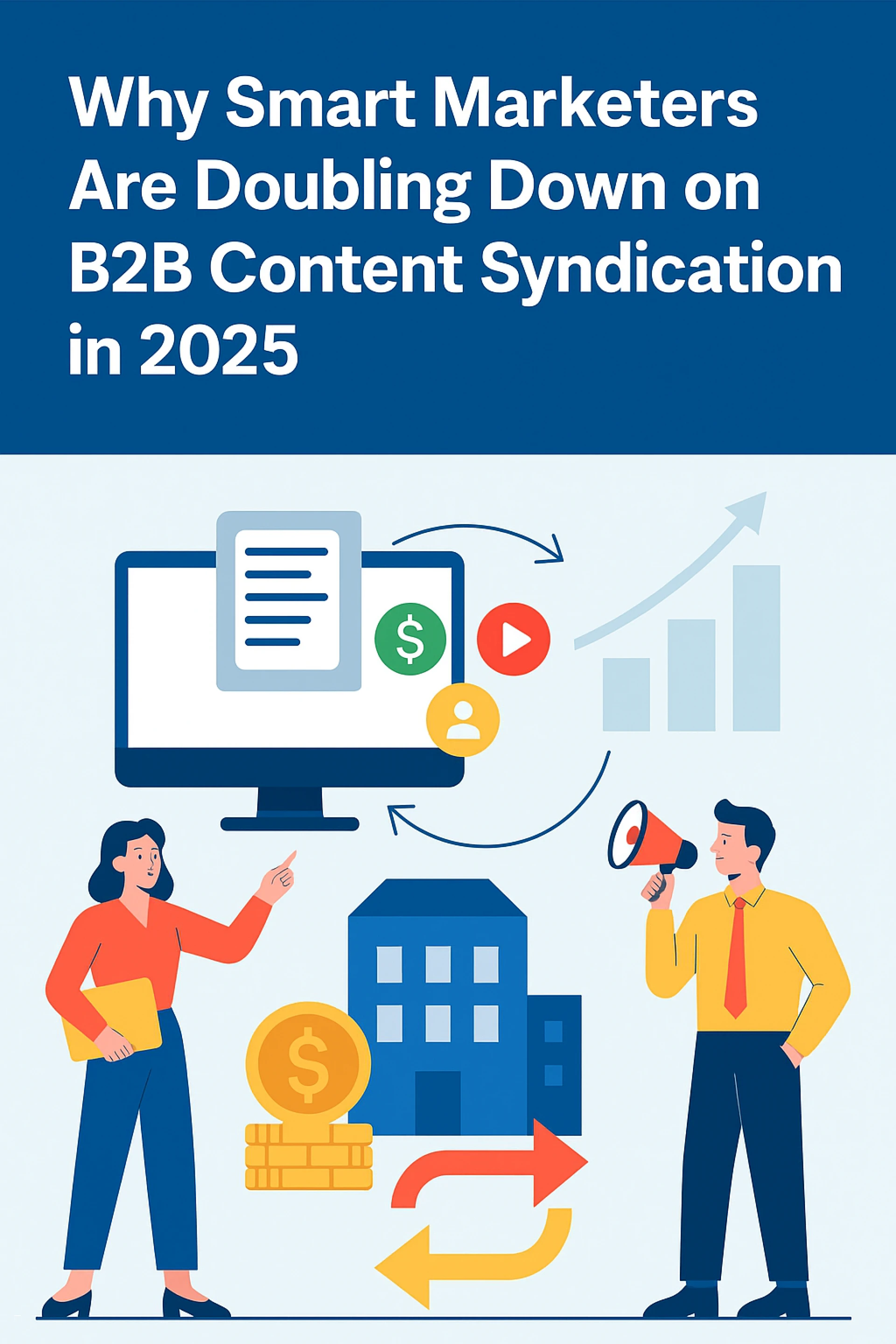
In a time when digital fatigue is real and cold outreach is almost dead, there’s a quiet performer that consistently fuels B2B pipelines: content syndication.
If you think it’s just republishing blog posts — think again.
Modern B2B content syndication services combine intent data, ABM strategy, and multi-platform distribution to ensure your most valuable content reaches decision-makers — not just random clicks.
Let’s unpack why content syndication platforms are dominating the B2B marketing conversation in 2025.
What Exactly Is Content Syndication?
Put simply, content syndication is the art of distributing your gated assets — like whitepapers, reports, and webinars — across trusted platforms to attract and convert targeted leads.
But the real magic happens when syndication becomes predictive, account-based, and outcome-driven.
Financial Content Syndication Is Booming — Here’s Why
If you’re in fintech, banking, or B2B finance — you know how hard it is to reach the right buyer.
That’s why financial content syndication has surged. It ensures:
- Distribution to finance-specific portals with high-trust audiences
- Compliance with FINRA, GDPR, and CCPA
- Leads from real CFOs, controllers, and VPs — not bots
And when combined with first-party intent data, it becomes a precision channel for scalable, compliant lead generation.
The Rise of ABM Content Syndication
ABM content syndication is where personalization meets pipeline.
Let’s say you’ve got 250 target accounts — instead of hoping they see your content on LinkedIn, you put your content in front of them via syndication partners.
Benefits include:
- Role-based content delivery (e.g., tech use cases for CTOs, ROI decks for CFOs)
- Intent-based remarketing after the first touch
- CRM-ready leads with enriched firmographic and technographic data
It’s no longer just about “more leads.” It’s about right leads from the right companies.
Vendors vs. Platforms: What’s the Difference?
When diving into content syndication, many marketers confuse vendors and platforms — but understanding the difference is key to picking the right partner for your goals.
Vendors are typically done-for-you services. They handle everything — from distribution and targeting to lead verification and delivery. These are best suited for ABM campaigns and high-quality lead (HQL) generation, especially when you're targeting niche industries or high-value accounts. Examples of top vendors include Only B2B and INFUSEmedia, both known for human-verified leads and targeted outreach.
On the other hand, platforms offer self-serve dashboards where you manage and launch your own campaigns. They’re ideal for scaling quickly, capturing large volumes of marketing-qualified leads (MQLs) at a lower cost per lead. If you’re comfortable managing your own targeting and creatives, platforms like NetLine and Outbrain can give you flexibility and scale.
Choosing between the two depends on your in-house capabilities, targeting depth, and budget. Need white-glove service and precision? Go with a vendor. Want volume and control? A platform may suit you better.
When picking your content syndication vendor, look for:
- Human-verified leads
- Intent-layered segmentation
- Industry-specific experience (e.g., finance, SaaS, healthcare)
- Transparent reporting & CRM sync
Which Content Syndication Platforms Are Worth Your Budget?
If you’re exploring content syndication platforms in 2025, here are the top contenders:
- Only B2B – Best for targeted ABM lead gen campaigns with real human verification.
- NetLine Portal – DIY content syndication with a flexible pay-per-lead model.
- INFUSEmedia – Full-funnel syndication with nurture automation built-in.
- TechnologyAdvice – Strong reach for IT and mid-market tech audiences.
- BrightTALK – Great for video/webinar syndication to decision-makers.
Each has different strengths — so your selection should match your audience type, deal size, and sales cycle.
Can Content Syndication Help You Rank Better on Google?
Yes — but indirectly.
Syndicated content itself doesn’t boost SEO unless the platforms allow backlinks or canonical tags. But here’s what does help:
- More brand mentions = more branded search
- Higher trust = better engagement metrics
- Opportunity for earned links (e.g., if influencers pick up your content)
Plus, if you apply Google EEAT principles (Experience, Expertise, Authority, Trust) to your syndicated content, it builds brand authority that Google notices.
Final Thoughts: Don't Just Syndicate. Strategize.
Content syndication in 2025 isn’t just about repurposing your content — it’s about activating it.
- Use it to reach ABM accounts.
- Use it to warm up leads before your SDRs call.
- Use it to educate, not just generate.
And above all — choose the right content syndication vendors who understand your audience better than you do.
Want help selecting a content syndication strategy that works?
Drop a comment or connect with us — we’ll help you navigate the right path, vendor, and platform for your goals.