
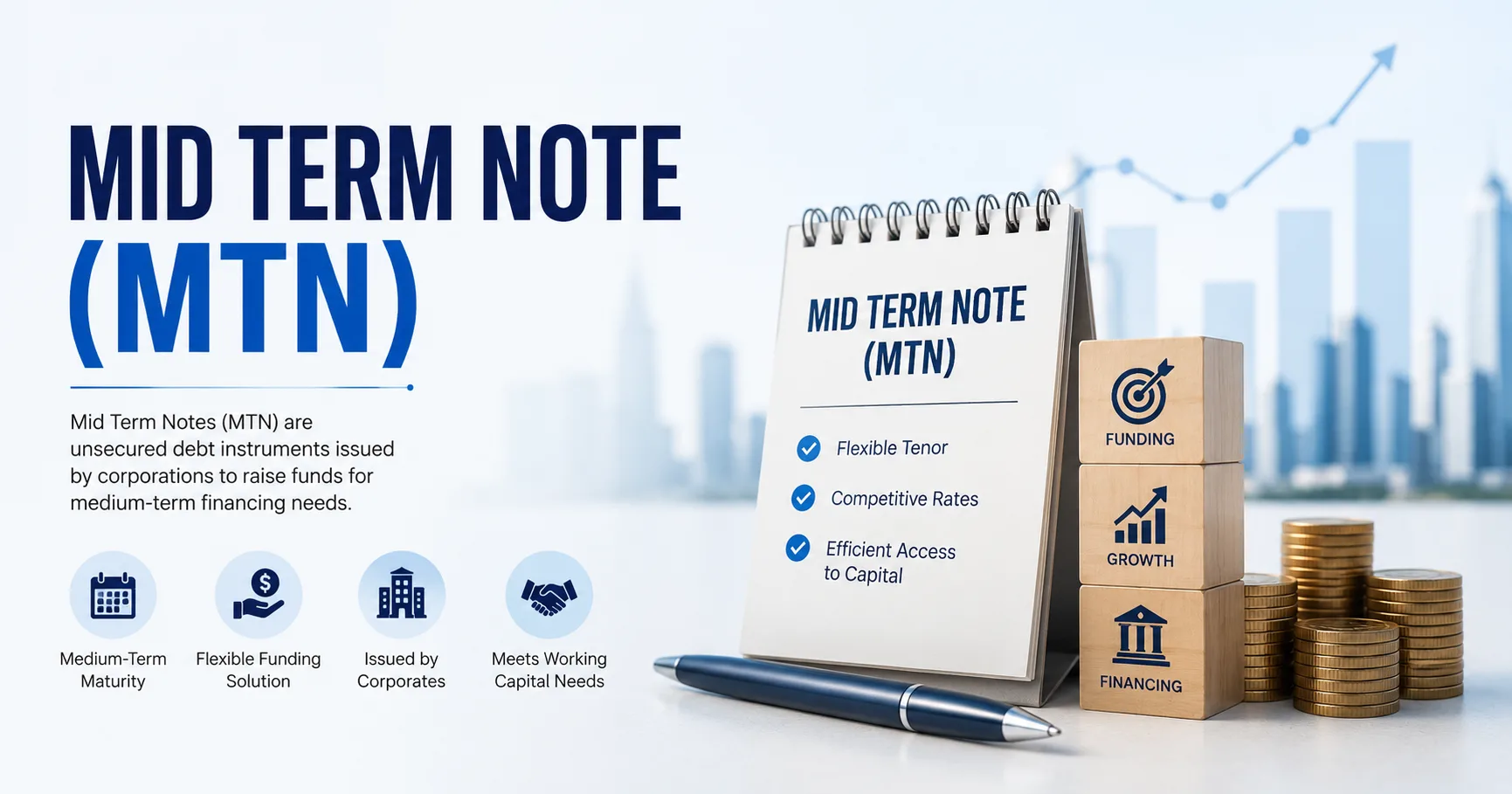
Investors today are constantly looking for financial instruments that balance stability, flexibility, and predictable returns. One such option gaining attention in structured finance is the mid term note (mtn). These instruments are designed to offer medium-duration investment opportunities, typically bridging the gap between short-term money market products and long-term bonds. For investors seeking diversification and controlled risk exposure, understanding how a mid term note (mtn) works is essential. This guide breaks down the structure, benefits, and real-world relevance of MTNs, including how institutions like The Hanson Group of Companies help facilitate informed investment decisions.
What Is a Mid Term Note?
A mid term note (mtn) is a debt instrument issued by corporations or financial institutions with a maturity period generally ranging from one to ten years. Unlike traditional bonds that may follow rigid issuance schedules, MTNs are often issued continuously through a program structure, allowing issuers to tailor terms based on investor demand.
The flexibility of a mid term note (mtn) makes it attractive for both issuers and investors. Issuers can customize interest rates, maturity dates, and currency options, while investors gain access to structured opportunities that align with their financial goals. This adaptability has made MTNs a preferred tool in modern capital markets.
How Mid Term Notes Work in Practice
The structure of a mid term note (mtn) is built around a program agreement. Under this framework, an issuer registers an MTN program and can issue notes in multiple tranches over time rather than issuing a single large bond.
Each tranche of a mid term note (mtn) may differ in terms of maturity, coupon structure, and yield, depending on investor demand and market conditions. For example, one issuance might offer fixed interest payments, while another could be floating-rate based on benchmark indices.
From an investor’s perspective, MTNs provide access to customized fixed-income exposure without the need to commit to long-term lock-ins. This structure also allows better liquidity planning for institutional investors who prefer staggered maturities.
Key Benefits of MTN Investments
One of the most important advantages of a mid term note (mtn) is flexibility. Investors can select notes that align with their risk tolerance, investment horizon, and income expectations. This customization is not commonly found in standard bond markets.
Another benefit is diversification. A mid term note (mtn) program often includes multiple issuances across sectors, currencies, and credit profiles, allowing investors to spread risk efficiently. Additionally, MTNs often provide competitive yields compared to traditional fixed-income instruments, especially in volatile interest rate environments.
Liquidity is another factor. While not as liquid as government securities, MTNs can be structured in ways that allow secondary market trading, depending on issuer arrangements. This makes them a practical choice for portfolio balancing.
The Hanson Group of Companies and MTN Solutions
The Hanson Group of Companies plays a key role in helping investors and institutions navigate structured investment opportunities, including the mid term note (mtn) market. Through its financial expertise, the company assists in identifying suitable MTN programs that align with investor objectives and market conditions.
By focusing on transparency and due diligence, The Hanson Group of Companies ensures that each mid term note (mtn) opportunity is evaluated carefully before being presented to clients. This includes reviewing issuer credibility, risk exposure, and return potential. Such a structured approach helps investors make informed decisions rather than speculative ones.
In addition, the company provides guidance on portfolio integration, ensuring that MTNs complement broader investment strategies rather than operate in isolation.
Important Considerations Before Investing
While a mid term note (mtn) offers several advantages, investors should also understand the associated risks. Credit risk is one of the primary concerns, as returns depend on the issuer’s ability to meet obligations. Market risk and interest rate fluctuations can also impact MTN valuations over time.
Due diligence is critical before committing capital. Investors should evaluate issuer strength, program structure, and economic conditions influencing the note. Working with experienced financial partners like The Hanson Group of Companies can help reduce uncertainty and improve decision-making quality.
Conclusion
A mid term note (mtn) represents a flexible and strategic fixed-income instrument designed for modern investors who value customization and balance. With the ability to tailor maturity, yield, and structure, MTNs serve as an effective bridge between short-term and long-term investments.
When approached with proper analysis and guidance, especially through trusted institutions like The Hanson Group of Companies, MTNs can become a valuable part of a diversified investment portfolio. Understanding their structure, benefits, and risks ensures that investors can make informed decisions aligned with long-term financial goals.