
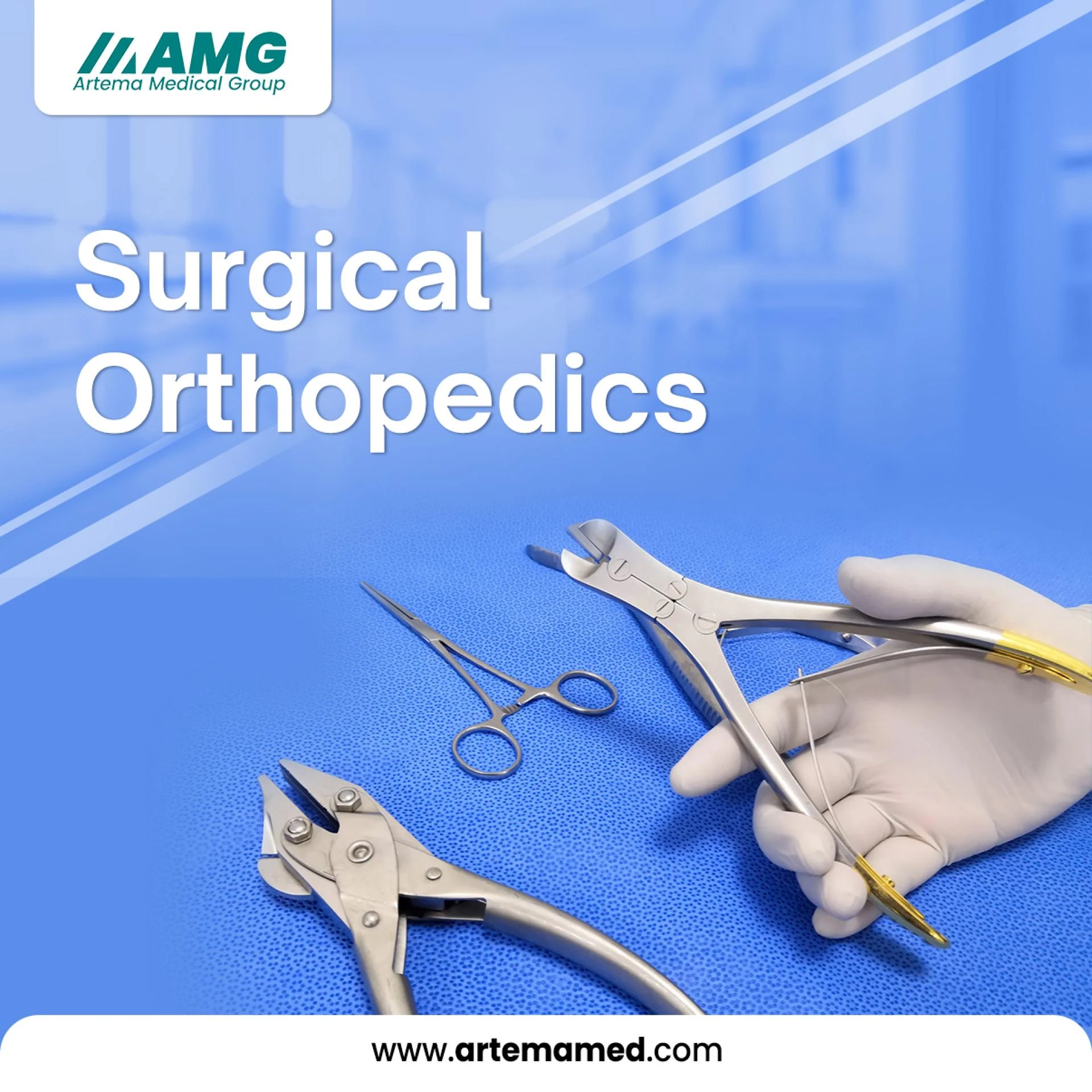
A needle holder, also known as a needle driver and Needle Forceps, is used to hold a suturing needle during surgical procedures. The main parts of a needle holder consist of a shank, a ring, a textured tip, and a ratchet mechanism that locks the needle in place. Choosing and handling a needle holder is always a topic of concern for surgeons. Before making a decision, it is crucial to assess several important factors.
The purpose of the surgical needle holder is to hold the surgical needle securely during its passage through tissue without any change in the structure of the needle. However, the straight configuration of a needle holder often does not fit with curved surgical needles, as a result of which needle holders irreversibly bend and flatten the curved surgical needle. Moreover, with time, the surface of the needle holder often wears out, and improper sterilization and carelessness in handling can lead to deformity in the structure of the holder.
These deformations lead to unpredictable needle trajectories in tissue, which interfere with the physician's ability to achieve meticulous coaptation of tissues without injury to contiguous tissues. This problem can be solved by choosing the right needle holder and inspecting it before use.
What factors determine the performance of the Needle Holder?
Because the manufacturers of needle holders and surgical needles provide no information regarding the clamping and yield moments, the physician has no scientific basis for selecting surgical needle holders and needles for wound closure. But ideally, the following points should be considered before choosing a needle holder:
· The performance of a needle holder is always judged by its clamping moment. This property of the needle holder determines the magnitude of the stress on the clamped surgical needle.
· The safety of the needle holder is determined by measuring the torque required to rotate in the jaws of each needle holder.
· The integrity of the needle holder is determined by its yield moment, which refers to the torque or force required to cause permanent deformation or damage to the instrument.
How to Select a Needle Holder?
· The physician should select a needle holder in which the clamping moment is less than the needle yield moment.
· A needle holder should be able to hold a hair on the back of your hand. If not, it is not functioning properly.
· A needle holder must be matched to the needle size for which it is intended.
· For long-term procedures, needle holders with Tungsten Carbide should be used. This material grips the suture needle more precisely and wears out much slower than stainless steel.
Inspection of a Needle Holder:
Inspecting needle holders after each procedure and before sterilizing is very important to avoid any instrumental or physical harm in the future. It is because, with use, the surface of the needle holder will wear out and stop making complete contact, which affects its grip. Let's discuss them one by one;
1. Worn jaws. When the needle holder is exposed to bright light in the closed position, no light should pass through the jaw surfaces; otherwise, the jaw is worn out and must be replaced. The jaw is bent if the light shines through a significant portion.
2. Cracks in the jaws or joints. Any small crack in the jaws, joints, or tips of the needle holder can affect the integrity of the instrument, and if it appears, it should be sent to the vendor or manufacturer for repair. If cracks appear in the inserts, they must be replaced. Visible cracks cannot be repaired.
3. Rust and stains. To determine whether the instrument's discoloration is due to rust or a stain, rub a pencil eraser over part of the discoloration. If the discoloration cannot be removed, then it is rust, and if it can be removed, then it is a stain. Place the instrument in a rust removal solution, and for stain removal, place the solution in a stain removal solution.
4. Loose joint: Check the instrument's tightness by gently pushing the handle up and down; if it feels loose, it should be repaired.
5. Poor ratchet fit. Check that the jaw tip closes appropriately in the first, second, and third ratchet positions. If the needle can be easily turned in any of the positions, repair is needed.
Conclusion:
In conclusion, the proper inspection and selection of surgical needle holders are crucial for ensuring safe and effective procedures. By carefully evaluating factors such as clamping force, material integrity, and wear, surgeons can select the correct needle holder to avoid potential complications. Regular instrument inspection helps maintain its functionality, enhancing surgical precision and permitting meticulous wound closure.
Please visit our website, Artema Medical for more information.