Food waste is a growing global concern. Every day, tons of food are discarded across industries from commercial kitchens to manufacturing facilities. This waste typically ends up in landfills, producing methane and contributing to environmental degradation.
However, this challenge presents a major opportunity. By implementing a food waste recycling system supported by an industrial food waste grinder, businesses can transform their waste streams into valuable resources. These systems allow for more efficient waste handling, compliance with environmental regulations, and even potential cost savings.
What is a Food Waste Recycling System?
A food waste recycling system is a structured process that collects, treats, and repurposes food waste. Instead of sending organic waste to landfills, this system ensures it is recycled into useful products like compost, biogas, or animal feed.
Core Components of a Food Waste Recycling System
The system typically includes:
- Collection units, where food waste is separated from general trash at the source.
- Pre-treatment equipment, such as grinders, to reduce the size of the waste.
- Processing technologies, including composting, anaerobic digestion, or dehydration.
- Transport or storage solutions for moving the waste to a recycling facility or processing it on-site.
Sources of Food Waste
Food waste comes from several sectors. Residential homes produce significant waste, but commercial and industrial sectors are the biggest contributors. These include hotels, restaurants, hospitals, schools, and food manufacturing plants.
Role of Industrial Food Waste Grinders in Recycling
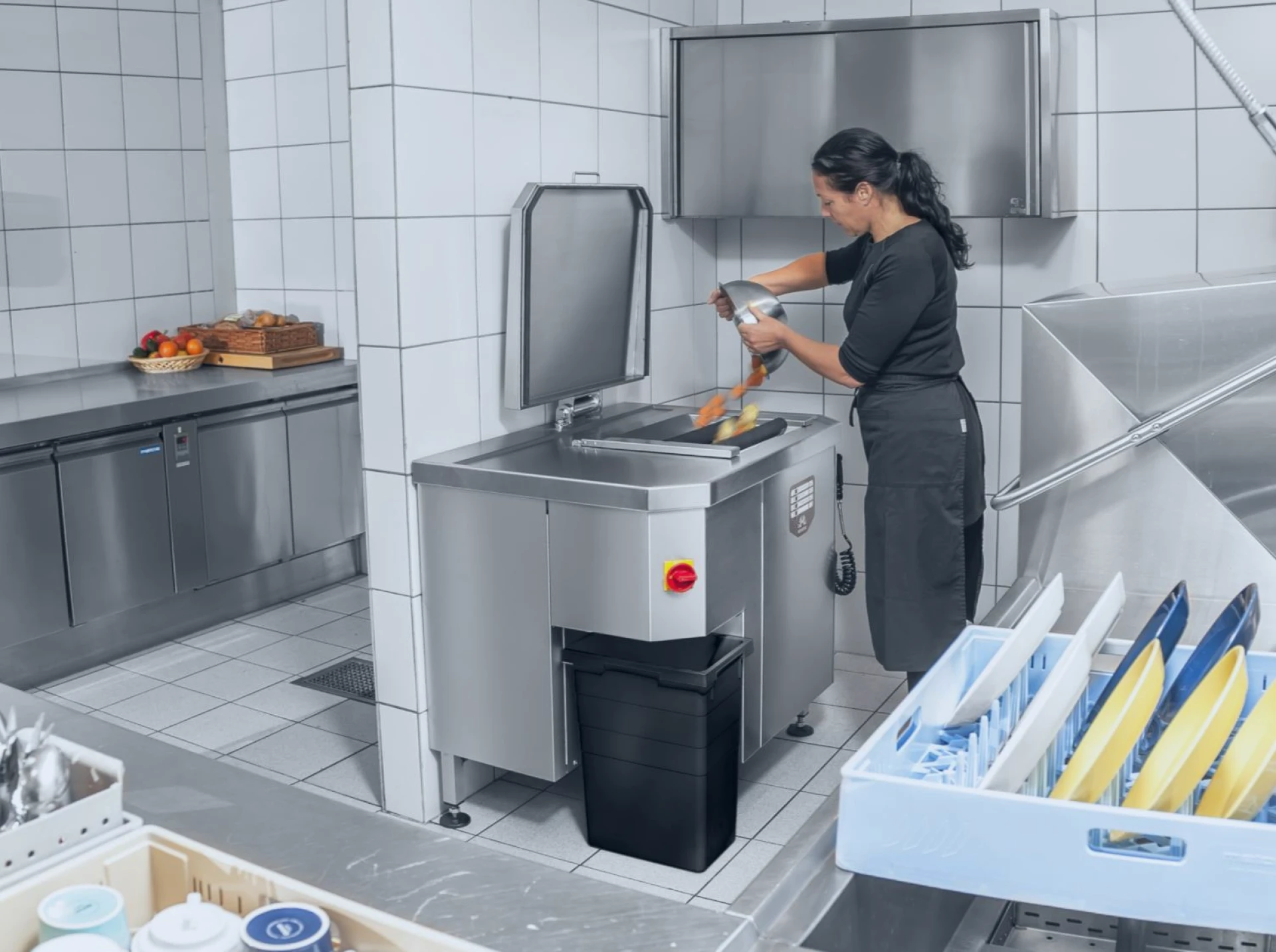
The industrial food waste grinder is the engine of the food waste recycling process. These machines are designed to break down all types of food waste — even tough materials like bones or fibrous vegetables — into smaller particles.
How They Work
Using high-powered motors and durable blades, industrial grinders shred waste into fine, consistent particles. This makes it easier to store, transport, or process the waste through composting or digestion systems. Grinders can be installed at the source of waste generation, such as in a kitchen or production line, or used in centralised waste processing areas.
Key Features of Industrial Grinders
These machines typically include:
- Powerful motors capable of running continuously.
- Stainless steel blades designed to handle a wide range of food materials.
- Durable construction for long-lasting performance.
- Noise-reducing and odor-control features for better work environments.
- Automation options, including sensors and overload protection.
Environmental Impact of Food Waste Recycling
Implementing a recycling system supported by a grinder has numerous environmental benefits.
First, it reduces landfill waste. Food waste in landfills produces methane, a greenhouse gas far more potent than carbon dioxide. Diverting this waste to recycling significantly cuts emissions.
Second, it supports soil health. When processed into compost, food waste becomes a nutrient-rich additive that improves soil structure and fertility, reducing the need for chemical fertilizers.
Third, it contributes to renewable energy. When food waste is digested anaerobically, it produces biogas that can be used to generate electricity or heat.
Economic Advantages for Businesses
Investing in a food waste recycling system and grinder brings real financial benefits.
Businesses can reduce their waste disposal costs, as smaller waste volumes mean fewer pickups and lower tipping fees. There are also opportunities for income generation — for example, selling compost or generating energy through anaerobic digestion.
Operational efficiency also improves. Grinders make kitchens and food processing areas cleaner and safer. Plus, using advanced waste systems ensures businesses stay compliant with local regulations, avoiding fines and improving their sustainability credentials.
Types of Food Waste That Can Be Recycled
Food waste recycling systems are highly versatile and can handle:
- Fruit and vegetable scraps.
- Cooked food leftovers.
- Meat and bone waste (with the right grinder model).
- Bakery waste like bread and pastries.
- Packaged or spoiled food (when using de-packaging technology).
- Dairy products.
Each type of waste may require specific grinder settings or pre-treatment, but the right system can handle them all.
Selecting the Right Industrial Food Waste Grinder
Choosing the best grinder depends on several factors.
Start by assessing the volume of food waste your facility generates. Higher volumes will require larger grinders with stronger motors and larger hoppers.
Next, consider the types of food waste. If your waste includes bones or fibrous vegetables, you’ll need a heavy-duty model.
Space availability is another factor. Some businesses have limited room for equipment, so a compact model may be required.
Finally, think about integration. Will the grinder connect to a composting machine, conveyor system, or anaerobic digester? Choosing a model that fits seamlessly into your existing setup is crucial.
On-site vs. Off-site Food Waste Recycling
There are two primary models for recycling food waste: on-site and off-site.
On-site recycling involves processing the waste at the point of generation. This method reduces transportation costs and emissions and offers full control over the recycling process. However, it may require more space and a higher initial investment.
Off-site recycling involves collecting food waste and transporting it to a separate facility. It’s suitable for businesses with limited space but comes with ongoing transportation costs and possible scheduling issues.
Both methods have benefits, and the choice depends on your facility’s goals, size, and budget.
Innovations in Food Waste Grinding and Recycling
Technology has transformed the waste management industry. Today’s food waste grinders come equipped with smart features like:
- Load-sensing automation that adjusts motor speed based on waste volume.
- Remote monitoring systems that track grinder performance and maintenance needs.
- De-packaging features that separate food from plastic or foil containers.
- Integration with smart bins and data analytics platforms to track waste generation.
These innovations not only improve efficiency but also provide valuable data that businesses can use to optimize operations and prove compliance.
Challenges in Implementing Food Waste Recycling Systems
While the benefits are clear, some businesses still face hurdles in setting up food waste recycling systems.
The initial cost of equipment and setup can be a barrier. However, many governments offer grants or rebates to offset these costs.
Space limitations can also be a challenge, particularly for urban facilities. Fortunately, compact and mobile units are becoming more available.
Contamination is another concern. When food waste is mixed with plastic or non-organic materials, it can damage equipment or ruin compost batches. Proper staff training and clear labeling are essential to prevent this.
Best Practices for Efficient Food Waste Management
To maximize results from your recycling system:
- Train staff to properly separate and handle food waste.
- Label waste bins clearly to prevent contamination.
- Schedule regular maintenance for grinders and other equipment.
- Monitor waste volumes and track data to find areas for improvement.
- Partner with reliable service providers if using off-site recycling.
These practices ensure smoother operations and better environmental outcomes.
Compliance and Legal Requirements
Many jurisdictions now require businesses to separate and recycle organic waste. These rules vary by region, but they often apply to restaurants, grocery stores, schools, and food manufacturers.
Using an industrial grinder and a recycling system helps businesses stay compliant. It simplifies record-keeping, improves traceability, and shows a commitment to sustainability — all of which can improve public image and customer loyalty.
FAQs About Food Waste Recycling and Industrial Grinders
1. Can I use a household grinder in a commercial setting?
No. Household units aren’t built for heavy, continuous use. Commercial or industrial-grade grinders are essential for high-volume operations.
2. How often should an industrial grinder be maintained?
Most units require basic cleaning daily and full maintenance every 3 to 6 months, depending on usage.
3. Are food waste grinders loud or disruptive?
Modern grinders are built with sound insulation and operate quietly. Most models are suitable for indoor use without major disruption.
4. Can packaged food be processed?
Yes, but only if your grinder includes a de-packaging unit that separates food from containers.
5. Are there financial incentives for installing a recycling system?
In many areas, governments offer rebates, grants, or tax breaks for food waste recycling equipment.
6. What happens to the waste after grinding?
The ground waste is sent for composting, anaerobic digestion, or dehydration — depending on your setup and local facilities.
Conclusion: Building a Greener, Smarter Future
Food waste is no longer just trash — it’s a resource. With the right food waste recycling system and a powerful industrial food waste grinder, businesses can reduce their environmental footprint, save money, and improve operational efficiency.
The future of food waste is circular, not linear. And with smart investments in equipment and training, any organization can be part of the solution.