
Keeping your blood sugar within a healthy range is one of the smartest ways to protect your overall health, especially if you’re living with diabetes or are at risk. With countless tips online, it can be hard to know what really matters. This guide makes it easy.
We’ll walk you through how to check your levels, what those numbers mean, and how to keep them stable with simple lifestyle habits, like smart eating, regular movement, restful sleep, and stress management. We’ve also included sustainable tips for those who want to reduce their medical waste footprint.
What Is Blood Sugar?
Blood sugar (glucose) is the body’s main energy source, coming from the food you eat. A hormone called insulin helps carry this sugar into your cells. If your body can’t make or use insulin properly, glucose stays in the bloodstream, leading to high sugar levels.
Over time, this can result in diabetes, which may damage your heart, nerves, eyes, and kidneys if not managed well.
Types of Diabetes
- Type 1 Diabetes: The body stops making insulin completely. It usually begins early in life and requires lifelong insulin therapy.
- Type 2 Diabetes: The body doesn’t use insulin effectively or produces too little. It’s more common in adults and often tied to diet and lifestyle.
- Prediabetes: Sugar levels are higher than normal but not high enough for a diabetes diagnosis. Early changes in habits can help delay or prevent full-blown diabetes.
Understanding Your Blood Sugar Levels
Know Your Blood Sugar Numbers, it helps you spot issues early and make better decisions for your health. Here's a quick reference:
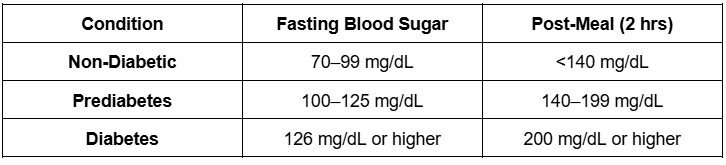
These ranges can vary slightly, so always follow your doctor’s advice.
Practical Ways to Keep Blood Sugar Stable
Forget drastic diets or unrealistic routines. Long-term results come from consistent, doable changes.
1. Eat Whole and Balanced Meals
Choose foods in their most natural form:
- Whole grains like brown rice and oats
- Fresh fruits and vegetables
- Lean proteins such as eggs, lentils, chicken, or fish
- Healthy fats like olive oil, seeds, and nuts
Avoid sugary drinks, white bread, and fried or packaged foods. When eating carbs, pair them with protein or fat (e.g., a banana with peanut butter) to slow sugar absorption.
2. Stick to a Regular Meal Schedule
Your body thrives on consistency. Eating meals and snacks around the same time each day helps your system manage blood sugar better. Avoid skipping meals, as it can trigger sugar drops or overeating later.
3. Move Every Day
Even light activity can help your body use insulin more effectively. Aim for 30 minutes of physical movement a day, such as:
- A brisk walk after meals
- Stretching or yoga
- Dancing, swimming, or cycling
Short, frequent activity is more beneficial than one big workout once a week.
4. Monitor Your Sugar Levels
Regular checks help you understand your body’s response to food, stress, or medication. Track your readings in the morning and after meals. Use digital apps or notebooks to record the data. Eco-conscious? Consider reusable monitors to cut down on waste.
5. Manage Stress Gently
Stress raises cortisol, which can spike sugar levels. Try calming activities like:
- Breathing exercises
- Spending time outdoors
- Writing down your thoughts
- Listening to soothing music
Even 10 minutes of calm time each day can make a big difference.
6. Prioritise Sleep
Lack of sleep messes with insulin sensitivity. Try to get 7–8 hours of rest each night. Tips to improve sleep:
- Stick to the same bedtime
- Avoid screens and caffeine before bed
- Keep your bedroom quiet, cool, and dark
7. Stay Hydrated
Water helps flush excess sugar and supports kidney function. Drink filtered water throughout the day and avoid sugary beverages or artificial sweeteners. Keep a reusable bottle nearby as a reminder.
When Medicine Is Needed
Diabetes medicine. Sometimes, lifestyle changes alone aren’t enough. If your doctor prescribes medication, it’s because your body needs additional help managing sugar.
A commonly used option for Type 2 diabetes is a weekly injection that mimics a natural hormone to improve insulin response and help control appetite. This medication can help regulate blood sugar levels and support weight management when combined with a healthy diet and regular exercise.
Dulaglutide, marketed under various brand names, is one such treatment that offers convenience with once-a-week dosing.
Trulicity 0.75 is a specific dosage strength often prescribed for patients starting this therapy, providing effective glucose control while also aiding in appetite regulation.
Eco-Friendly Tips for Diabetes Care
Diabetes care often leads to waste, from strips to syringes. Here’s how to make your routine more planet-friendly:
- Use reusable monitors or pens instead of disposable ones
- Record readings digitally instead of paper logs
- Dispose of sharps in proper containers
- Recycle medication boxes and blister packs if permitted
These small steps go a long way in reducing your environmental impact.
Final Takeaway
Managing blood sugar is not about being perfect. It’s about consistency. With daily habits like healthy eating, regular activity, stress control, and mindful sleep, you can take control of your health.
Know your numbers. Follow medical advice. And don’t forget—you’re not just managing diabetes; you’re building a healthier life that respects both your body and the planet.
No matter where you are on your journey—newly diagnosed or managing diabetes for years—there’s always room for progress. Stay informed, stay committed, and take small steps every day.
Good health begins with knowing your numbers and making choices that care for both your body and the planet.