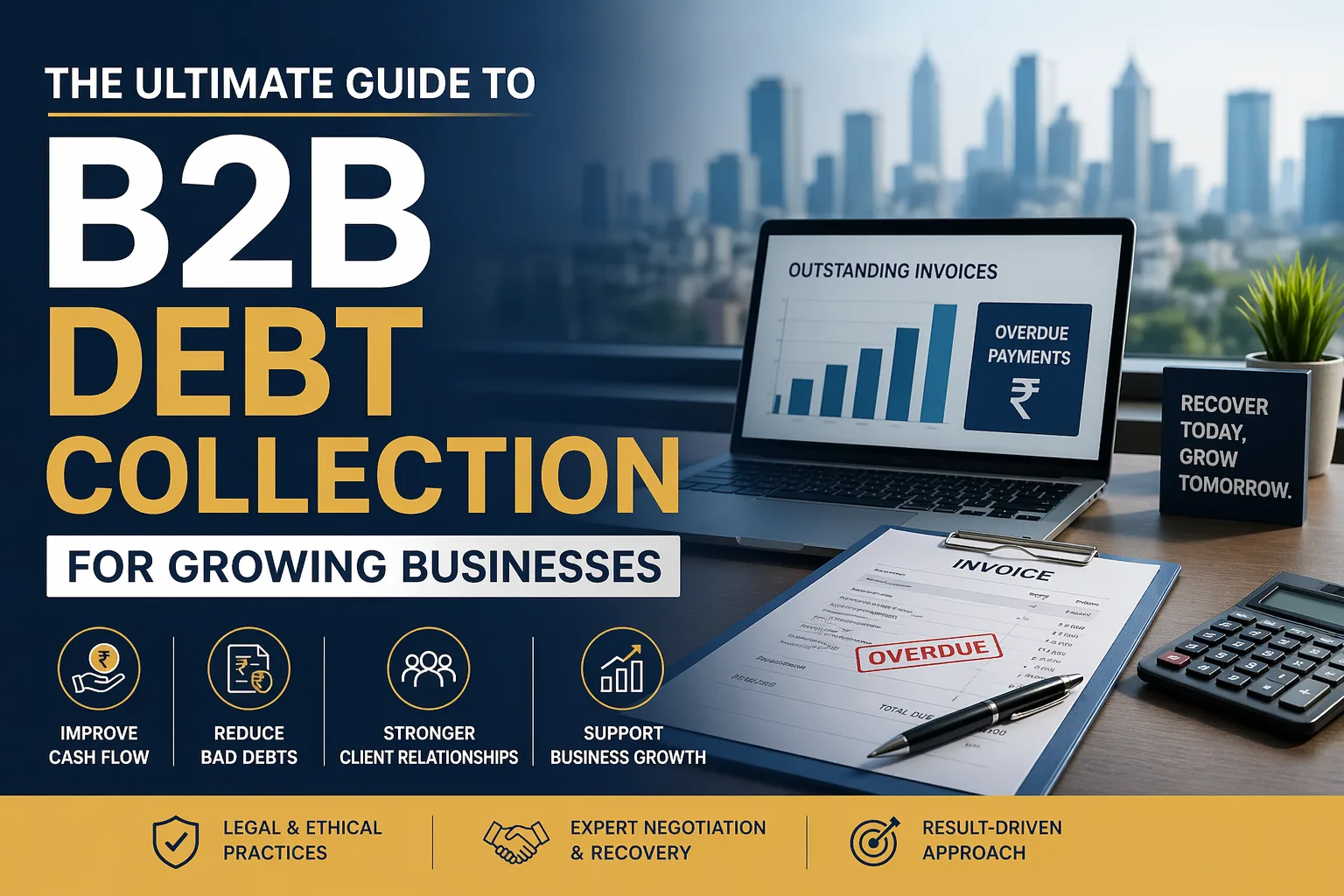
In today’s competitive business environment, maintaining a steady cash flow is essential for growth and sustainability. For many companies, especially small and medium-sized enterprises (SMEs), unpaid invoices and delayed payments can create serious financial strain. This is where (business-to-business) B2B debt collection plays a critical role. A well-structured debt collection strategy not only helps recover outstanding payments but also strengthens financial stability and business relationships.
Press enter or click to view image in full size

This ultimate guide will walk you through everything growing businesses need to know about B2B debt collection, from understanding its importance to implementing effective strategies.
What is B2B Debt Collection?
B2B debt collection refers to the process of recovering unpaid invoices or outstanding payments from other businesses. Unlike B2C (business-to-consumer) collections, B2B collections often involve larger sums, longer payment cycles, and more complex relationships.
The goal is not just to recover money but to do so in a professional and ethical manner that preserves business relationships.
Why B2B Debt Collection is Important for Growing Businesses
For growing businesses, cash flow is the lifeline. When clients delay or default on payments, it directly impacts operations, payroll, inventory, and expansion plans.
Here’s why B2B debt collection is crucial:
1. Improves Cash Flow
Timely recovery of dues ensures your business has the liquidity needed to operate efficiently.
2. Reduces Bad Debts
A proactive approach minimizes the risk of unpaid invoices turning into bad debts.
3. Saves Time and Resources
Instead of chasing payments, your team can focus on core business activities.
4. Maintains Professional Relationships
Structured communication ensures that payment follow-ups remain respectful and professional.
Common Challenges in B2B Debt Collection
B2B debt collection is not always straightforward. Businesses often face several challenges, such as:
- Long payment cycles and credit terms
- Disputes over invoices or services
- Clients facing financial difficulties
- Lack of proper documentation
- Fear of damaging client relationships
Understanding these challenges is the first step toward overcoming them effectively.
Key Steps in the B2B Debt Collection Process
To ensure successful recovery, businesses should follow a systematic approach:
1. Clear Credit Policies
Before extending credit, define clear payment terms, due dates, penalties, and conditions. Make sure clients agree to these terms in writing.
2. Accurate Invoicing
Send detailed and error-free invoices with all necessary information such as payment deadlines, payment methods, and contact details.
3. Timely Follow-Ups
Don’t wait too long to follow up. Send reminders before and after the due date through emails, calls, or messages.
4. Maintain Documentation
Keep records of contracts, invoices, communications, and payment history. Proper documentation strengthens your case in case of disputes.
5. Offer Flexible Payment Options
Sometimes, clients delay payments due to financial constraints. Offering installment plans can help recover dues faster.
Press enter or click to view image in full size

When to Hire a B2B Debt Collection Agency
While internal efforts can handle early-stage collections, there are situations where hiring a professional agency becomes necessary:
- Payments are overdue for a long period
- Clients are unresponsive or avoiding communication
- Large amounts are involved
- Legal action may be required
A professional agency like Baadshah Recovery Agency brings expertise, negotiation skills, and legal knowledge to recover debts efficiently.
Benefits of Hiring a Professional Debt Collection Agency
Partnering with a B2B debt collection agency offers several advantages:
1. Higher Recovery Rate
Experienced agencies use proven strategies to maximize recovery.
2. Legal Compliance
They follow all legal and ethical guidelines, reducing your risk.
3. Professional Communication
Agencies maintain a neutral and professional tone, preserving client relationships.
4. Cost-Effective
Most agencies work on a success-based fee model, meaning you pay only when recovery is made.
5. Saves Time
Your team can focus on business growth while experts handle collections.
Legal Aspects of B2B Debt Collection
It’s important to understand the legal framework surrounding debt collection. Businesses must ensure that their recovery practices comply with applicable laws and regulations.
Key legal considerations include:
- Having a valid contract or agreement
- Maintaining proper documentation
- Avoiding harassment or unethical practices
- Following due legal procedures if escalating the case
In some cases, legal notices or court action may be required to recover large or disputed debts.
Best Practices for Effective B2B Debt Collection
To improve your chances of successful recovery, follow these best practices:
1. Act Early
The sooner you follow up, the higher the chances of recovery.
2. Communicate Clearly
Keep communication polite, firm, and professional.
3. Segment Your Debtors
Prioritize accounts based on risk and outstanding amount.
4. Use Technology
Leverage accounting and CRM tools to track payments and automate reminders.
5. Build Strong Client Relationships
A good relationship increases the likelihood of timely payments.
How to Prevent Future Payment Delays
Prevention is always better than cure. Here are some tips to minimize future payment issues:
- Conduct credit checks before onboarding clients
- Set clear payment terms and conditions
- Request partial upfront payments
- Offer early payment discounts
- Regularly review client payment behavior
By taking these proactive measures, businesses can reduce dependency on debt collection.
The Role of Technology in B2B Debt Collection
Modern technology has transformed the debt collection process. Businesses can now use automated tools to streamline collections:
- Automated invoice generation
- Payment reminder systems
- Online payment gateways
- Data analytics for risk assessment
These tools not only improve efficiency but also enhance accuracy and transparency.
Final Thoughts
B2B debt collection is an essential part of financial management for growing businesses. While unpaid invoices are a common challenge, having a structured approach can make a significant difference.
By implementing clear policies, maintaining proper documentation, and following up consistently, businesses can improve their recovery rates. And when needed, partnering with a professional debt collection agency like Baadshah Recovery Agency can provide the expertise and support required to recover dues effectively.
Ultimately, the goal is not just to recover money but to build a financially stable and sustainable business. With the right strategies in place, B2B debt collection can become a powerful tool for growth rather than a challenge.
Baadshah Recovery Agency is a trusted B2B debt collection agency in Mumbai, offering professional and result-driven solutions for recovering unpaid invoices and outstanding business dues. With a strong focus on legal compliance and ethical practices, we help businesses maintain healthy cash flow while preserving client relationships.
Our experienced team uses strategic negotiation and proven recovery methods to ensure faster collections. Whether you are dealing with delayed payments or long-pending debts, Baadshah Recovery Agency provides reliable support tailored to your business needs, helping you recover funds efficiently and focus on growth without financial stress.