
Understanding the Evolution of SEO
SEO in 2026 doesn’t look anything like it did even five years ago. Back then, ranking on Google often felt like a formula—stuff in the right keywords, build some backlinks, and you were good to go. Today, that simplistic approach has been replaced by something far more dynamic, nuanced, and, honestly, unpredictable. Search engines have become smarter, users have become more demanding, and the competition has exploded across nearly every niche imaginable.
What’s interesting is how SEO has shifted from being a purely technical discipline into a hybrid of psychology, content strategy, and engineering. You’re no longer just optimizing for algorithms—you’re optimizing for human behavior interpreted through algorithms. That’s a big difference. Google’s systems now analyze how users interact with your content: do they stay, scroll, engage, or bounce within seconds? These behavioral signals are just as important as traditional ranking factors.
At the same time, the rise of AI-generated content has flooded the internet with information. This has forced search engines to raise the bar even higher. It’s no longer enough to just “answer a question”—you need to answer it better, faster, and more clearly than anyone else. That’s where the debate begins: if content quality is at an all-time premium, does technical SEO still play a critical role?
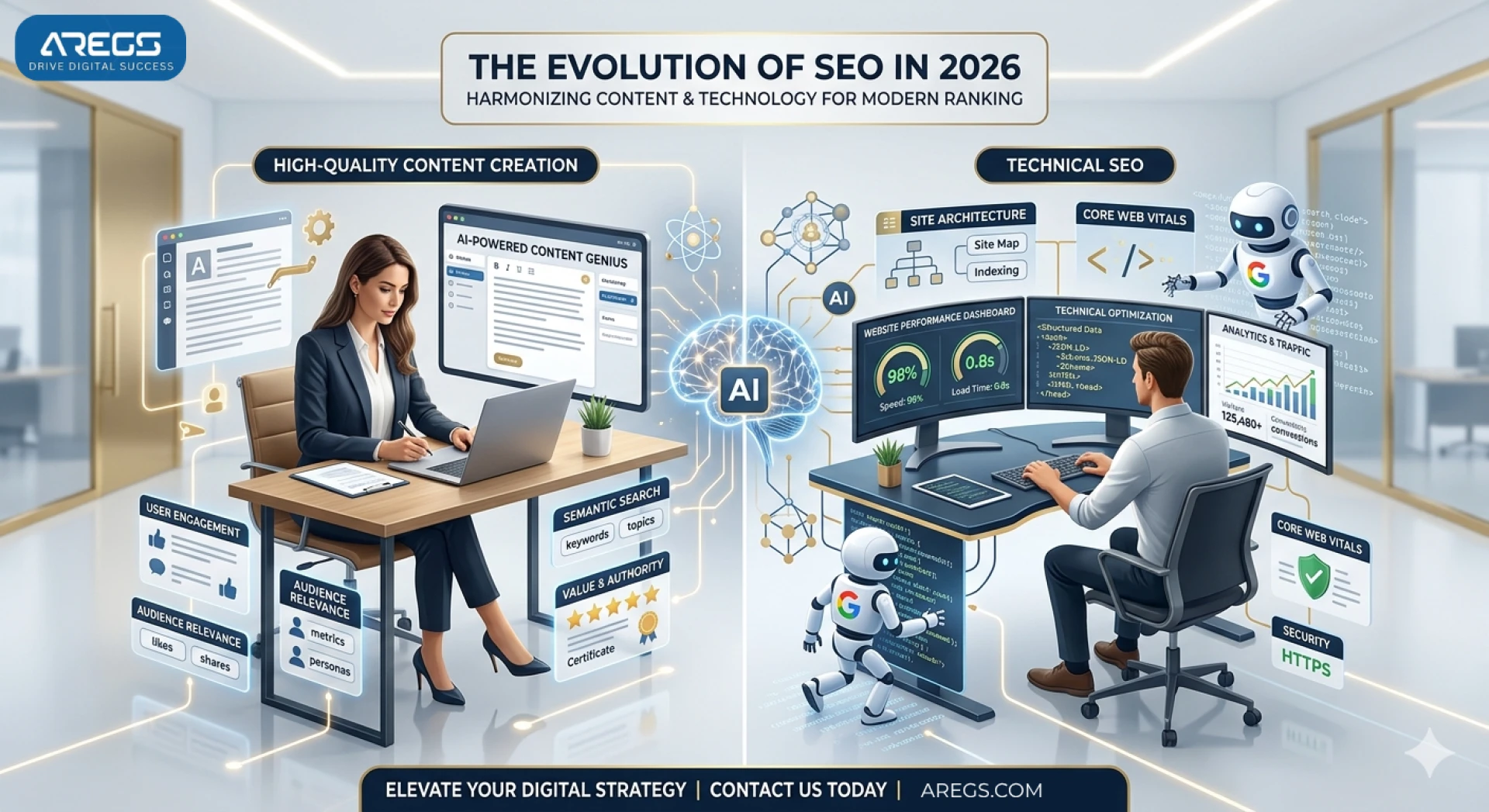
The answer isn’t as simple as yes or no. SEO today is more like a system of interconnected parts. Content may be the visible layer users interact with, but underneath, technical SEO acts like the infrastructure holding everything together. Without it, even the best content can struggle to reach its audience.
So before deciding whether content alone is enough, it’s important to understand how SEO has evolved—and why both content and technical optimization have become deeply intertwined in modern search strategies.
From Keywords to User Intent
In the early days of SEO, everything revolved around keywords. If you wanted to rank for “best running shoes,” you’d repeat that phrase as many times as possible and hope Google rewarded you for it. It worked—until it didn’t. Search engines quickly realized that keyword stuffing created a terrible user experience, and they began shifting toward understanding intent rather than just matching words.
Fast forward to 2026, and search engines are now exceptionally good at interpreting what users mean, not just what they type. For example, if someone searches “how to fix a slow website,” Google understands that the user likely wants actionable steps, tools, and maybe even diagnostic advice—not just a definition of website speed. This shift has fundamentally changed how content is created and optimized.
This is where content shines. High-quality content that aligns with user intent can rank even without aggressive keyword optimization. But here’s the catch: if your site is slow, hard to navigate, or difficult for search engines to crawl, even the most intent-driven content can get buried. It’s like writing a brilliant book and hiding it in a library with no catalog system—no one will find it.
User intent has also become more layered. There’s informational intent, transactional intent, navigational intent, and even exploratory intent driven by AI-powered search experiences. Content must adapt to these layers, but technical SEO ensures that search engines can properly interpret and deliver that content to the right audience.
So while keywords haven’t disappeared, they’ve taken a backseat to intent. And understanding intent is where content leads—but technical SEO still plays a crucial supporting role in making sure that content is discoverable and accessible.
The Rise of AI in Search Algorithms
Artificial intelligence has completely reshaped how search engines operate. Google’s AI systems—like RankBrain, BERT, and newer multimodal models—are now capable of understanding context, tone, and even subtle nuances in language. This means search engines can evaluate content in a way that feels almost human.
In 2026, AI doesn’t just rank pages—it interprets them. It looks at structure, clarity, expertise, and how well the content satisfies the user’s query. It can even detect whether content feels genuinely helpful or just artificially generated fluff. That’s a huge leap from traditional ranking systems.
But here’s where things get interesting. AI relies heavily on structured, well-organized data to function effectively. That’s where technical SEO becomes essential. Elements like schema markup, clean site architecture, proper indexing, and fast loading speeds all help AI systems understand your content better. Without these, even high-quality content can be misinterpreted or overlooked.
Think of AI as a highly intelligent reader—but one that still needs clear formatting and structure to fully grasp what it’s reading. If your website is cluttered, slow, or poorly structured, you’re essentially making it harder for AI to “read” your content.
There’s also the rise of AI-generated search results, where answers are pulled directly from multiple sources and displayed instantly. In this environment, only content that is both high-quality and technically optimized has a chance of being featured.
So while AI has elevated the importance of content, it has also made technical SEO more critical than ever. It’s no longer just about helping search engines find your pages—it’s about helping them understand and trust your content in an increasingly intelligent ecosystem.