
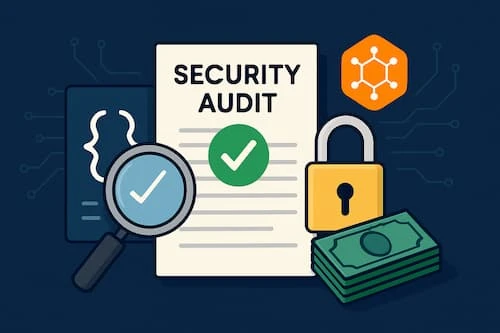
In the ever-evolving blockchain landscape, smart contracts have revolutionized how transactions, agreements, and operations are executed. These self-executing pieces of code run on decentralized networks and eliminate the need for intermediaries. However, their immutable nature means once deployed, any flaws or vulnerabilities can be permanently exploited — often with devastating consequences.
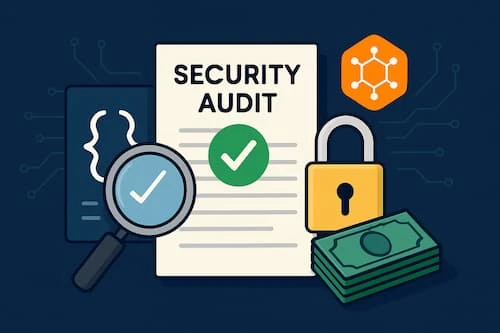
This makes smart contract audits not just a good practice but a necessity for any project aiming to succeed in the blockchain space. A comprehensive audit thoroughly reviews the codebase, logic, security, and performance of your smart contracts before they go live, providing assurance that your project is secure, reliable, and compliant.
1. Ensures Security and Prevents Costly Exploits
Security is the most critical reason to conduct a full smart contract audit. Unlike traditional software, smart contracts are immutable once deployed on the blockchain. This means that any bugs, vulnerabilities, or logical errors baked into the code cannot simply be patched or updated without complex and costly measures such as contract upgrades or forks.
In recent years, numerous DeFi platforms, NFT projects, and blockchain startups have suffered massive losses due to exploited vulnerabilities. One famous example is the DAO hack of 2016, where attackers exploited a reentrancy vulnerability in the contract, leading to a loss of $60 million worth of Ether at the time. More recently, various DeFi projects have lost millions due to bugs that could have been prevented with proper audits.
A thorough audit involves multiple stages, including static code analysis, dynamic testing, and manual review by experienced security experts. Auditors look for known vulnerability patterns such as:
- Reentrancy attacks that allow repeated calls to the contract before state changes complete
- Integer overflows and underflows that can cause incorrect calculations
- Access control flaws that allow unauthorized users to execute privileged functions
- Timestamp dependencies that can be manipulated to alter contract behavior
By identifying and patching these vulnerabilities before deployment, a smart contract audit acts as your first and best line of defense against hackers.
2. Builds Trust with Users and Investors
Blockchain projects rely heavily on community trust and investor confidence. Unlike traditional companies where regulatory oversight and established brand reputation provide assurances, blockchain initiatives must demonstrate transparency and security through technical means.
Publishing an audit report from a reputable security firm or independent auditor sends a strong signal to your community that you prioritize safety and follow industry best practices. This transparency reassures users that your project is less likely to be compromised, increasing participation and retention.
Investors, especially institutional ones, often require audit certifications before committing significant capital. An audit report can become a crucial piece of documentation in your fundraising materials and pitch decks. Many leading projects that gained rapid adoption and investment, such as Chainlink and Uniswap, prominently highlight their audit credentials.
3. Improves Code Quality and Performance
A complete audit is not just about security; it is also an opportunity to improve the overall quality and efficiency of your smart contracts. Auditors review your codebase for clean, maintainable programming practices, readability, and gas optimization.
Gas fees are a critical concern for users interacting with Ethereum and other smart contract platforms. Inefficient code can lead to high transaction costs, discouraging users and limiting adoption. Auditors often suggest:
- Removing redundant computations or state variables
- Simplifying complex logic to reduce opcode usage
- Employing design patterns that minimize storage costs
Improving your contract’s performance benefits both users and developers. Better gas efficiency makes your dApp more competitive, while maintainable code simplifies future upgrades and debugging.
4. Ensures Compliance with Standards and Regulations
As blockchain matures, compliance with standards and regulatory frameworks is becoming essential. Many smart contracts must adhere to token standards like ERC-20 for fungible tokens, ERC-721 for NFTs, or ERC-1155 for multi-token contracts.
A smart contract audit verifies that your implementation complies with these technical standards, ensuring compatibility with wallets, exchanges, and other ecosystem tools. Non-compliance can lead to malfunctioning features or refusal by platforms to list your token.
Moreover, audits can help identify potential legal risks hidden in contract logic, such as unauthorized minting capabilities, governance mechanisms that might classify tokens as securities, or lack of user consent clauses. Auditors knowledgeable about blockchain regulations can flag these issues early, helping you avoid future legal troubles.
5. Reduces Development Costs and Time
Although hiring a professional audit team involves upfront costs, the overall effect is cost-saving. Detecting vulnerabilities or logic errors after deployment can lead to expensive emergency fixes, contract migrations, or even total project failure.
For example, after the bZx protocol exploit in 2020, the team had to rapidly patch contracts and compensate affected users, which cost both money and credibility. Without a prior audit, such situations are more common.
An audit acts as a quality assurance checkpoint, catching issues during development before they escalate. This early feedback helps your development team fix problems faster, streamlining the product lifecycle and accelerating your time-to-market.
6. Provides a Clear Roadmap for Future Enhancements
Audit reports usually include detailed findings, recommendations, and best practices that serve as valuable guidance for your development roadmap. Beyond immediate fixes, auditors often suggest architectural improvements to make your smart contracts more modular, upgradeable, or extensible.
For instance, auditors might recommend using proxy contracts or standardized libraries to allow seamless upgrades or adding robust access controls to simplify future governance changes. This foresight allows you to build a scalable system that adapts to market demands and technological advances without costly rewrites.
7. Mitigates Risks and Liability
Smart contracts are entrusted with managing user funds, sensitive data, or critical business logic. Any security breach exposes you to direct financial losses and potential legal liabilities.
Conducting a full audit demonstrates due diligence in risk management. In some regulatory frameworks, having an audit report can be a mitigating factor in legal disputes, showing that you took reasonable steps to ensure security.
This risk mitigation is especially important for projects handling large amounts of capital or operating in regulated industries like finance, insurance, or supply chain management.
8. Enhances Community and Ecosystem Support
A transparent audit process helps you cultivate an active, engaged community. Users who feel confident in your contract’s security are more likely to participate in staking, governance, liquidity pools, or token sales.
In addition, audited projects tend to attract partnerships with other blockchain ventures, exchanges, and wallet providers who prefer to integrate with secure and vetted smart contracts. These integrations increase your project’s reach, liquidity, and long-term viability.
9. Identifies Hidden Vulnerabilities Beyond Code
Smart contract security is complex and multifaceted. Vulnerabilities can stem not only from code bugs but also from interaction between contracts, economic exploits, or unintended edge cases.
Complete audits combine multiple approaches — including static analysis, dynamic testing, fuzzing, and sometimes formal verification — to uncover subtle issues. For example, they might detect:
- Race conditions in multi-contract workflows
- Economic exploits like oracle manipulation or flash loan attacks
- Logic errors triggered under rare scenarios
By uncovering these hidden weaknesses, audits provide a more comprehensive safety net than simple code reviews.
10. Demonstrates Commitment to Best Practices and Innovation
Finally, investing in a complete smart contract audit shows your commitment to blockchain industry best practices, innovation, and continuous improvement. It signals that you prioritize security, transparency, and reliability — qualities critical for long-term success.
Auditors often provide insights into emerging threats, new attack vectors, and state-of-the-art defensive techniques. Leveraging this expertise helps you stay ahead of adversaries and build resilient contracts ready for future challenges.
Smart contract audits have evolved from a luxury to an essential pillar in the blockchain project lifecycle. The benefits of conducting a thorough, professional audit extend well beyond simply finding bugs. They encompass security, trust, performance, regulatory compliance, risk management, community growth, and strategic foresight.
Ignoring this critical step exposes your project to financial losses, reputational damage, legal risks, and missed opportunities. Conversely, embracing a comprehensive audit process empowers you to launch secure, efficient, and credible smart contracts that inspire confidence among users and investors alike.
As the blockchain ecosystem becomes more competitive and regulated, a complete smart contract audit is your project’s strongest foundation for sustainable success.