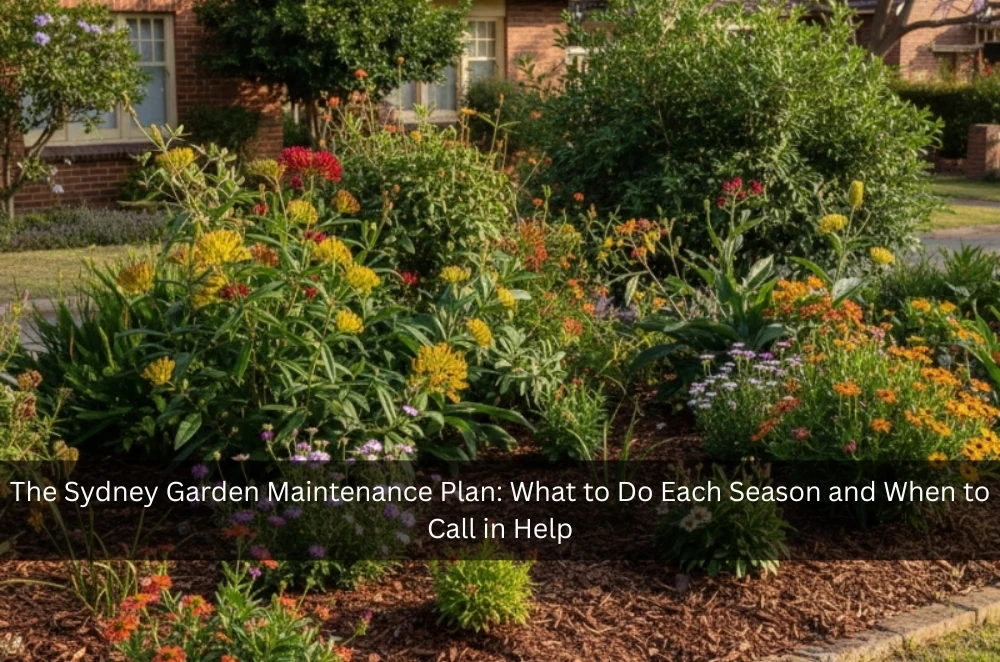
A garden in Sydney doesn’t usually fail all at once—it slowly gets away from you.
Warm spells, sudden rain, and fast-growing plants can turn “I’ll do it this weekend” into a month-long backlog.
The fix isn’t working harder; it’s choosing a maintenance rhythm that matches your yard and your schedule.
Why Sydney gardens feel high-maintenance (even when you “don’t plant much”)
Sydney’s growing conditions are generous, which is great until you miss a couple of cycles and everything compounds.
Lawns get long, edges disappear, hedges puff out, weeds seed, and green waste piles up faster than expected.
If you’ve ever done a big tidy-up and felt like it looked messy again within weeks, you’ve already met the problem: the work wasn’t sequenced.
The four-zone approach that makes maintenance simpler
Instead of thinking in tasks (“mow, weed, prune”), think in zones you can rotate through.
Zone 1: Lawn and edges (mowing, edging, spot weed control)
Zone 2: Beds and groundcovers (weeding, mulching, plant health)
Zone 3: Shrubs and hedges (shape, clearance, airflow, boundary control)
Zone 4: Trees and hardscape surrounds (leaf drop, overhang, drains, paving edges)
When you plan by zones, you stop doing random “panic gardening” and start doing the right work at the right time.
A practical seasonal rhythm for Sydney yards
You don’t need a perfect calendar—you need a repeatable pattern.
Summer
Summer is about control and safety: keep growth tidy, manage water stress, and prevent plants from smothering pathways and drains.
Prioritise mowing/edging, quick weed passes before they seed, and clearing leaf litter from stormwater areas.
Autumn
Autumn is the “reset” window.
A deeper weed-and-mulch cycle here sets you up for less work later, and it’s also when a clean-up can restore shape to hedges and define borders again.
Winter
Winter is where you prepare rather than chase growth.
It’s a good time for structural pruning (where appropriate), bed repairs, and planning changes because you can see the bones of the garden more clearly.
Spring
Spring is your “growth surge” season.
If you miss the early spring cycle, you spend the rest of spring reacting, so plan one stronger visit early and one follow-up.
The maintenance scope checklist is what most people wish they had earlier
A lot of disappointment comes from assuming “garden maintenance” means the same thing to everyone.
Before you book anything, decide what you actually want included and what you’re happy to handle yourself.
Core upkeep (most common):
- Mowing, edging, and line trimming
- Weeding (beds and hard surfaces)
- Light pruning and deadheading
- Green waste removal and tidy finish
Often-needed add-ons (clarify up front):
- Hedge shaping and height reduction
- Mulching (supply vs spread vs both)
- Seasonal clean-ups (leaf drop, storm cleanup)
- Minor plant replacement and bed refresh
Commercial/strata extras (especially relevant for businesses):
- Regular presentation standard (entry lines, carpark edges, signage visibility)
- Safety trims around walkways and lighting
- Predictable scheduling (before inspections or peak customer periods)
If the scope isn’t clear, the outcome won’t be either.
Decision factors: DIY, once-off blitz, or a regular service?
There’s no “right” choice—only what fits your time, budget, and tolerance for the garden looking rough between efforts.
DIY makes sense when:
- Your garden is small and simple
- You can keep a steady cadence (even short sessions)
- You don’t mind green waste handling and tool upkeep
A once-off blitz makes sense when:
- You’re preparing for an event, sale, inspection, or reopening
- The garden has drifted and needs a reset
- You want a clean baseline before choosing a rhythm
A regular service makes sense when:
- Growth is fast, and you’re always behind
- You wanta consistent presentation without weekend catch-ups
- You’re managing a business, strata, or multiple properties
If you want a simple reference for what’s typically included in ongoing upkeep versus a once-off tidy, All Green Gardening and Landscaping Sydney can help you sanity-check the scope before you lock anything in.
How to compare gardening services without getting upsold
Good service isn’t just “more work”; it’s the right work in the right order.
Ask providers to describe their approach using plain language, then listen for these signals:
- Sequencing: Do they explain what happens first and why (e.g., trim then mow, weed then mulch)?
- Finish standard: Do they define what “tidy” means (edges, blow-down, removal)?
- Waste handling: Is green waste removal included, limited, or billed separately?
- Access and timing: Do they ask about gates, parking, noise-sensitive times, and site rules?
- Garden health vs appearance: Do they flag plant stress, soil issues, or drainage concerns without selling you a full redesign?
A clean quote is nice, but a clear method is better.
Common mistakes that waste time, money, and weekends
Mistake 1: mowing without edging.
The lawn may look shorter, but it still looks messy, and the edges take longer the more you delay them.
Mistake 2: pruning at random rather than as part of a cycle.
You can accidentally trigger more growth at the wrong time and create a constant “chasing” job.
Mistake 3: Weeding after everything has seeded.
You end up doing the same work twice, because the next generation is already queued up.
Mistake 4: mulching without weeding or bed prep.
Mulch hides problems for a short time, then weeds pop through and it looks worse than before.
Mistake 5: underestimating green waste.
The clean-up often isn’t hard—it’s the hauling, dumping, and reset that drains the day.
Operator Experience Moment
A pattern I’ve noticed is that people book help when the garden feels overwhelming, but they don’t define the “done” standard. The team does a solid tidy, then the garden rebounds quickly because edging, mulch, or follow-up pruning wasn’t part of the plan. When the scope is written as a repeatable cycle, results last longer and the work feels calmer.
Practical Opinions (exactly 3 lines)
Edges are the fastest way to make a garden look “maintained.”
One good seasonal reset beats three rushed weekend attempts.
If green waste removal isn’t clear, your quote isn’t complete.
A simple first-action plan for the next 7–14 days
Days 1–2: Do a 15-minute audit walk.
List the top five visual problems (usually edges, weeds, hedges, leaf litter, bare beds).
Days 3–4: Choose your baseline standard.
Decide what “good enough” looks like for your property (especially if it’s customer-facing).
Days 5–7: Pick the rhythm.
DIY cadence, once-off blitz, or regular service—and write down the minimum frequency you can realistically keep.
Days 8–10: Gather two to three quotes using the same scope.
Provide photos, access notes, and your baseline standard so you can compare like-for-like.
Days 11–14: Lock the sequence, not just the tasks.
Confirm the order of work (e.g., weed/shape first, then mow/edge, then final tidy and removal) so the result holds.
Local SMB Mini-Walkthrough (Sydney, NSW)
A small clinic in Sydney wants the entry to look sharp for weekday appointments.
They set a presentation standard: clean edges, clear path lines, no weeds near signage.
They choose a fortnightly rhythm in growth seasons and a lighter winter cadence.
They specify quiet-hours access and where green waste can be staged temporarily.
They schedule a deeper seasonal reset before spring growth surges.
They add hedge clearance around lighting to improve safety after dark.
When “maintenance” is actually a landscaping problem
Sometimes the issue isn’t effort—it’s design.
If beds are too narrow, plants are overcrowded, or water flows into the wrong areas, maintenance becomes a treadmill.
In those cases, a small redesign (better edging, simpler plant choices, clearer zones) can reduce maintenance more than any extra mowing ever will.
Key Takeaways
- A clear scope and sequencing beat a vague “general tidy” every time.
- Sydney gardens reward seasonal planning—miss spring and you’ll chase growth for weeks.
- Compare services by method, finish standard, and waste handling, not just price.
- A repeatable cadence (DIY or professional) stops the garden from drifting back to chaos.
-
Common questions we hear from Australian businesses
Q1) How often should we book garden maintenance in Sydney?
Usually, it depends on growth rate and presentation needs, so the next step is to set a minimum standard (entry, paths, signage visibility) and choose a cadence that keeps it. In Sydney, spring and wet periods often need more frequent visits than winter.
Q2) What should we include in a “garden maintenance” scope?
In most cases, you’ll want mowing, edging, weeding, a tidy finish, and clarity on green waste removal, so the next step is to write those items into the request for quote. In Sydney, green waste can pile up fast after trims, so disposal limits should be explicit.
Q3) Is a once-off garden clean-up worth it, or should we go straight to regular visits?
It depends on how far the garden has drifted, so the next step is to do a quick audit (edges, weeds, hedges, beds) and decide whether you need a reset baseline first. In most Sydney suburbs, a reset before spring can prevent the “constant catch-up” cycle.
Q4) How do we compare two quotes that look similar?
Usually, the difference is hidden in scope, so the next step is to confirm sequencing, waste removal, and what “tidy” includes (blow-down, edging detail, bed finish). In Sydney, access constraints and parking can also change labour time, so make sure both quotes reflect the same access reality.