
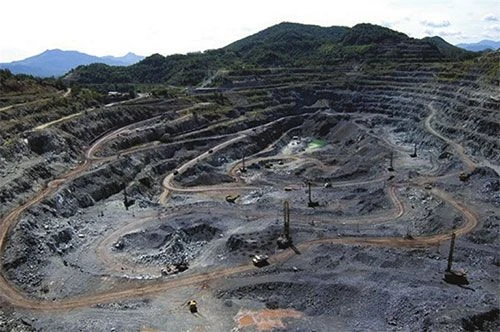
At Emirerri Steel Manufacturer Pvt. Ltd., we are dedicated to delivering premium steel products that meet the evolving demands of construction, infrastructure, and industrial applications across India. While phosphate mining is predominantly recognized for its contribution to agricultural fertilizers, it plays a vital though often underappreciated role in supporting the steel industry through the controlled introduction of phosphorus. Phosphorus, sourced primarily from mined phosphate rock, enables the production of ferro-phosphorus alloys essential for precise alloying in steelmaking. This connection is becoming increasingly strategic as the industry pursues higher performance, greater efficiency, and enhanced sustainability. Phosphorus in Steelmaking: Balancing Benefits and Control. Phosphorus exerts a dual influence on steel properties:
- Positive contributions (when precisely managed)
- Provides significant solid-solution strengthening, increasing yield strength by 50–100 MPa in low-carbon, HSLA, and rephosphorized grades.
- Enhances machinability in free-cutting steels.
- Improves atmospheric corrosion resistance in weathering steels and select structural products.
- Aids fluidity during casting for uniform microstructures.
These benefits are achieved through intentional additions of ferro-phosphorus (typically 23–26% P), derived from phosphate rock via reduction processes in submerged-arc furnaces. Conversely, excessive phosphorus leads to embrittlement, reduced toughness, and weldability issues — necessitating rigorous dephosphorization in primary steelmaking and tight control (<0.03–0.05% P in most grades). Emerging Innovations Bridging Phosphate Mining and Steel. Recent advancements are transforming this supply chain toward greater sustainability and circularity:
- Phosphorus Recovery from Steelmaking Slag
Steelmaking slag, previously viewed largely as waste, is now a valuable secondary resource. Innovative hydrometallurgical processes including selective leaching, precipitation, and alkaline washing achieve high recovery rates (often 80–85%) of phosphorus from BOF and EAF slag. Recovered phosphate can be reused as fertilizer or reprocessed into ferro-phosphorus feedstock, reducing dependence on primary mining and promoting resource efficiency.
- Advancements in Phosphate Processing and Supply
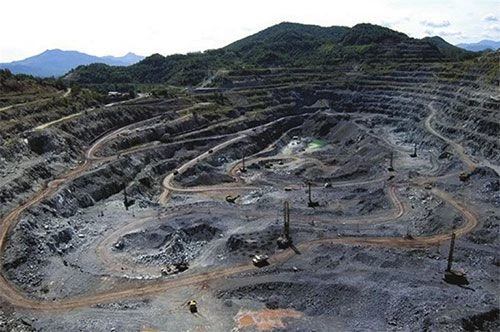
Modern mining operations incorporate AI-driven ore sorting, advanced beneficiation (e.g., improved flotation), real-time grade monitoring, and water recycling systems. These enhancements ensure consistent, high-quality phosphate rock supply for ferro-phosphorus production while minimizing environmental impact.
- Precision Alloying and Process Optimization
Emerging technologies enable finer control of phosphorus additions, supporting specialized grades for high-strength, corrosion-resistant, and machinable applications. These developments align with global trends toward circular economies, lower carbon footprints, and responsible resource use priorities that directly support sustainable steel production. Implications for Emirerri Steel and the Industry By leveraging these phosphate-derived innovations, we continue to optimize our product portfolio:
- High-strength structural steels and rebars for demanding infrastructure projects.
- Machinable and corrosion-resistant grades that extend service life and reduce maintenance.
- Materials that meet stringent quality and ESG standards.
As the steel sector advances toward decarbonization and resource circularity, the intelligent integration of phosphorus from responsible mining to slag recovery will remain a key enabler of performance and sustainability. We remain committed to responsible sourcing and continuous improvement to deliver steel that is not only strong and reliable but also produced with foresight for the future. We welcome insights from industry peers on these evolving synergies between mining and metallurgy.
#SteelProduction #SustainableMetallurgy #PhosphorusRecovery #HighPerformanceSteel #EmirerriStee