Introduction
Rising electricity bills, equipment overheating, and frequent power disruptions are common challenges in industrial environments. Many business owners focus on increasing production capacity but overlook one silent cost driver: poor power factor. This is where an APFC panel plays a crucial strategic role.
In industrial power systems, inefficient power usage not only increases operational costs but also reduces equipment life. Managing reactive power and maintaining stable voltage levels directly impacts profitability. Understanding how an APFC panel supports power quality management can help factories, commercial buildings, and growing enterprises operate more efficiently and sustainably.
What Is APFC Panel and How It Works
What Is an APFC Panel?
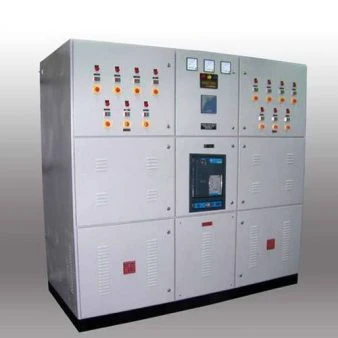
An automatic power factor correction panel is an intelligent electrical system designed to improve the power factor of an industrial or commercial installation.
To understand this clearly, we must look at how electrical loads behave. Inductive loads such as motors, transformers, and compressors consume reactive power along with active power. Reactive power does not perform useful work but increases total current flow. This leads to higher losses and penalties from electricity boards.
An APFC panel automatically detects power factor variations and switches capacitor banks in or out of the circuit to maintain an optimal power factor, usually close to unity.
How It Works in Practical Terms
- A power factor relay continuously monitors voltage and current.
- When the system detects a low power factor, it activates capacitor banks.
- Capacitors supply reactive power locally.
- This reduces the load on the main supply and improves system efficiency.
The logic is simple but powerful. By reducing unnecessary current flow, industries minimize line losses, voltage drops, and demand charges.
Why APFC Panel Matters in Industrial Power Quality
1. Reduction in Electricity Bills
Most utilities impose penalties if the power factor falls below a specified limit. Improving power factor reduces maximum demand charges and avoids penalties.
From an engineering standpoint, lower current reduces I²R losses in cables and transformers. Since heat loss is proportional to the square of current, even small improvements in power factor significantly reduce energy waste.
2. Improved Equipment Life
When excess current flows through electrical equipment, it generates additional heat. Heat accelerates insulation degradation and reduces the lifespan of motors and transformers.
By stabilizing reactive power, an APFC panel ensures smoother operation, reducing thermal stress on equipment.
3. Increased System Capacity
Improving power factor effectively frees up electrical capacity without upgrading infrastructure. The same transformer can handle more useful load when reactive power is managed efficiently.
For growing businesses, this means expansion without immediate capital investment in new transformers or panels.
Types of APFC Panels
Understanding the types of APFC panels helps businesses select the right configuration.
Conventional APFC Panels
These use fixed-step capacitor banks and are suitable for facilities with relatively stable loads.
Thyristor-Based APFC Panels
These respond faster to load fluctuations and are ideal for industries with dynamic loads like welding machines or elevators.
Detuned APFC Panels
Designed for systems with harmonic distortion, these panels include reactors to prevent resonance and protect capacitor banks.
Choosing the right type depends on load behavior, harmonic levels, and operational goals.
Strategic Benefits for Business Owners
Power quality management is not just a technical concern; it is a financial strategy.
Lower Operational Risk
Voltage instability can disrupt automated systems. With a properly designed APFC panel, voltage regulation improves, reducing unexpected downtime.
Compliance with Utility Standards
Electricity boards mandate minimum power factor levels. Maintaining compliance protects businesses from penalties and regulatory issues.
Sustainability and Energy Efficiency
Energy-efficient systems reduce carbon footprint. For companies focused on sustainability metrics, power factor correction supports environmental responsibility goals.
Why Professional Expertise Matters
Designing and installing an APFC system requires load analysis, harmonic study, and precise capacitor sizing. An incorrectly designed panel may lead to resonance, capacitor failure, or inefficient correction.
This is why working with an experienced manufacturer makes a measurable difference.
Companies like Dj Electro Controls, recognized as an industrial APFC panel manufacturer, provide tailored solutions based on actual load data rather than generic configurations.
For businesses seeking an APFC panel supplier in Mumbai, choosing a technically sound partner ensures long-term reliability. From explaining what an APFC panel is and how it works to delivering customized control logic, professional guidance minimizes risk and maximizes ROI.
How to Choose the Right APFC Panel for Your Industry
Before investing, consider:
- Nature of electrical loads
- Presence of harmonics
- Desired power factor target
- Future expansion plans
- Maintenance accessibility
A detailed energy audit often reveals hidden inefficiencies. Experienced manufacturers assess capacitor ratings, switching mechanisms, protection systems, and enclosure standards.
Consulting specialists helps align electrical infrastructure with production goals.
Conclusion
An APFC panel is not merely an electrical accessory. It is a strategic asset for industrial power quality management. By improving power factor, reducing energy losses, and enhancing system reliability, businesses can lower operational costs and increase efficiency without major infrastructure changes.
For enterprises serious about long-term savings and stable electrical performance, investing in the right APFC solution is a practical and financially sound decision.
If you are planning to upgrade your power management system, connect with [Dj Electro Controls] for expert guidance. Visit Dj Electro Controls or contact us today to explore customized solutions designed for your industry’s needs.
FAQ Section
1. What is an APFC panel used for?
An APFC panel is used to improve power factor by automatically managing reactive power in industrial and commercial electrical systems.
2. How does an APFC panel reduce electricity bills?
It reduces reactive power consumption, lowers maximum demand charges, and prevents utility penalties related to low power factor.
3. What are the different types of APFC panels?
Common types include conventional step-based panels, thyristor-based panels for dynamic loads, and detuned panels for harmonic-rich systems.
4. Is an APFC panel mandatory for industries?
While not always mandatory, utilities often impose penalties for low power factor, making APFC panels practically essential for cost control.