In the realm of water treatment, mining, paper manufacturing, and agriculture, polymers like OEM Anionic Polyacrylamide (PAM) have become indispensable due to their powerful flocculating and viscosity-modifying properties. At Shandong UPS Chemical Co., Ltd, we pride ourselves on developing high-quality OEM anionic polyacrylamide products designed to enhance process efficiency while minimizing ecological footprint.
Understanding the science behind anionic polyacrylamide and its interaction with the environment is paramount for industries aiming to optimize usage and embrace sustainable practices. Equally important is recognizing related polymers such as nonionic polyacrylamide and how their chemical behavior differs, contributing uniquely to industrial applications and environmental performance.
This comprehensive guide delves into the molecular chemistry and physical properties of OEM anionic polyacrylamide, explores its environmental impact, and highlights the distinctions between anionic and nonionic polyacrylamide types. Through an informed perspective, industries can promote effective and responsible polymer usage, aligning with global sustainability initiatives.
What is OEM Anionic Polyacrylamide?
Anionic polyacrylamide is a water-soluble polymer characterized by the presence of negatively charged carboxylate groups along its molecular chain. These anionic sites provide distinct advantages in destabilizing suspended particles in liquid suspensions, leading to enhanced flocculation—a process critical to water purification, sludge removal, and mineral processing.
OEM designation implies that the product is custom-manufactured to meet specific industrial quality standards and application requirements, ensuring consistency, purity, and performance tailored to client needs.
The Molecular Science Behind Anionic Polyacrylamide
At the molecular level, anionic polyacrylamide’s efficacy stems from its long-chain polymer structure combined with negatively charged ionic groups. This configuration enables bridging and electrostatic repulsion mechanisms:
- Bridging: Polymer chains adsorb onto suspended solids, linking particles into larger flocs that settle or filter out efficiently.
- Electrostatic Repulsion: The negative charges prevent re-stabilization of particles, promoting durable aggregation.
Furthermore, the degree of anionic charge is customizable, influencing polymer solubility, adsorption affinity, and floc strength.
The Role of Nonionic Polyacrylamide
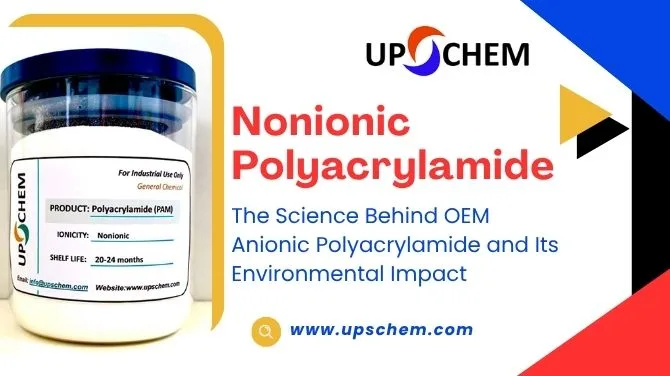
While anionic polyacrylamide carries ionic charges, nonionic polyacrylamide lacks charged groups, resulting in different interaction dynamics. Nonionic PAM relies primarily on physical entanglements and hydrogen bonding for flocculation, making it ideal in systems sensitive to pH or ionic strength.
Understanding when to use anionic versus nonionic polyacrylamide can profoundly affect treatment outcomes and environmental safety.
Environmental Impact and Sustainability Considerations
Despite its industrial advantages, assessing the environmental impact of anionic polyacrylamide is essential. Factors include:
- Biodegradability: OEM anionic PAMs are designed to minimize ecological persistence, breaking down under microbial action though at varying rates depending on formulation.
- Toxicity: Properly synthesized PAMs avoid acrylamide monomer residues, which are toxic; stringent quality assurance mitigates this risk.
- Water Quality: Effective use reduces chemical oxygen demand (COD) and turbidity, improving downstream water ecosystems.
In parallel, Shandong UPS Chemical Co., Ltd. promotes green manufacturing processes, lowering energy consumption and waste generation during polymer production.
Why Choose Shandong UPS Chemical Co., Ltd?
Our commitment is to deliver not only superior OEM anionic polyacrylamide but also expert guidance on best environmental practices and application optimization. Partnering with us means accessing tailor-made polymer solutions aligned with evolving regulatory requirements and sustainability goals.
Frequently Asked Questions (FAQ)
Q1: What differentiates anionic polyacrylamide from nonionic polyacrylamide?
A1: Anionic PAM carries negative charges enhancing electrostatic flocculation, while nonionic PAM relies on hydrogen bonding without ionic effects, suitable for different water chemistries.
Q2: Are OEM anionic polyacrylamides safe for the environment?
A2: When produced with strict quality controls and used appropriately, they have minimal environmental toxicity and are biodegradable.
Q3: How does OEM status affect polyacrylamide quality?
A3: OEM products are customized to client specifications with rigorous batch consistency and purity controls ensuring reliable performance.
Q4: Can anionic PAM be used in seawater treatment?
A4: Yes, but the charge density should be selected carefully to perform effectively in high ionic strength environments.
Q5: What role does molecular weight play in polyacrylamide performance?
A5: Higher molecular weight typically improves floc size and settling rate but may increase solution viscosity, affecting handling.
Conclusion
The science behind OEM Anionic Polyacrylamide reveals its indispensable role in industrial and environmental management. By comprehensively understanding its molecular properties, contrasts with nonionic polyacrylamide, and potential ecological impacts, stakeholders can harness its benefits responsibly.
Shandong UPS Chemical Co., Ltd remains committed to advancing polymer technology that not only elevates process efficiency but also aligns with sustainable industry practices. Stay tuned as we explore detailed application strategies, regulatory landscapes, and future innovations in subsequent sections of this ultimate guide.