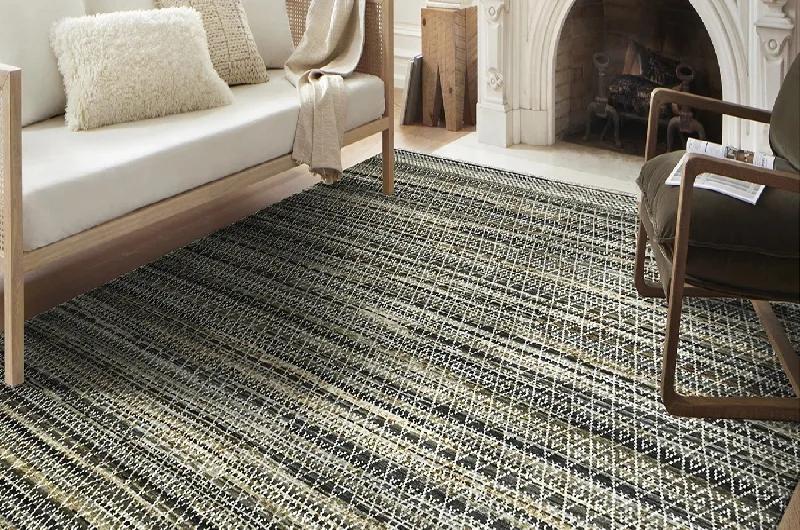
Furthermore, the chunky weave of this material acts as an anchor for the surrounding decor. It creates a distinct zone within an open-concept floor plan, defining the lounge area without the need for physical barriers like room dividers or heavy accent walls. The coarse, braided surface catches changing sunlight throughout the day, casting soft shadows that make the living room feel dynamic and alive. If you appreciate starker contrasts in neighboring spaces, you might eventually transition into a dining room grounded by a bold "black and white wool rug" to juxtapose the golden earthiness of your primary seating area.
Designing Around Circular Geometry in Minimalist Spaces
Integrating a circular floor covering into a living room requires a thoughtful approach to layout and scale. In standard rectangular or square rooms, a large circular piece acts as a unifying force. It pulls disparate furniture pieces—like a sleek sectional, a low-profile coffee table, and an accent armchair—into a cohesive conversation grouping. Instead of aligning every piece of furniture flush against a wall or square base, placing the front legs of your seating arrangement onto a curved perimeter coaxes the room into a warmer, more intimate configuration.
This geometric contrast is highly valued by global design experts and premiere manufacturers, including globally recognized suppliers like Amer Rugs, who understand that shape influences human psychology within a home. A square or rectangle implies order and boundary, whereas a circle symbolizes unity, movement, and infinity. To explore these options first-hand, homeowners often search for "area rugs in stores near me" to evaluate how different geometric formats interact with natural light before finalizing their room layout.
The Sustainable and Practical Advantages of Eco-Friendly Materials
Beyond its undeniable aesthetic contributions, choosing a natural vegetable fiber is a powerful nod toward sustainable living. Jute is one of the most environmentally friendly crops available, requiring minimal water, zero synthetic fertilizers, and a fraction of the land space compared to agriculture like cotton. It grows rapidly and absorbs carbon dioxide efficiently, making it a highly renewable resource. When a homeowner invests in a high-quality woven piece, they are making an ecologically responsible decision that aligns perfectly with the conscious consumption philosophy of minimalism.
From a practical standpoint, these pieces are remarkably resilient and built to handle everyday life. The dense, fibrous structure withstands foot traffic beautifully, making it an excellent investment for central gathering areas. For adjoining high-spill zones like transition entryways or culinary spaces, you can easily pair your main setup with high-utility textiles like "blue kitchen runner rugs washable" to ensure style remains intact without sacrificing daily functionality.
Investing in Lasting Value and Global Craftsmanship
When selecting flooring elements, looking at long-term durability and architectural value is essential. Authentic, premium jute pieces are often hand-loomed or hand-braided by skilled artisans who have perfected their craft over generations, providing a level of structural integrity that machine-made options rarely replicate. Finding high-quality artisanal pieces requires looking past standard generic options and identifying specialized warehouses or checking the "best discount carpet stores near me" to uncover wholesale-grade materials at exceptional market prices.
Investing in a well-made natural fiber piece offers exceptional value compared to high-end tufted textiles. Because the raw material is naturally abundant, you can acquire a massive, statement-making piece without stretching your design budget. For extended layouts or covered patios, configuring your home with "extra large indoor outdoor area rugs" helps extend the interior minimalist footprint out into nature seamlessly, delivering an open and cohesive luxury layout.
Future Outlook and the Evolution of Modern Minimalist Design
As interior design moves toward a more empathetic, nature-inspired future, the reliance on raw, untreated materials will only continue to grow. The future of minimalism is shifting away from cold, hyper-industrial white spaces and moving toward "warm minimalism"—a movement that prioritizes wellness, comfort, and biophilic elements that connect humans to nature. The round natural fiber piece is perfectly positioned at the center of this evolution.
Designers are continuously finding new ways to innovate with these traditional fibers, experimenting with mixed-material weaves, subtle geometric color-blocking, and varied border treatments. However, the classic, unadorned, circular golden weave remains the definitive standard. It transcends passing fads, ensuring that your living room will feel current, peaceful, and beautifully grounded for decades to come.
Elevating Visual Depth with Subtle Color Balancing
While warm minimalism values neutral palettes, incorporating deep, intentional hues can emphasize your primary layout beautifully. For instance, pairing a raw golden circle with a deep "green persian area rug" in an adjacent home office or reading nook creates a stunning, sophisticated transition. This unexpected splash of traditional color highlights the crisp simplicity of the living room, ensuring the overall home environment feels curated and dimensional rather than monotonous.
Using varied textile origins across your floor plan creates a sensory journey through the home. The rough texture of the living room circle underfoot provides a satisfying contrast to the plushness of bedroom tufting or the smooth durability of hallway runners. It is a highly strategic approach to interior layout that relies entirely on structural variety rather than superficial clutter to convey a message of modern comfort.
Frequently Asked Questions
How do you properly clean and maintain a round jute rug in a busy living room
Maintaining a natural fiber piece is straightforward but requires a gentle touch. Regular vacuuming with a suction-only setting or a disengaged beater bar is crucial, as spinning brushes can fray the natural fibers over time. Because jute is highly absorbent, moisture is its primary enemy; liquid spills should be blotted immediately with a clean, dry white cloth rather than rubbed. If a deeper clean is necessary, use a specialized dry-cleaning powder or a slightly damp cloth with mild soap, ensuring the piece is dried completely with a fan or natural sunlight to prevent mold or discoloration.
Do natural jute rugs shed a lot and how can that be managed
Shedding is a natural characteristic of plant-based fibers, especially when the piece is brand new. Small, loose fibers will gently fall away from the weave during the first few months of use. This can be managed easily by vacuuming the surface twice a week and occasionally vacuuming the floor beneath the piece where dust tends to accumulate. As the fibers settle and break into their environment, the shedding will diminish significantly, leaving you with a smooth, durable surface.