Industrial accidents do not typically happen without warning. In the vast majority of serious incidents — explosions, fires, toxic releases, and structural failures — there is a preceding sequence of events, conditions, and human behaviours that, had they been detected and acted upon in time, would have provided an opportunity to intervene before catastrophe occurred. The challenge is not that warning signs are absent. The challenge is that they frequently occur in locations, at times, or under conditions where human observation is simply not possible or not sustained with sufficient continuity to catch them at the critical moment.
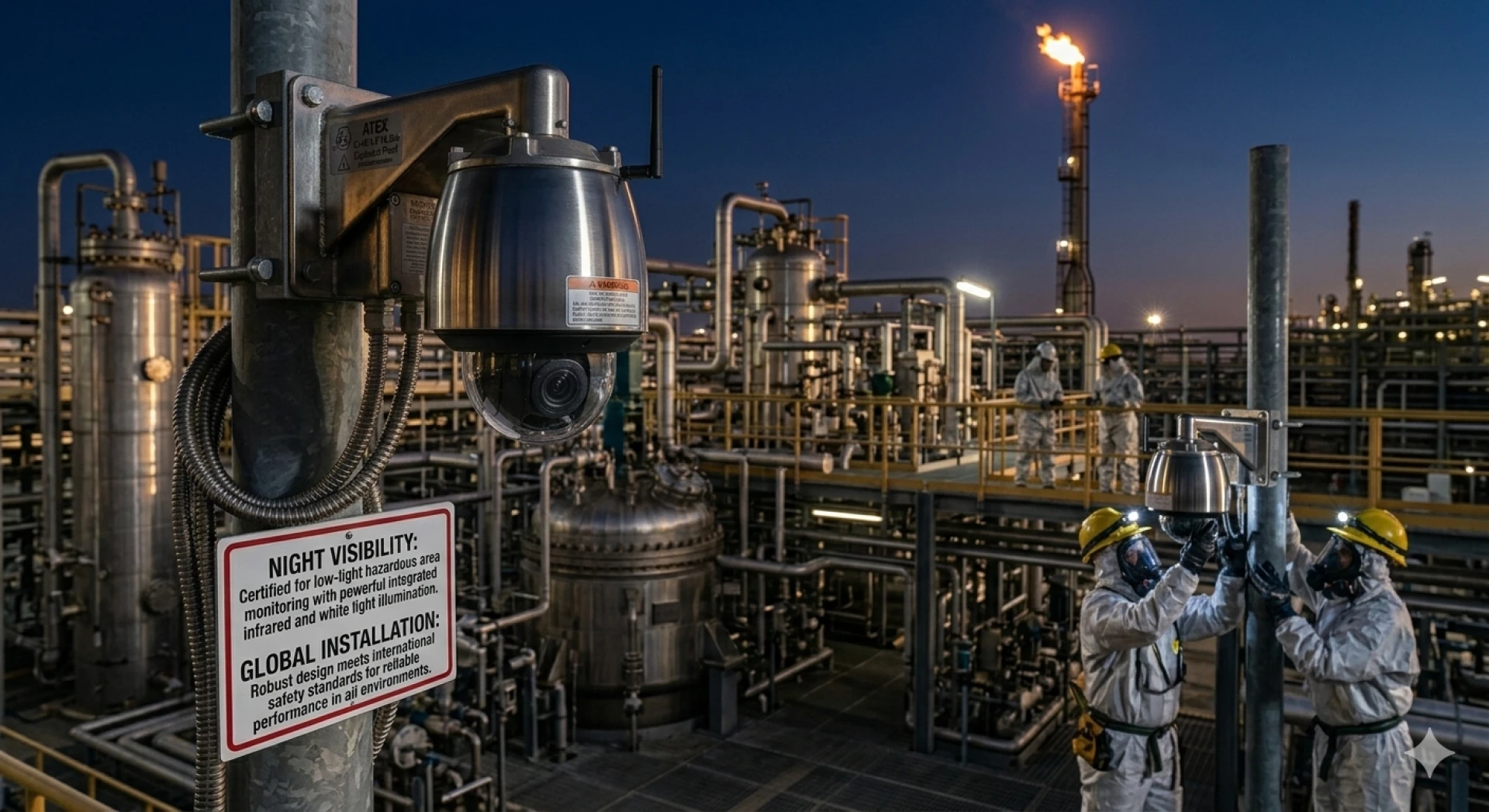
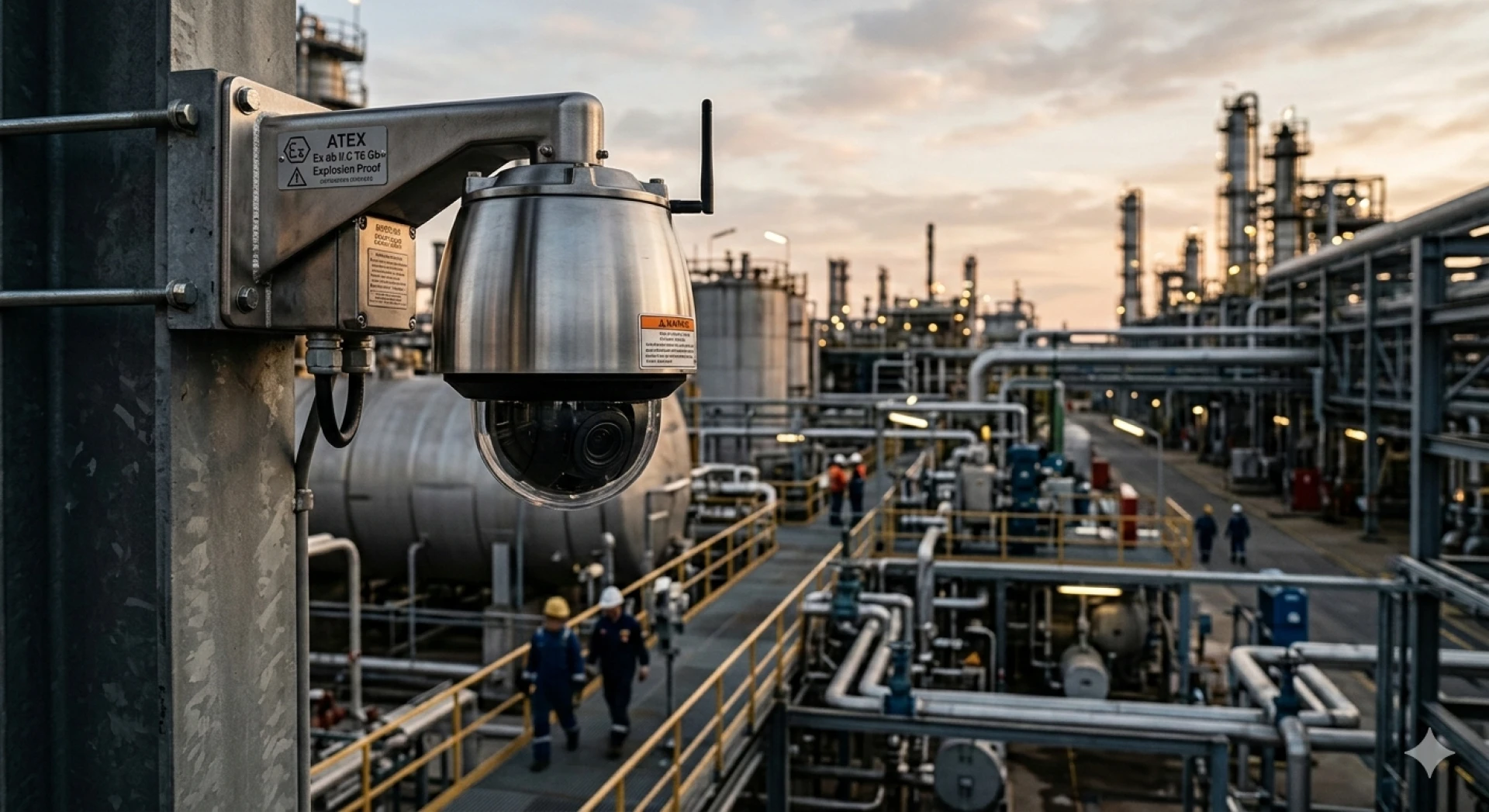
This is the operational gap that certified explosion-proof surveillance technology is uniquely positioned to fill. In hazardous industrial environments where the presence of flammable gases, combustible dust, or volatile chemicals makes the stakes of any undetected incident extraordinarily high, continuous visual monitoring by appropriately certified cameras is not a supplementary safety measure — it is a foundational one. Understanding the specific mechanisms through which the Explosion Proof PTZ Camera prevents industrial accidents rather than simply recording them reveals why investment in this technology is one of the most direct and evidence-based interventions available to industrial safety professionals today.
Detecting Process Deviations Before They Escalate
The majority of serious industrial accidents in process industries are preceded by a process deviation — an abnormal condition in temperature, pressure, flow, level, or equipment state that departs from the designed operating envelope and, if left unaddressed, progresses toward a hazardous outcome. Instrumentation systems detect many of these deviations through sensors and alarms. But instrumentation has limitations — sensors fail, alarms are missed during busy periods, and some process deviations manifest visually before they register on instrumentation at all.
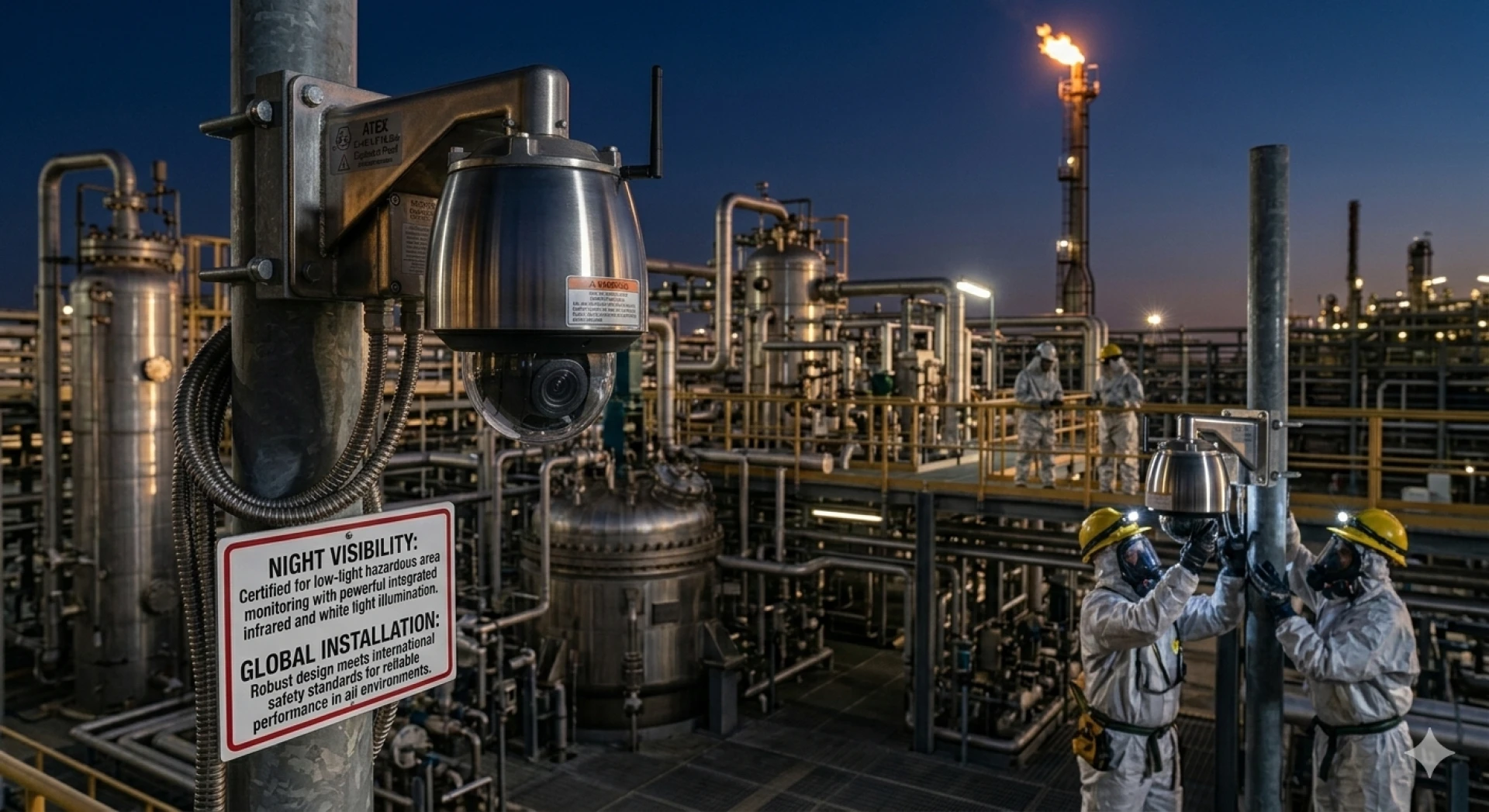
A PTZ camera with wide-area coverage of critical process areas provides a continuous visual channel through which deviations that have not yet triggered instrumentation alarms can be detected and communicated to control room operators. An unusual liquid accumulation beneath a pump suggesting seal failure, a visible vibration in a rotating piece of equipment indicating a developing mechanical problem, steam escaping from a flange joint that should be fully sealed, or ice formation on a cryogenic line indicating an insulation breach — all of these conditions are visually detectable before they become critical, and all of them represent opportunities for preventive intervention that a camera-equipped control room can act upon.
The pan-tilt-zoom capability of the Explosion Proof PTZ Camera extends this detection reach across a far wider area than any fixed camera could monitor from the same installation point. Preset patrol tours ensure that every critical observation point within the camera's coverage zone is visited regularly, and alarm-linked positioning ensures that when an instrumentation alert does occur, the camera immediately provides the visual context that operators need to assess the situation and respond appropriately.
Monitoring Human Behaviour in High-Risk Areas
Process deviations account for a significant proportion of industrial accidents, but human behavioural failures account for an equally important share. Procedural violations, unsafe work practices, inadequate use of personal protective equipment, unauthorised access to restricted areas, and incorrect execution of maintenance or operational tasks all create accident pathways that instrumentation systems are entirely blind to. Only visual monitoring can detect these behavioural risk factors — and only continuous visual monitoring can detect them in time to prevent rather than merely document their consequences.
The ATEX PTZ Camera, certified for deployment in the classified hazardous zones where the consequences of behavioural failures are most severe, provides safety teams with the remote observation capability needed to monitor human activity in high-risk areas without requiring a physical safety supervisor to be present at the location at all times. Control room operators monitoring live PTZ feeds can identify when a worker has entered a confined space without a standby person in position, when hot work is being performed in proximity to a classified zone boundary without appropriate fire watch arrangements, or when a vehicle is operating in a pedestrian exclusion zone — and can intervene immediately via radio communication before the unsafe condition results in an injury.
Video analytics capabilities embedded in modern explosion-proof PTZ systems further extend this behavioural monitoring function. Algorithms configured to detect the absence of PPE such as hard hats and high-visibility vests, to identify personnel entering pre-defined exclusion zones, or to flag vehicles exceeding speed limits within facility boundaries can provide automated alerts that supplement human operator attention — creating a layer of behavioural safety monitoring that operates continuously and without the attentional limitations that affect human observers during extended monitoring shifts.
Supporting Safe Isolation and Permit-to-Work Processes
Maintenance activities at hazardous industrial facilities are governed by permit-to-work systems specifically designed to ensure that the equipment being worked on is safely isolated, that the surrounding area is confirmed free of hazardous atmospheres, and that all personnel involved understand and comply with the conditions of the permit. Permit-to-work failures — where one or more of these conditions is not properly established or maintained — are a leading cause of serious injuries and fatalities in the process industries.
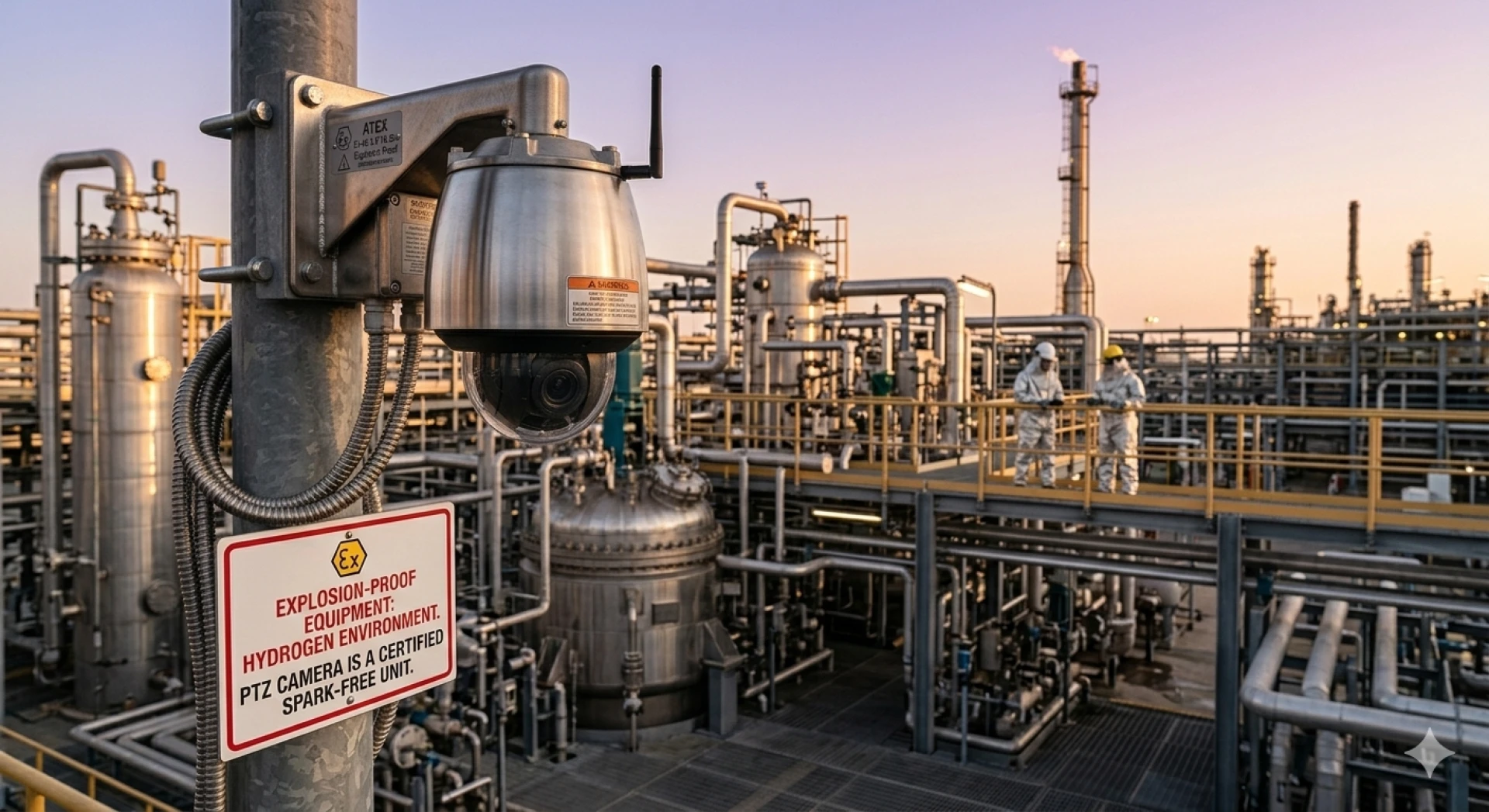
Visual monitoring via an Ex Proof PTZ Camera provides permit controllers and safety managers with a remote verification capability that significantly strengthens permit-to-work compliance. Before a permit is issued, camera footage can confirm that isolation barriers are correctly positioned and that the work area configuration matches the assumptions on which the permit is based. During the work, the camera can verify that personnel numbers and positions remain consistent with permit conditions, that no unauthorised equipment or ignition sources have been introduced to the area, and that the work scope has not expanded beyond the permitted boundary.
When conditions change — a nearby process upset that alters the atmospheric risk profile of the work area, an unplanned personnel movement that introduces an additional person to the permit zone, or the detection of a gas release in an adjacent area — real-time PTZ camera footage provides permit controllers with the immediate situational awareness they need to make rapid, informed decisions about whether to suspend the permit and evacuate the work area, rather than relying on second-hand reports from individuals who may themselves be at risk.
Accelerating Emergency Response and Minimising Escalation
When an industrial accident does occur despite preventive measures, the speed and quality of the initial emergency response is the primary determinant of whether the incident remains contained or escalates into a major emergency. The first minutes of any industrial incident are critical — the period during which the difference between a controlled shutdown and a catastrophic escalation is decided by the quality of information available to those managing the response.
An Explosion Proof PTZ Camera integrated with the facility's emergency response systems provides incident commanders with immediate, high-quality visual intelligence from the moment an alarm is triggered. Rather than dispatching a first responder into an unknown and potentially lethal atmosphere to physically assess conditions at the alarm location, the incident commander can observe conditions directly through the PTZ camera feed — identifying the nature, scale, and location of the incident, confirming whether personnel are in immediate danger, and directing emergency response resources with the precision that only genuine situational awareness enables.
This capability does not merely accelerate the response — it makes the response fundamentally safer by reducing the need for emergency responders to enter an unassessed hazardous environment as their first action. In incidents involving explosive atmospheres, the value of avoiding that first unnecessary entry into the danger zone cannot be overstated.
Building a Culture of Continuous Safety Awareness
Beyond the direct accident prevention mechanisms, the deployment of comprehensive explosion-proof PTZ surveillance across a hazardous industrial facility contributes to something more intangible but equally important — the development of a genuine safety culture in which continuous monitoring and accountability for safe behaviour are understood as permanent, non-negotiable features of the working environment.
When workers know that critical areas are under continuous visual surveillance by systems certified for their specific working environment, the social and psychological context for safe behaviour is reinforced. Procedural compliance rates improve. Unsafe shortcuts that might otherwise occur during periods of reduced supervision become less likely. And the data generated by continuous surveillance — patterns of near-miss events, recurring behavioural deviations, and process anomaly signatures — provides safety teams with the evidence base to drive targeted improvements in training, procedures, and physical safeguards.
Conclusion
The prevention of industrial accidents in hazardous environments requires a surveillance infrastructure that is continuously present, technically capable, certified for the explosive atmospheres in which it operates, and deeply integrated into the facility's broader safety management systems. The PTZ camera — and specifically the certified Explosion Proof PTZ Camera deployed across classified hazardous zones — delivers all of these attributes in a single technology platform that addresses process deviation detection, behavioural monitoring, permit-to-work compliance, emergency response support, and safety culture development simultaneously — and given the irreversible human and operational consequences that serious industrial accidents carry, what greater priority could any hazardous area facility have than ensuring its visual monitoring infrastructure is genuinely capable of preventing them before they occur?