In today’s competitive market, businesses must constantly innovate to stay ahead. Traditional problem-solving approaches often fall short when it comes to addressing complex challenges and meeting customer needs. This is where
plays a crucial role. It provides organizations with a structured yet flexible framework to drive innovation, foster creativity, and create customer-centric solutions that deliver real value.
What is Design Thinking?
Design thinking is a human-centered approach to problem-solving that focuses on understanding user needs, redefining problems, and creating innovative solutions through iterative testing. Unlike conventional methods that prioritize efficiency or cost, design thinking emphasizes empathy, collaboration, and experimentation.
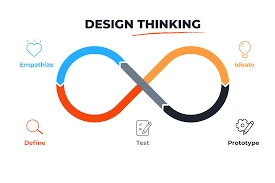
The process typically involves five stages:
- Empathize – Understanding the user’s pain points and experiences.
- Define – Clearly outlining the problem statement.
- Ideate – Brainstorming multiple solutions.
- Prototype – Developing simple models of potential solutions.
- Test – Refining ideas through user feedback and iteration.
How Design Thinking Drives Innovation
One of the biggest advantages of design thinking is its ability to spark innovation. By focusing on the end user, businesses can uncover unmet needs and opportunities that might otherwise go unnoticed. For example, companies like Apple, Airbnb, and Google have successfully applied design thinking to develop products and services that revolutionized their industries.
Innovation is not just about introducing new products; it’s about creating meaningful experiences. Through design thinking, organizations can explore creative possibilities, reduce risks by testing prototypes early, and ensure solutions align with user expectations.
Design Thinking and Customer-Centric Solutions
Customer-centricity is at the heart of successful businesses. Today’s consumers expect personalized, seamless, and engaging experiences. Design thinking provides the framework to deliver exactly that. By empathizing with customers, businesses can go beyond surface-level demands and understand deeper motivations and frustrations.
For instance, in the healthcare sector, design thinking has helped hospitals redesign patient experiences, making care more accessible and less stressful. In retail, it has enabled brands to create intuitive shopping experiences that build customer loyalty. By focusing on empathy and feedback, businesses ensure their solutions truly resonate with customers.
Benefits of Applying Design Thinking
Adopting design thinking in business operations offers several benefits, including:
- Improved Problem-Solving – Encourages creative and practical solutions to complex challenges.
- Faster Innovation Cycles – Prototyping and testing allow quicker refinements and market readiness.
- Higher Customer Satisfaction – Solutions are tailored to actual user needs.
- Cross-Functional Collaboration – Breaks silos by involving diverse teams in the ideation process.
- Reduced Risks – Early testing ensures flaws are identified before large-scale investments.
The Future of Design Thinking in Business
As industries embrace digital transformation, design thinking will play an even greater role in shaping innovative strategies. With technologies like AI, data analytics, and automation, businesses will need a human-centered approach to balance efficiency with empathy. This makes design thinking not just a tool, but a mindset for future growth.
Organizations that integrate design thinking into their culture will be better positioned to adapt to market shifts, create value-driven solutions, and maintain a competitive edge.
Conclusion
In a world where customer expectations are constantly evolving, innovation is no longer optional—it is essential. Design thinking provides the perfect balance of creativity, strategy, and empathy to drive meaningful innovation. By adopting this approach, businesses can develop customer-centric solutions that not only meet demands but also create memorable experiences.
For organizations aiming to stand out in a crowded marketplace, investing in design thinking is the key to building lasting relationships with customers and driving long-term success.