In today’s digital-first world, customers interact with businesses through multiple channels such as email, phone, social media, live chat, and websites. Managing these interactions efficiently can be challenging without a centralized system. This is where CRM software plays a vital role.
CRM systems help businesses manage, track, and optimize customer communication across various channels from a single platform. By doing so, organizations can deliver consistent, personalized, and timely responses that enhance customer satisfaction and loyalty. Businesses adopting CRM for SMBs and CRM for real estate can especially benefit from improved communication and better customer engagement.
Understanding Multi-Channel Communication
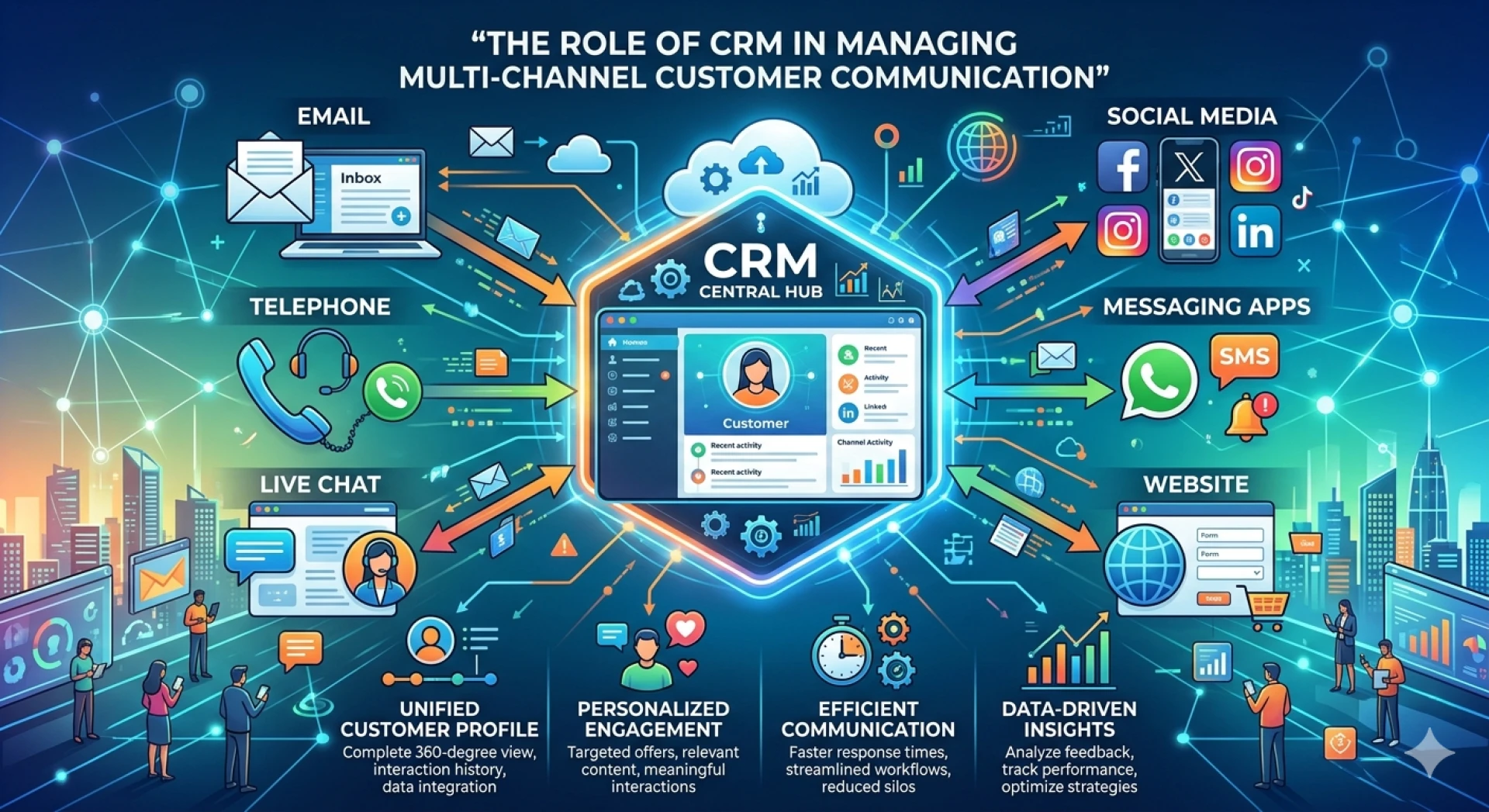
Multi-channel communication refers to engaging with customers through different platforms where they are most active. A customer might inquire about a product via social media, follow up through email, and expect support via chat.
Without a proper system, these interactions can become disconnected, leading to confusion and poor customer experience. CRM software ensures that all communication is unified and easily accessible, especially for businesses using CRM for SMBs and CRM for real estate.
Centralized Communication Management
One of the biggest advantages of CRM is its ability to centralize all customer interactions. Emails, calls, chat messages, and social media conversations are stored in one place.
This allows teams to access complete communication history, ensuring that no information is lost. Businesses leveraging CRM for SMBs and CRM for real estate can maintain better organization and deliver more efficient service.
Consistent Customer Experience
Customers expect a seamless experience regardless of the channel they use. CRM systems ensure that communication remains consistent across all touchpoints.
For example, if a customer switches from email to phone support, the agent can view previous interactions and continue the conversation without interruption. This consistency builds trust and improves customer satisfaction for companies using CRM for SMBs and CRM for real estate.
Improved Response Time
Quick responses are crucial in today’s competitive environment. CRM tools help businesses respond faster by organizing messages and prioritizing queries.
Automated notifications and alerts ensure that no customer inquiry goes unanswered. This leads to faster issue resolution and better customer experience, particularly for businesses using CRM for SMBs.
Personalization Across Channels
Personalization is key to effective communication. CRM systems use customer data such as preferences, behavior, and history to tailor messages.
Businesses can send personalized emails, offers, and responses based on customer needs. This enhances engagement and increases the likelihood of conversion. Companies using CRM for real estate can personalize property recommendations and client communication effectively.
Automation of Communication Workflows
Managing communication manually across multiple channels can be overwhelming. CRM systems automate routine tasks such as sending follow-up emails, reminders, and responses.
Automation ensures consistency and reduces manual effort, allowing teams to focus on more strategic activities. Businesses adopting CRM for SMBs can greatly benefit from these efficiencies.
Better Team Collaboration
CRM platforms enable better collaboration among teams by providing a shared view of customer interactions.
Sales, marketing, and support teams can access the same data, ensuring alignment and efficient communication. This helps in delivering a unified customer experience, especially for organizations using CRM for SMBs and CRM for real estate.
Data-Driven Insights
CRM systems provide valuable insights into communication performance. Businesses can analyze response times, customer engagement, and channel effectiveness.
These insights help organizations identify which channels perform best and optimize their communication strategies accordingly. Companies leveraging CRM for SMBs can make smarter decisions using these insights.
Enhanced Customer Engagement
By managing communication effectively across multiple channels, businesses can engage customers more meaningfully.
CRM systems help maintain regular contact, provide timely updates, and ensure that customers feel valued. This leads to stronger relationships and increased loyalty. Businesses using CRM for real estate can build long-term client relationships more effectively.
Scalability and Flexibility
As businesses grow, the volume of customer interactions increases. CRM systems are designed to handle large volumes of communication across multiple channels.
They provide the flexibility to add new channels and adapt to changing customer preferences without disrupting operations. This makes CRM for SMBs an ideal solution for growing businesses.
Conclusion
Managing multi-channel customer communication is essential for delivering a seamless and personalized customer experience. CRM software provides the tools needed to centralize interactions, automate workflows, and improve communication efficiency.
By leveraging solutions like CRM for SMBs and CRM for real estate, businesses can enhance customer engagement, improve response times, and build long-term relationships. In an increasingly connected world, CRM plays a crucial role in ensuring that every customer interaction is meaningful and consistent.