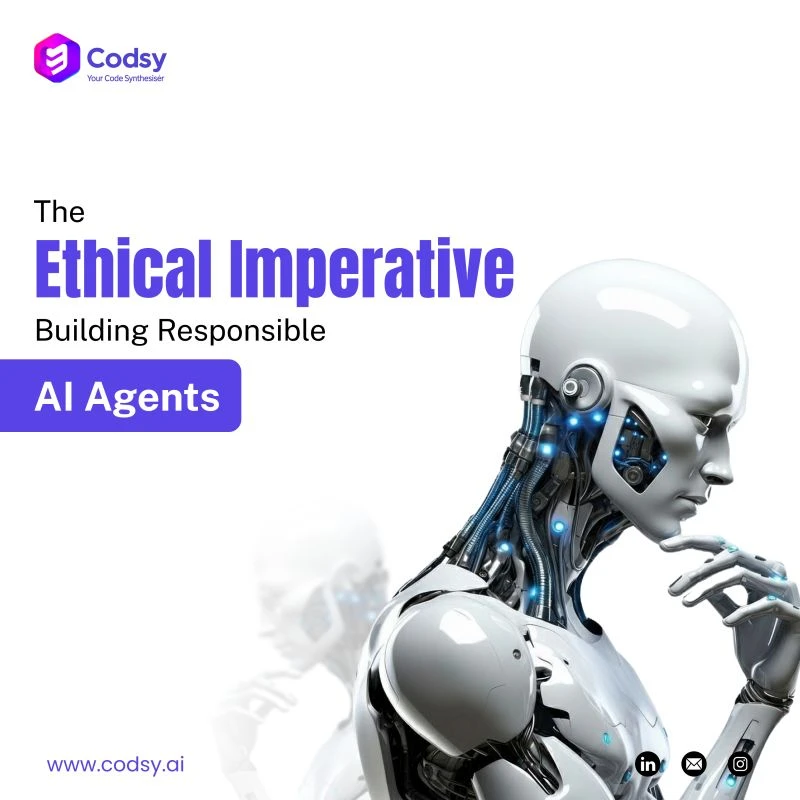
Artificial Intelligence is no longer a distant idea it’s a living part of how we create, communicate, and innovate. Yet, even as machines grow smarter, the real breakthrough lies not in replacing human creativity but in amplifying it.
That’s where AI agents come in intelligent systems designed to collaborate with humans, blending the best of human imagination with machine precision.
The Gap Between Human Creativity and Machine Intelligence
Humans are creative, intuitive, and emotionally aware. Machines, on the other hand, are logical, consistent, and capable of processing vast amounts of data.
For years, these two forces operated separately humans as the thinkers, machines as the executors.
But the rise of AI agents has started to close that gap. These agents are not just programmed tools; they are adaptive, context-aware collaborators capable of learning from human input and responding intelligently.
What Are AI Agents?
AI agents are intelligent software systems that can perceive their environment, make decisions, and take action toward specific goals. Unlike traditional automation, which simply follows pre-set commands, AI agents can reason, learn, and interact dynamically.
In creative and technical industries alike, they act as bridges, translating human intent into executable, optimized outcomes.
Collaboration, Not Replacement
One of the most misunderstood ideas in modern AI is that automation threatens human creativity. In reality, AI agents enhance it.
They take over repetitive and analytical work, freeing humans to focus on strategy, storytelling, and design.
For example, in software development, an AI agent can generate or optimize code while a developer focuses on architecture and user experience.
In marketing, an agent might analyze audience behavior, allowing the creative team to craft more resonant campaigns.
This partnership between intuition and computation creates a synergy that neither side could achieve alone.
The Role of AI Agents in Generative Creativity
With the emergence of Generative AI, AI agents are stepping beyond assistance and into creative collaboration. They can brainstorm design options, write code snippets, compose content, or generate art, all guided by human direction.
The key difference between a generative tool and an AI agent is autonomy.
While tools respond to prompts, agents can understand context, set goals, and refine their outputs over time.
In practice, this means creative professionals are no longer limited to static AI models; they’re working with evolving digital teammates that understand nuance and purpose.
The Human–Machine Loop
True creativity doesn’t happen in isolation — it’s a continuous feedback loop.
AI agents fit perfectly into this loop:
- Humans create ideas.
- AI agents analyze, expand, or execute those ideas.
- Humans review, adjust, and inspire new directions.
This process fuels innovation, ensuring that creative outcomes are both inspired and intelligently optimized.
A Real-World Example: Intelligent Collaboration in Software
Software development is one of the clearest examples of this partnership in action.
Platforms like Codsy AI are pioneering environments where personalized AI agents collaborate with human developers in real time — joining discussions, writing code, testing modules, and optimizing performance.
Here, the AI doesn’t replace the developer; it becomes a collaborator, helping teams move faster while maintaining precision.
This model demonstrates how human creativity and machine intelligence can coexist to push boundaries and deliver results that neither could achieve alone.
Benefits of Human–AI Collaboration Through Agents
- Efficiency: Routine tasks are handled autonomously, saving time.
- Consistency: AI maintains quality and accuracy across projects.
- Scalability: Teams can handle larger workloads without losing quality.
- Innovation: AI insights inspire fresh, data-backed ideas.
These outcomes show why businesses are rapidly adopting AI-driven collaboration frameworks it’s not just about speed; it’s about empowering people to work smarter and think bigger.
Ethical and Creative Balance
While the rise of AI agents promises incredible potential, it also demands responsibility.
Creativity must remain human-guided, with humans setting ethical boundaries and defining purpose.
Transparency in AI behavior, respect for intellectual property, and maintaining human oversight will ensure that technology serves as an enabler — not a replacement — for creativity.
The Future of Creative Collaboration
As AI agents continue to evolve, the creative process itself will transform.
Writers, developers, and designers will shift from “doing the work” to directing intelligent systems that do the work with them.
This doesn’t diminish creativity — it magnifies it.
Machines will handle structure and scale; humans will drive vision and emotion.
Conclusion
The fusion of human creativity and machine intelligence defines the future of innovation.
AI agents serve as the vital bridge between imagination and execution, transforming how ideas move from concept to reality.
Platforms like Codsy AI exemplify this collaboration — enabling humans and machines to think, create, and evolve together.
In this new era, creativity isn’t replaced by AI; it’s reinforced by it.