The Moon itself does not change color, but our view of it does. The real reason lies in atmospheric physics and light scattering. Sunlight reflected from the Moon must pass through Earth’s atmosphere before reaching our eyes. Depending on atmospheric conditions, this light can appear different in color.
When the Moon is high in the sky, its light travels a shorter path through the atmosphere, making it appear bright white. When it’s closer to the horizon, the path becomes longer, scattering shorter wavelengths and enhancing reds and oranges. This is similar to why sunsets appear red.
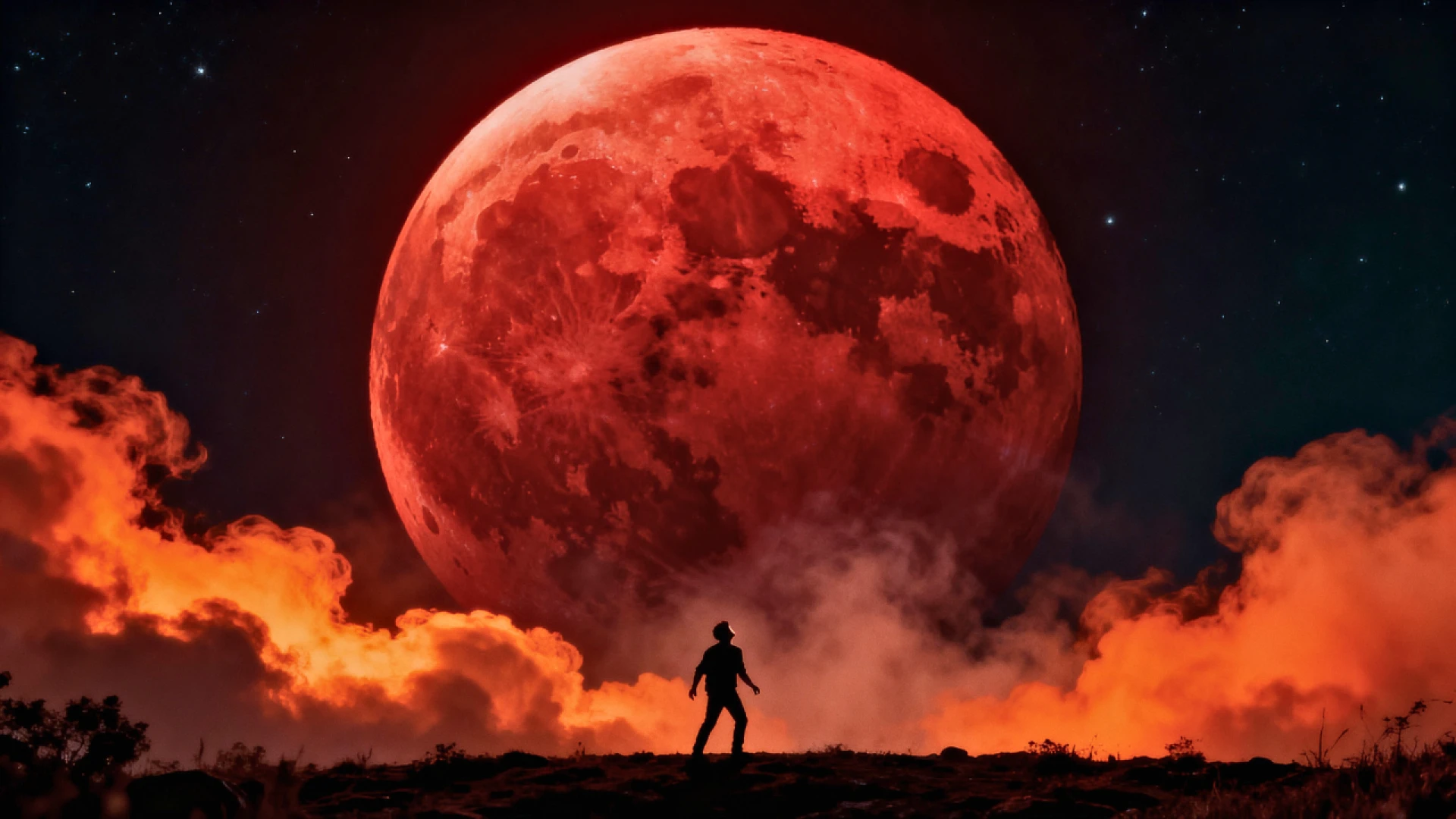
Special astronomical events also affect lunar color. During a total lunar eclipse, Earth blocks direct sunlight, and only refracted red light reaches the Moon. This gives it a deep red appearance that can vary depending on global weather and atmospheric clarity.
Particles in the air—such as dust, smoke, and pollution—can further intensify or dull these colors. In rare cases, heavy particles can even give the Moon a bluish tint.
Each color shift tells a story about Earth’s atmosphere, making the Moon a natural indicator of environmental and cosmic conditions.