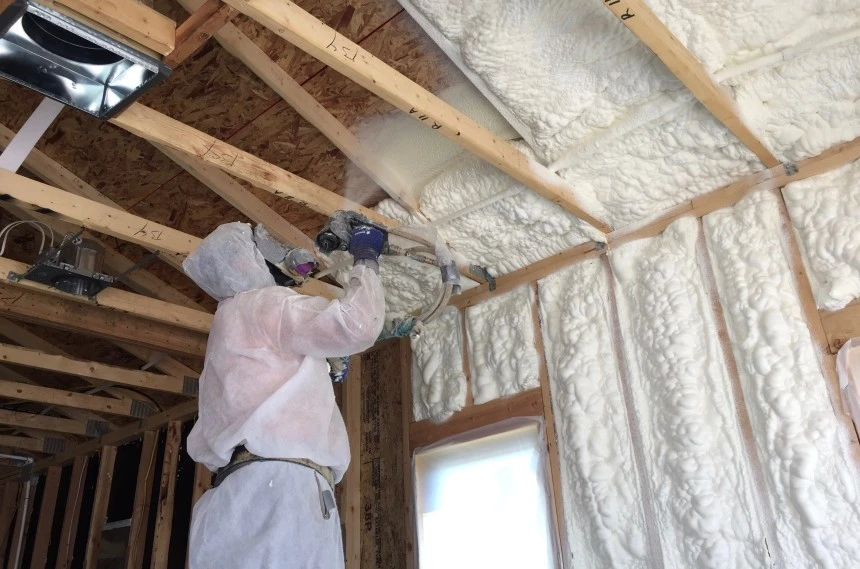
Spray foam insulation is one of the most effective materials available for improving a home's energy efficiency and comfort, yet it's surrounded by persistent myths. The most common misconceptions center on its safety, cost, and performance. In reality, when installed by a certified professional, spray polyurethane foam (SPF) is a safe, inert material that provides an exceptional air seal and thermal barrier. Misinformation often stems from improper installations or a misunderstanding of how the material works within a home's building envelope.
This article cuts through the noise to deliver clear, factual information about spray foam insulation, tackling the biggest myths one by one. The details provided are drawn from the experience of certified master installers and building science specialists who work with this material daily. By understanding the facts, homeowners can make a more informed decision about whether spray foam is the right choice for their property.
Myth: Spray foam is a Dangerous Chemical Cocktail
One of the biggest fears surrounding spray foam is its chemical composition and the potential for off-gassing. The truth is that spray foam is created through a chemical reaction between two separate liquid components. During application, there are volatile organic compounds (VOCs) present, which is why professional installers wear full protective gear and ventilate the area. However, once the foam cures, typically within 24 hours, the chemical reaction is complete. The resulting foam becomes an inert, stable, and rigid plastic that is safe for occupancy.
The key to safety is proper installation. Certified technicians are trained to manage the chemical ratio, temperature, and pressure precisely. If these factors are off, the foam may not cure correctly, which can lead to lingering odors or other issues. This is why homeowners should always ask for proof of certification from an organization like the Spray Polyurethane Foam Alliance (SPFA). A certified installer understands the science behind the application and follows strict safety protocols to ensure the home is safe to re-enter after the specified curing time.
Myth: The Upfront Cost is Not Worth It
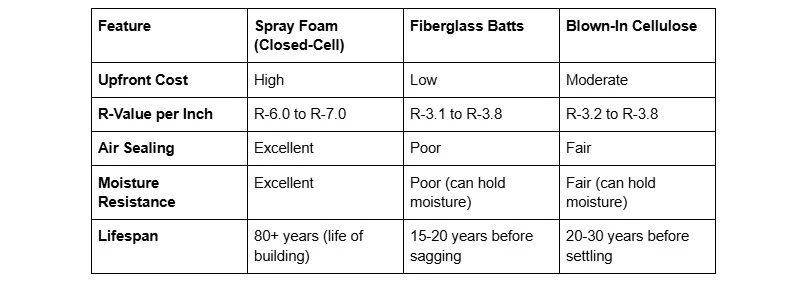
There's no denying that spray foam insulation has a higher initial installation cost than traditional materials like fiberglass or cellulose. Looking only at the upfront price, however, misses the bigger picture of long-term value. Spray foam is not just an insulator; it’s also an air barrier and, in the case of closed-cell foam, a moisture barrier. This multi-functionality is where its true value lies.
Because it expands to fill every crack and gap, spray foam can reduce air leakage in a home by a huge margin. The Department of Energy estimates that air leakage can account for up to 40% of the energy used for heating and cooling a typical home. By stopping these leaks, spray foam can lower monthly energy bills substantially, often creating a return on the initial investment within a few years. It also adds structural integrity to walls and roofs and protects against moisture damage, preventing far more expensive repairs down the road.
Insulation Material Cost and Performance Comparison
Myth: R-Value Is the Only Performance Metric That Matters
For decades, R-value has been the standard for measuring Professional insulation performance. While it's a good measure of an insulation's ability to resist conductive heat flow, it doesn't account for heat loss through air movement (convection). A home can have walls packed with high R-value fiberglass, but if there are gaps around outlets, windows, and framing, air will still move through, carrying energy with it.
This is where spray foam stands out. Its greatest strength is its ability to create a monolithic air barrier. It stops drafts and air leaks completely, which is something batt and blown-in insulation just can't do on their own. In a climate like Chicago's, which experiences both frigid winters and humid summers, controlling air movement is essential. An effective air barrier helps prevent ice dams in the winter, reduces the strain on an air conditioner in the summer, and improves overall indoor comfort year-round. An airtight building envelope is just as important as a high R-value.
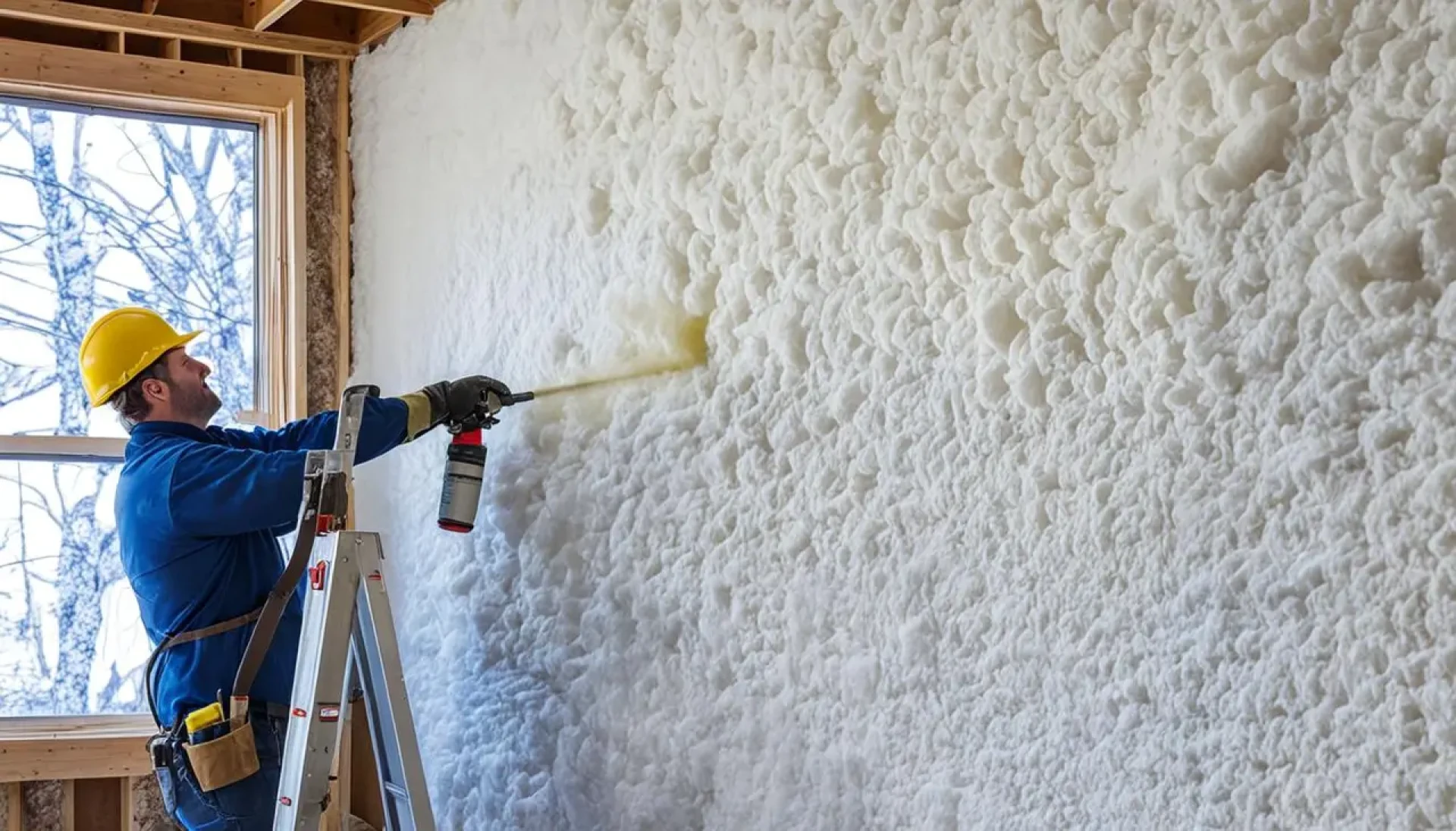
Myth: You Can Get the Same Results with a DIY Kit
Hardware stores sell DIY spray foam kits, which can be tempting for handy homeowners. These kits are fine for small projects, like sealing a rim joist or filling a small cavity. They are not, however, a substitute for a professional installation when insulating an entire attic, wall system, or crawl space.
Professional equipment is a complex system that heats the chemical components to a specific temperature (often over 120°F) and pressurizes them correctly. This ensures the two parts mix perfectly at the nozzle to create high-quality, stable foam. DIY kits lack this level of control. Using them for large applications often results in a poor chemical reaction, leading to foam that shrinks, pulls away from studs, or fails to cure properly. A professional also prepares the surface, ensuring it is clean, dry, and free of contaminants that could prevent the foam from adhering. This preparation step is often overlooked in DIY projects and is critical for a successful application.
Things to Consider Before Making a Decision
Beyond debunking myths, choosing the right insulation involves thinking about a few key factors before committing to a spray foam project.
- Home Ventilation: Because spray foam makes a home extremely airtight, the building's ventilation system must be considered. Older homes often "breathe" through unintentional leaks. Sealing them up may require adding or upgrading mechanical ventilation, like a Heat Recovery Ventilator (HRV), to ensure fresh air exchange and healthy indoor air quality.
- Project Type: The approach for a new construction project is very different from a retrofit in an existing home. Retrofitting requires careful planning to access wall cavities and other tight spaces without causing extensive disruption.
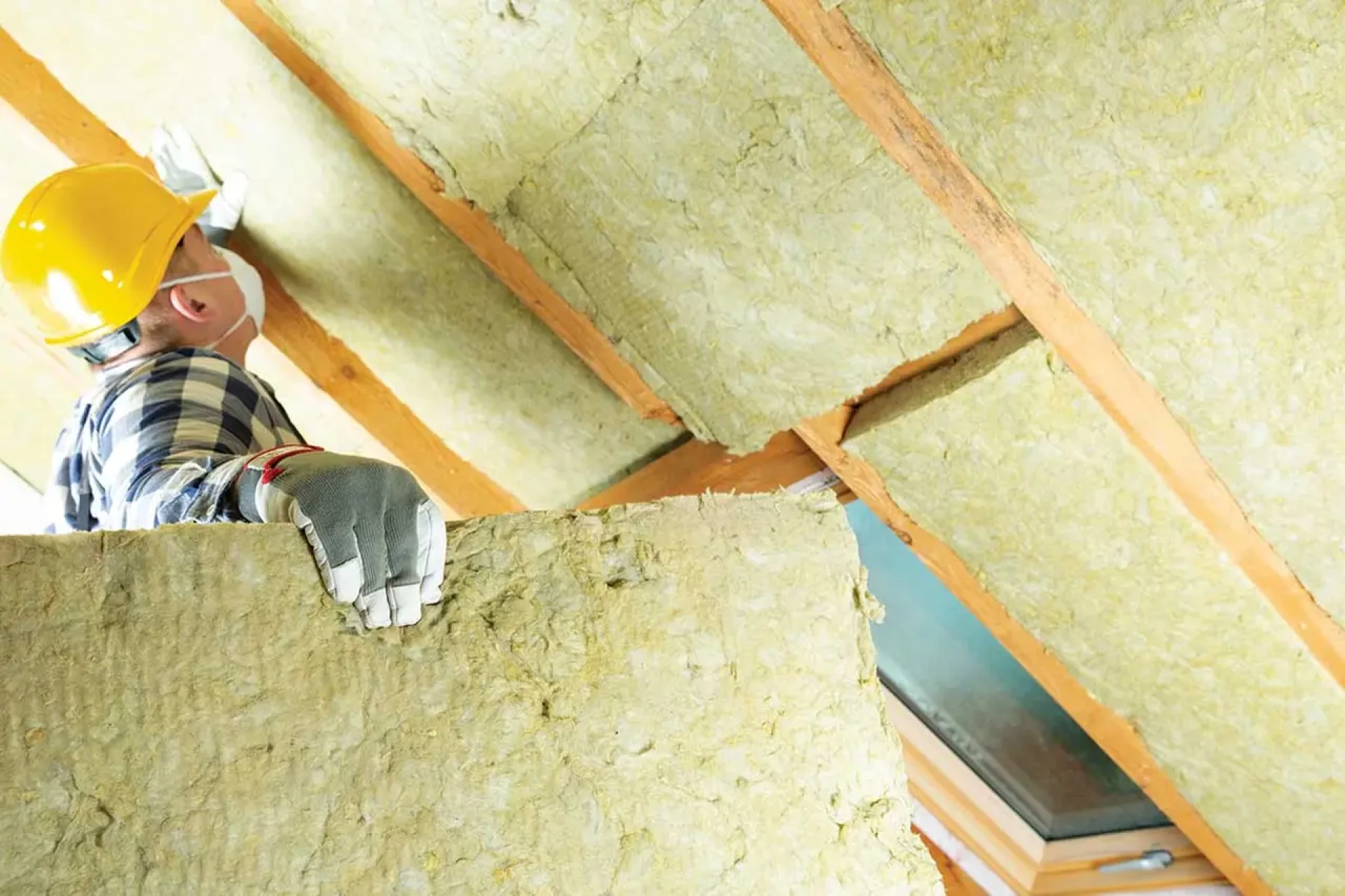
- The Right Foam for the Job: There are two main types of spray foam. Open-cell foam is lighter, less dense, and excellent for sound dampening. Closed-cell foam is rigid, dense, and acts as a vapor barrier, making it ideal for basements, crawl spaces, and situations where moisture control is a priority. An expert can recommend the right product for each specific application.
Questions People Ask About Spray Foam Insulation
Does spray foam shrink over time?
No. When installed correctly, professional-grade spray foam is dimensionally stable. It cures into a rigid plastic that permanently adheres to the substrate and will not shrink, sag, or settle over the life of the building.
Can spray foam be applied over old insulation?
This is generally not recommended. For spray foam to create an effective air seal, it must bond directly to the sheathing and framing. Leaving old, compressed, or contaminated insulation in place can prevent proper adhesion and compromise the performance of the new foam.
Is spray foam a good sound barrier?
Yes, it offers excellent sound control. Open-cell foam, in particular, is very effective at dampening airborne sound due to its soft, porous cell structure. This makes it a great choice for media rooms, offices, and walls between bedrooms.
How long does spray foam insulation last?
Spray foam insulation is a permanent solution. It is an inert polymer that does not break down, degrade, or lose its R-value over time. It is expected to last for the entire lifespan of the home.
Can pests eat through spray foam?
Spray foam offers no food value for insects or rodents. Its rigid, solid nature also creates a formidable barrier that seals off the cracks and holes pests typically use to enter a home. While a very determined rodent could technically tunnel through it, the foam itself is not an attractant.
Final Thoughts on Spray Foam
Many of the fears and myths about spray foam insulation come from stories of improper installation. When applied correctly by a trained and certified professional, it is one of the best building materials available for creating a comfortable, healthy, and energy-efficient home. It provides a superior air seal, offers high thermal resistance, and adds durability. Homeowners should focus on finding a qualified contractor who understands building science and can recommend the right solution for their specific home and climate.
Get a Professional Insulation Assessment
For homeowners struggling with high energy bills, drafts, or moisture issues, a professional building assessment is often the best first step. Experts can diagnose the root cause of these problems, which may not always be obvious. The team at South Chicago Insulation offers comprehensive evaluations to pinpoint air leaks and insulation gaps. They have the expertise to handle complex home performance challenges. Homeowners can contact them by phone at (779) 803-8025 or by email at [email protected] to discuss their home’s specific needs.
Author: Bob Gasca attended his first spray foam training in 2007 and has since pursued yearly training to stay current. He is a certified Spray Foam Master Installer and a Spray Foam Worldwide Ambassador, specializing in solutions for complex moisture and air infiltration issues.
Reviewer: Noah Gonzalez reviewed this article, drawing on 9 years of experience to offer suggestions that make the guidance more directly useful for insulation contractors.