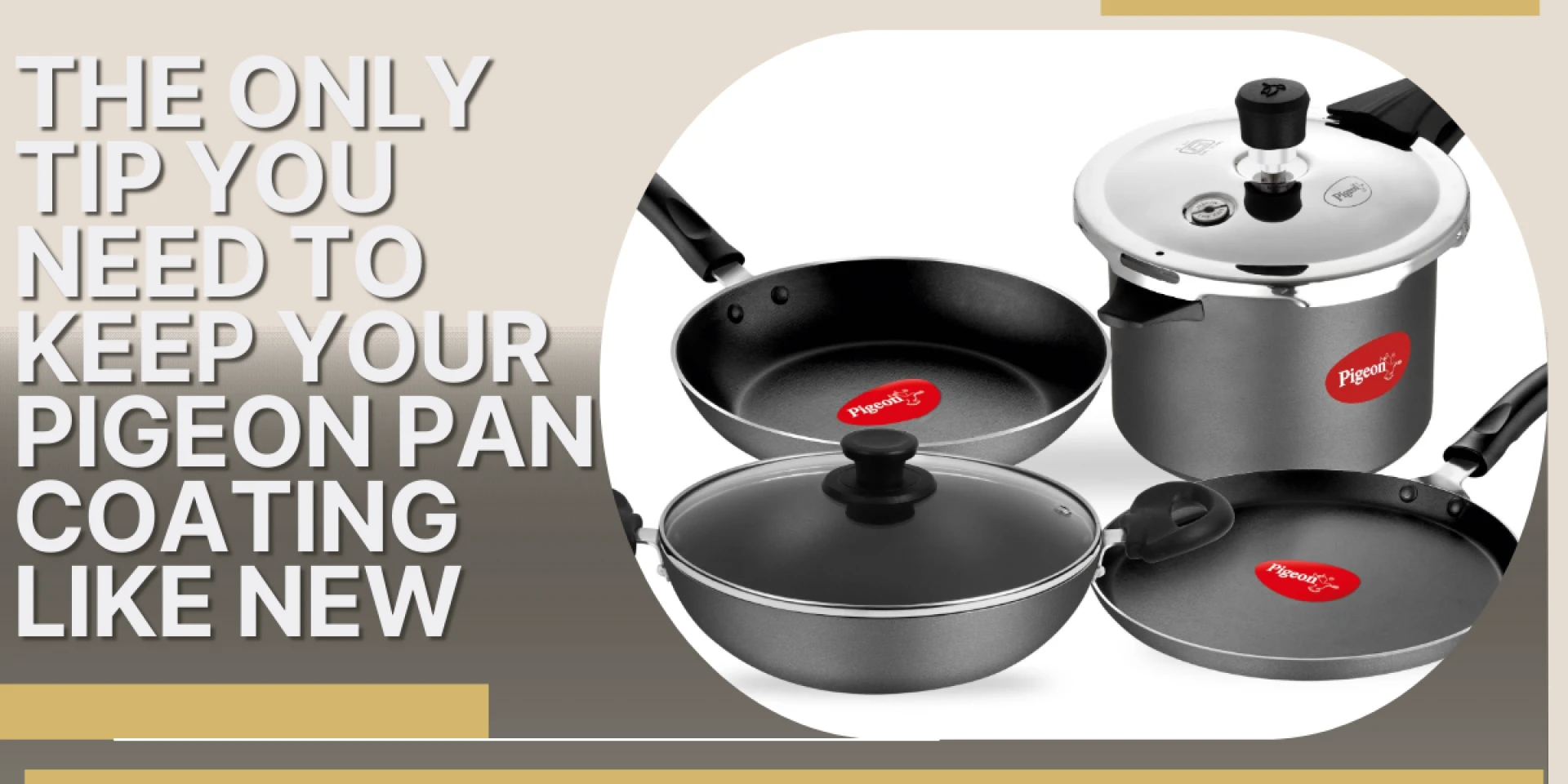
A good pan set can completely elevate your cooking experience, but nothing affects performance faster than a worn-out non-stick coating. The coating on a Pigeon pan is designed to make cooking smoother, healthier, and easier—but only when it stays intact. Once it begins to scratch, flake, or peel, cooking becomes frustrating, food sticks to the surface, and the pan loses its efficiency.
The good news? Keeping your Pigeon pan coating in excellent condition is far easier than most people think. In fact, there is one powerful rule that prevents 90% of coating damage: use the right utensils and handle the pan gently at all times.
Every other tip simply supports this main principle. Here’s a detailed guide to keeping your Pigeon Pan Set coating looking and performing like new for years.
1. The Golden Rule: Never Use Metal Utensils
Metal utensils are the biggest enemy of non-stick coating. Every scrape from a metal spoon, spatula, or ladle creates microscopic scratches that slowly weaken the coating. Over time, these scratches turn into chips, peeling, and uneven cooking.
Switching to:
- silicone
- wooden
- nylon
- bamboo utensils
instantly extends the life of your pans. Even stirring gently with metal can damage the surface more than you realize. This is the single most effective habit to protect your non-stick coating.
2. Heat Control: Low to Medium Is the Sweet Spot
Many people assume that a Pigeon pan can handle high heat at all times. While the base is built for durability, the non-stick coating wears out quickly under extreme temperatures.
Cooking at low to medium heat ensures:
- The coating stays intact
- Food cooks evenly
- The surface doesn’t warp
- The finish remains smooth
If you need high heat, preheat briefly and reduce the flame once your ingredients are added. Slow, controlled heating protects the coating far better than quick blasts of high flame.
3. Avoid Using Non-Stick Spray Oils
This is an unexpected one.
Pre-packaged oil sprays leave a sticky residue that builds up over time. Even though it seems harmless, these residues cling to the coating, making them hard to remove. This forces you to scrub harder, which damages the surface.
Instead, use:
- a few drops of cooking oil
- a silicone brush
- a paper towel to spread the oil evenly
This method coats the pan beautifully without leaving stubborn layers behind.
4. Cool Before Washing — Every Time
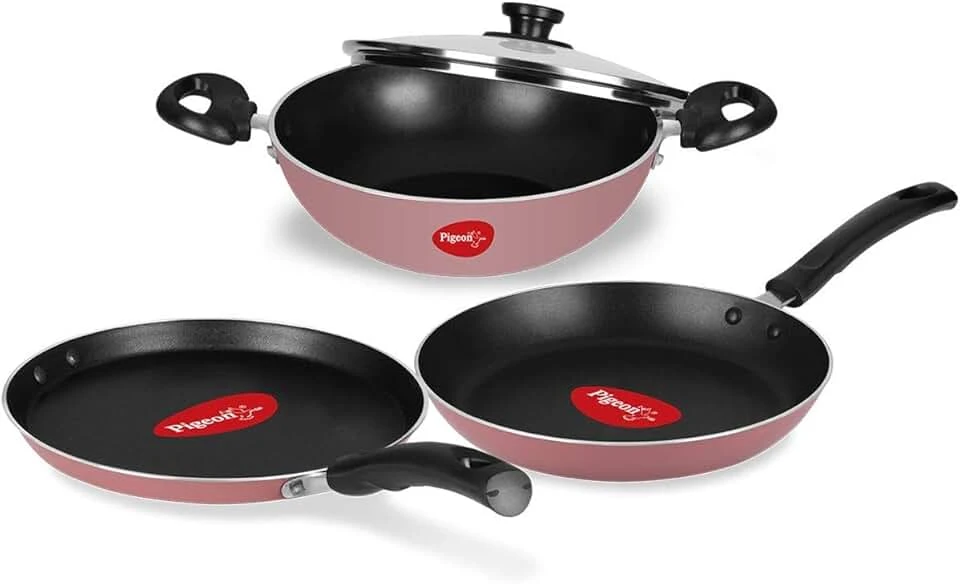
Washing a hot non-stick pan under cold water leads to thermal shock. This can warp the base and loosen the coating from the metal surface. Once the pan warps, the coating begins to crack slowly.
Always allow the pan to cool naturally before washing.
Even waiting 2–3 minutes helps maintain the structural integrity of both the coating and the base.
5. Gentle Cleaning = Long-Lasting Coating
Strong scrubbing is one of the biggest reasons non-stick pans deteriorate early. Even with mild scrubbers, over-scrubbing reduces coating quality over time.
For daily cleaning:
- Add warm water
- Add one drop of dish soap.
- Use a soft sponge
- Wipe gently
- Rinse and dry
If food is stuck, soak the pan for 10 minutes. Never try to scrape the food off. Soaking loosens it naturally without damaging the coating.
6. Stacking Pans Safely Prevents Invisible Damage
Many coatings get scratched in storage, not during cooking.
When pans are stacked directly on top of each other, the bottom of one pan rubs against the non-stick surface of another. Over time, this leads to dull patches and micro-scratches.
To avoid this:
- Place a soft cloth between pans
- Use felt cookware protectors
- hang pans if you have the space
This tiny habit protects the coating far better than most people realize.
7. Use Oil, Even With Non-Stick
Many people skip oil entirely, thinking the coating eliminates the need for it. But using a small amount of oil helps create a protective barrier between the food and the pan. It reduces friction and prevents wear over time.
Just a thin layer makes cooking smoother and keeps the coating healthier for longer.
Conclusion
A non-stick coating is only as strong as the care it receives. While there are many small habits that help protect it, the single most important rule is simple: use gentle utensils and handle it gently at all times. When combined with proper cleaning, heat control, and safe storage, your Pigeon pan set stays smooth, reliable, and efficient for years.
If you want cooking to be easier, healthier, and more enjoyable, protecting your non-stick coating is the key—and it starts with the smallest daily habits. With guidance and smarter kitchen practices encouraged by OWEG, you can extend the life of your cookware and enjoy consistently better results in every meal.