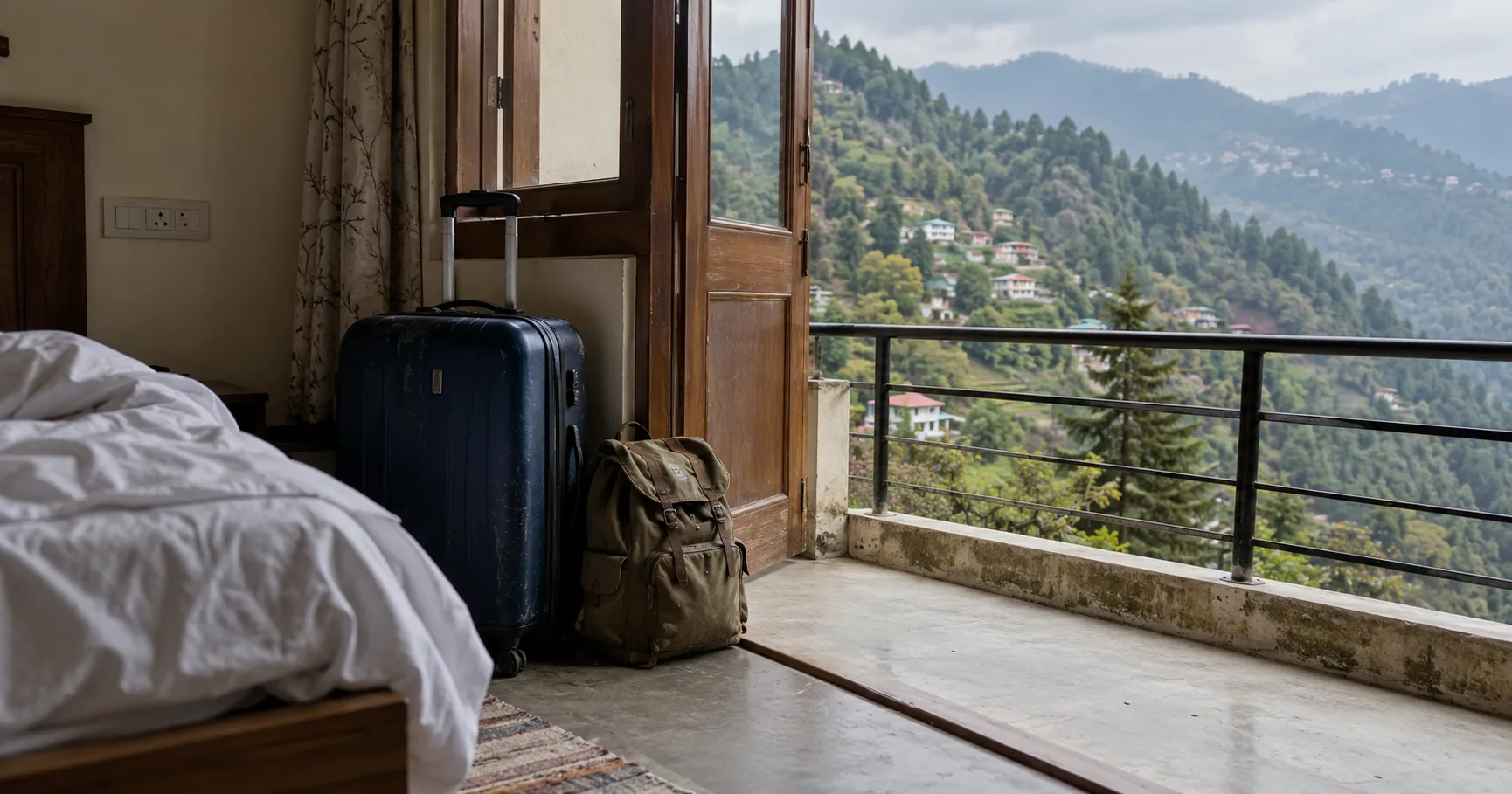
The itinerary looks straightforward: arrive, explore, stay overnight and move on the next morning.
Repeat that pattern for several days, however, and a holiday can begin to feel like a series of checkouts. Bags never quite get unpacked. Breakfast depends on the departure time. The place you reached yesterday evening disappears through the rear window before you have properly seen it.
One-night stays are sometimes useful on a Uttarakhand trip. The question is whether each one helps the journey or simply adds another destination to the list.
A night in a destination is not a full day there
When reading an itinerary, it is easy to confuse the number of nights with the amount of time available.
Imagine reaching a hotel in the late afternoon and leaving after breakfast. Technically, you have stayed in that destination. In practice, you may have had time for little more than dinner and a short walk.
That can work well for a transit stop. It is less satisfying when the destination was one of your main reasons for travelling.
For each place you are excited about, check the expected arrival and departure times. Look for usable time between them rather than counting the overnight stay alone.
Moving hotels has its own workload
The journey between two hotels is only part of a moving day.
There is also the search for a missing charger, the final room check, settling bills and fitting luggage back into the vehicle. At the next property, the process starts again in reverse.
For a couple travelling light, this may be a minor inconvenience. For a larger family, it can shape much of the day.
Before adding another overnight stop, consider whether the experience there justifies the extra move.
When a one-night stop makes sense
A short stay has a clear purpose when it breaks a longer journey or positions you conveniently for the following day.
It may also suit travellers who enjoy moving regularly and care more about covering a route than spending time in individual towns.
The useful question is: “What does this stop allow us to do?”
A convincing answer might be an easier onward journey or enough time for a particular visit. “It adds another place to the package” is less helpful.
When a second night changes the experience
Staying a second night gives you a day without checkout.
You can leave luggage in the room, return for a rest and make plans without coordinating another hotel arrival. It also creates room to move an outing if the group feels tired.
This flexibility matters when people have different energy levels. Some can head out early while others take a slower morning.
An extra night does not automatically improve every itinerary. It is most useful where you have enough interest in the destination to enjoy the additional time.
Read the route through its overnight stops
Before studying the attraction list, write down only the places where you will sleep.
Next, mark every day that involves changing hotels. This simple exercise makes a busy route easier to recognise.
Then ask:
- Are we moving on consecutive days?
- Which destination deserves more time?
- Are we returning along the same route unnecessarily?
- Could one stop be removed without losing an experience we care about?
- Does our final night leave a manageable journey to the departure point?
When comparing published Uttarakhand tour itineraries, use the overnight sequence to assess the pace before comparing the number of attractions.
Agree on the pace before booking
“Relaxed” means different things to different travellers.
One person may consider a morning drive followed by sightseeing an easy day. Another may want to stay in the same hotel and decide what to do after breakfast.
Instead of asking your group whether an itinerary looks comfortable, discuss specific choices. How many early starts are acceptable? Does anyone want an afternoon rest? Would you rather see another town or have a full day in the current one?
These answers give the person arranging the trip something concrete to work with.
Make one small change before starting again
You do not always need to redesign the entire holiday.
Choose the day that looks most crowded. See what happens if you remove its least important stop, spend an additional night or move an activity to another day.
Sometimes that single adjustment creates enough breathing room for the whole trip.
Before confirming, finish this sentence for every overnight stay: “We are sleeping here because…”
If each answer makes sense to your group, the itinerary is more likely to suit the holiday you actually want.
Disclosure: The contributor is affiliated with Chaukhamba Travels, which operates the linked itinerary page.