If you’ve spent any time browsing property portals lately, chances are you’ve bumped into a project called The King’s Avenue at Codename S.E.Z, and honestly, it’s hard to miss. Everyone from seasoned NRI investors to first-time land buyers seems to be talking about this Vrindavan development, and there’s a good reason for that buzz. It isn’t just another plotted layout tucked away on the outskirts of a pilgrim town — it’s being marketed as a full-blown lifestyle destination wrapped around spirituality, wellness, and long-term land appreciation.
In this article, we’re going to walk through everything you’d actually want to know before you even think about picking up the phone to call a sales executive: the location, the pricing, the plot sizes, the amenities, and a few practical things you should double-check before signing anything. Think of this as the conversation a well-informed friend would have with you over chai, minus the sales pitch.
What Is The King’s Avenue at Codename S.E.Z, Vrindavan?
The King’s Avenue at Codename S.E.Z is a premium plotted land development spread across roughly 65 acres in Vrindavan, Uttar Pradesh, developed by The House of Abhinandan Lodha, better known in the industry simply as HoABL. The project sits at the heart of what the developer calls an emerging “Spiritual Economic Zone,” a fairly novel positioning that blends the idea of a religious tourism corridor with a modern, gated residential township.
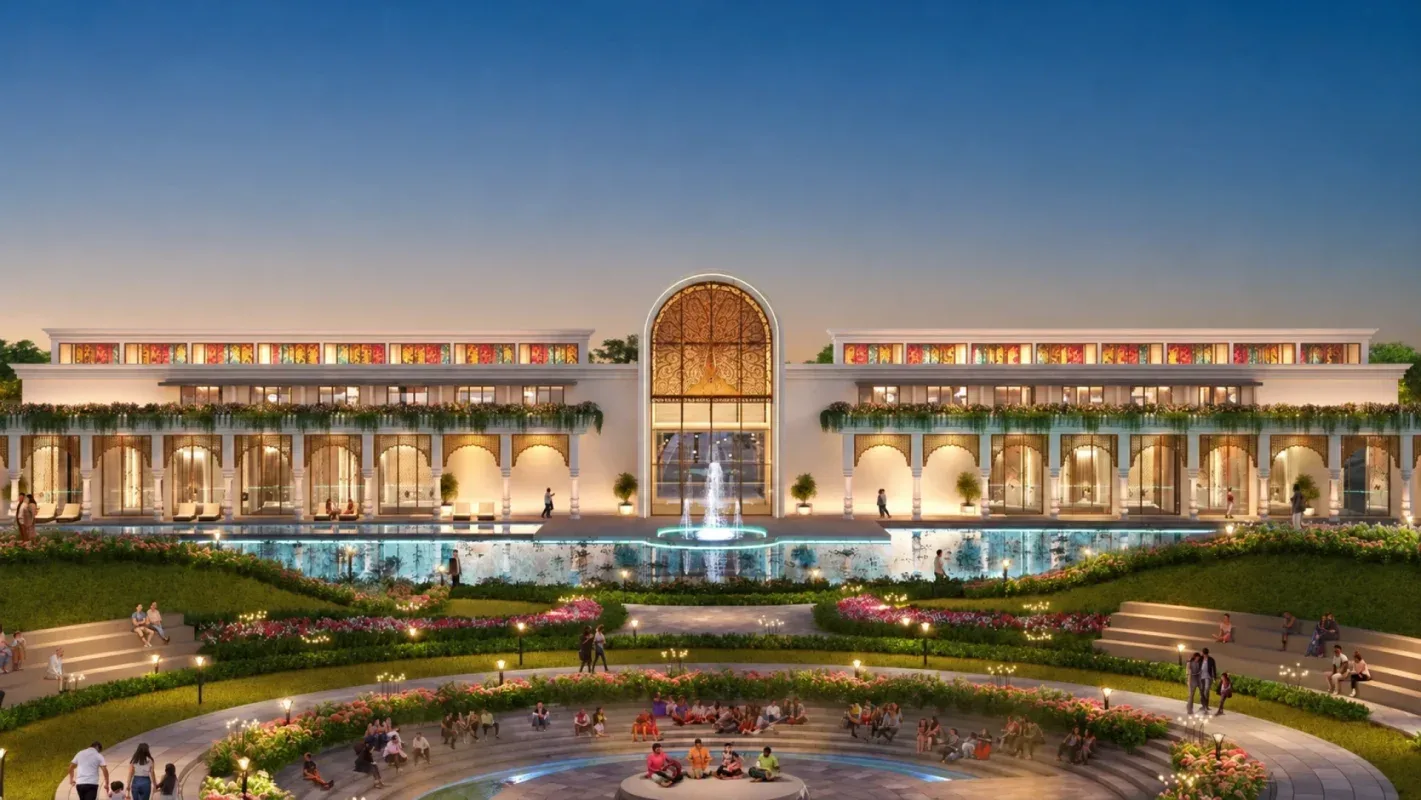
What makes this project stand out on paper is its branding as the world’s first “sensorial branded land development,” a phrase you’ll see repeated across their marketing, which essentially means the layout has been designed around sensory experiences — think landscaped gardens, meditation zones, and themed walkways rather than just rows of numbered plots.
The master plan reportedly draws design inspiration from the peacock, a bird closely associated with Lord Krishna, and the architectural vision has been credited to HCP Architects, a firm with a fairly recognizable portfolio in India. Whether you’re a spiritually inclined buyer looking for a second home near the temples of Vrindavan or a purely numbers-driven investor eyeing appreciation potential, this project has been packaged to appeal to both crowds at once, and that dual appeal is precisely why it’s generating so much conversation right now.
Why Vrindavan Is Becoming a Hotspot for Real Estate Investors
You might be wondering why a temple town like Vrindavan is suddenly on every investor’s radar instead of just being a weekend pilgrimage stop. The honest answer is that religious tourism in India has quietly become one of the strongest economic engines in the real estate sector, and Vrindavan sits right in the middle of that wave.
According to project-level data shared by the developer, tourist footfall in the region is projected to climb from roughly 2.5 crore visitors to nearly 6.2 crore by 2030, and that kind of growth doesn’t happen in a vacuum — it drags hospitality, retail, and residential demand along with it. Add to that a reported ₹32,000-crore transformation planned for the broader Vrindavan-Mathura belt, and you start to understand why developers are racing to plant their flags here early, almost the same way investors piled into Goa or Rishikesh a decade before those markets matured.
The Rise of the Spiritual Economic Zone Concept
The term “Spiritual Economic Zone” might sound like clever marketing at first glance, and to some extent, it is, but there’s an underlying logic to it that’s worth unpacking. Just as Special Economic Zones were created decades ago to concentrate industrial and export activity in specific pockets, this concept tries to concentrate wellness tourism, religious hospitality, and residential investment around a single geographic node.
Vrindavan already pulls in devotees from across the country and abroad for temples like Banke Bihari and ISKCON, so the theory is that formalizing this into a branded zone will attract more structured, higher-quality development rather than the piecemeal plotting that’s historically dominated small-town real estate. Whether this framing holds up as a long-term economic model remains to be seen, since it’s still a relatively new positioning in the Indian property market, but it has undeniably captured attention and driven early interest into projects like King’s Avenue.
Government Push and Infrastructure Boost
None of this growth story works without infrastructure, and to be fair, the state government has been putting real money behind Braj region development. Reports point to a roughly ₹30,000-crore master plan for the wider Braj belt, covering everything from road widening to heritage conservation, and that kind of public investment tends to have a magnetic effect on private capital.
The upcoming Jewar International Airport, located a little over an hour away, is frequently cited by developers and brokers alike as a genuine game-changer for the region, since it would put Vrindavan within comfortable striking distance for both domestic and international travelers. When you combine improved road networks with an international airport nearby, the investment thesis for land in this belt starts to look considerably more grounded than pure speculation.
The King’s Avenue Location & Connectivity
Location is, as always, the single biggest factor that will make or break a land investment, and this is where The King’s Avenue at Codename S.E.Z tries to make its strongest case. The project is situated on Goverdhan Road in Vrindavan, a stretch that’s increasingly being positioned by local brokers as a high-growth micro-market thanks to its relative proximity to the older, more congested parts of the city while still offering room for large-scale planned development.
Being close to Goverdhan Road also means the plot is within a reasonably short drive of some of the most visited religious sites in the entire Braj region, which matters enormously for a project banking on spiritual tourism as its core selling point. For anyone evaluating plots purely from a resale or rental perspective, that combination of accessibility and religious relevance is often what separates a project that appreciates steadily from one that simply sits stagnant.
Proximity to Religious Landmarks
One of the more compelling arguments for buying here is simply how close the project sits to Vrindavan’s marquee temples. Marketing materials and listing platforms consistently mention walking or short-drive distance to landmarks such as Prem Mandir, the Banke Bihari Temple, and the ISKCON Vrindavan temple complex, three of the most heavily visited religious sites in the town.
If you’ve ever visited Vrindavan during a festival season, you already know how much footfall these temples pull in, and that proximity translates directly into potential value for anyone thinking about eventual resale, homestay income, or simply the convenience of daily darshan if you plan to live there. It’s worth remembering, though, that “proximity” in marketing brochures can sometimes be generously measured, so a physical site visit to actually gauge travel time during peak traffic hours is something no serious buyer should skip.
Road, Highway & Upcoming Metro Connectivity
Beyond the temples, the broader connectivity picture is what really matters for long-term appreciation, and this is where the project leans on some genuinely significant infrastructure. The site is positioned to benefit from access to NH-44 and NH-19, both of which are critical arteries linking Delhi, Agra, and Mathura, along with connectivity to the Yamuna Expressway that dramatically cuts travel time to Noida and the wider Delhi-NCR region.
There’s also mention of a Greenfield Link connecting the Yamuna Expressway to NH-19, plus an upcoming Mathura–Vrindavan Metro extension that, if delivered on schedule, would give residents fast intra-city movement between the two temple towns. None of these projects are fully operational yet, so treat them as upside potential rather than guaranteed amenities on day one, but collectively they paint a picture of a region that’s investing seriously in getting people in and out efficiently.
Price List of The King’s Avenue at Codename S.E.Z
Now let’s get to the number everyone actually clicks on this article for: the price. Based on current listing data, plots at The King’s Avenue at Codename S.E.Z have been priced anywhere from roughly ₹1.18 crore at the entry level up to around ₹1.83 crore for the larger parcels, depending on plot size, facing, and location within the layout. More recent revised pricing for the 140 square meter plots — that’s about 1,506 square feet — reportedly starts around ₹1.51 crore on an all-inclusive basis, while an earlier “Divine Series” collection was launched with 1,248 square foot units priced from about ₹1.28 crore.
It’s genuinely important to flag here that real estate pricing, especially in a fast-launching project like this one, tends to shift frequently based on phase-wise releases, demand, and inventory availability, so treat any number you read online, including the ones in this article, as indicative rather than final. Always confirm the current rate card directly with the developer or an authorized channel partner before making any financial commitment.
Plot Sizes and Price Range
As you can see from the table, the pricing effectively scales with plot size in a fairly linear fashion, which is typical of well-structured branded land developments rather than the somewhat chaotic pricing you often find in unorganized local layouts. What’s worth noting is that these are described as “all-inclusive” figures in most listings, meaning they’re meant to cover the base land cost along with development charges, though buyers should always get a full cost breakdown in writing that separates land cost, preferential location charges, club membership fees, and any registration or stamp duty components, since these can add a meaningful percentage on top of the headline number.
Payment Plans and Booking Process
Most branded plotted developments, and King’s Avenue appears to follow this pattern, offer buyers a mix of payment structures rather than demanding the full amount upfront. Typically this includes a booking amount to secure the plot, followed by construction or development-linked installments, and in some cases interest-free EMI windows for a limited period before interest starts accruing on the remaining balance.
The general booking journey described by the developer’s own channels involves an initial consultation call, a virtual or in-person preview of the estate, and then a secure online reservation process once you’ve settled on a specific plot number and size. If you’re the type of buyer who prefers face-to-face reassurance before wiring a booking amount, it’s absolutely reasonable to insist on a physical site visit before finalizing anything, and any legitimate developer should have no issue accommodating that request.
Floor Plans and Plot Configurations
Since this is a plotted land development rather than a ready-built villa or apartment project, “floor plans” here really refer to the layout of the individual land parcels rather than a finished building blueprint. Plots are being offered in a range of configurations starting from around 1,248 square feet and stretching up to roughly 1,743 square feet, giving buyers meaningful flexibility depending on whether they want a compact second-home plot or a larger parcel with room for a more expansive future construction.
The master layout itself has been designed with wide internal roads, dedicated green pockets, and a peacock-inspired planning concept that the developer says influences how blocks and clusters are arranged across the 65-acre site.
For buyers planning to eventually construct a home, it’s worth asking the sales team for the specific setback rules, floor space index allowances, and any architectural guidelines the township enforces, since branded developments often come with design consistency requirements that can affect how much creative freedom you have when you actually build.
Amenities at The King’s Avenue
This is genuinely where the project tries to differentiate itself from the dozens of other plotted layouts scattered across Vrindavan’s outskirts. Rather than simply fencing off a piece of land and calling it a gated community, the developer has positioned amenities as a central part of the value proposition, reportedly packing in more than 40 lifestyle-oriented features across the township.
That’s a fairly ambitious number for a plotted development, and while marketing language always deserves a healthy pinch of skepticism, the scale of what’s being planned does suggest a genuine attempt to build something more comprehensive than a typical land parcel scheme.
The Grand Clubhouse and Sensorial Garden
At the center of the amenity story sits a clubhouse reportedly spanning over one lakh square feet, described as an “arena of world-class indulgence” alongside a dedicated sensorial garden.
A clubhouse of that scale, if delivered as promised, would genuinely be one of the larger recreational facilities you’d find in a plotted township anywhere in this price bracket, let alone in a smaller city like Vrindavan.
The sensorial garden concept ties back into the project’s broader branding around sensory experience, likely incorporating elements like aromatic plantings, water features, and quiet meditation corners designed to slow visitors down rather than rush them through a generic park space.
Anant Krishna Mandir — The Spiritual Heart of the Project
Perhaps the most distinctive amenity on offer is the Anant Krishna Mandir, a temple within the township itself that’s been described as celebrating the Nine Roops, or forms, of Lord Krishna.
For a project so heavily positioned around spirituality, having a dedicated in-township temple isn’t just a nice-to-have feature, it’s arguably the emotional centerpiece of the entire development, giving residents and visiting family members a place of daily worship without needing to travel into the busier parts of town. This kind of feature also tends to matter a great deal for the older generation within a family, who often have significant influence over property purchase decisions, especially in a market as culturally rooted as Vrindavan.
Everyday Lifestyle and Security Features
Beyond the headline attractions, the everyday practicalities matter just as much, and here the project ticks fairly standard but essential boxes: landscaped gardens, wide internal roads, dedicated green zones, recreational spaces, and round-the-clock security systems.
These might sound like basic checklist items, but in a region where a lot of older plotted layouts still lack proper drainage, consistent road width, or organized security, having these fundamentals baked into the master plan from day one genuinely does set a branded project apart from unorganized local competitors. When you’re comparing multiple projects, it’s worth asking pointed questions about who maintains these common areas post-handover and what the ongoing maintenance charges look like, since a beautiful brochure image doesn’t always translate into long-term upkeep once the initial marketing push winds down.
RERA Approval and Legal Transparency
For anyone even remotely serious about buying land in India, RERA registration isn’t optional homework, it’s the single most important document you should verify before parting with any money. The King’s Avenue at Codename S.E.Z is listed with a UP RERA registration, and the listing data available shows a registration number tied to the project on the Uttar Pradesh RERA portal.
That said, RERA numbers, phase-wise approvals, and project status can and do get updated over time, so rather than relying on any secondary source, including this article, the smart move is to look up the project directly on the official UP RERA website using the project name and cross-check the registered land area, developer details, and promised completion timeline. A genuinely RERA-compliant project will have no hesitation sharing this number with you directly, and honestly, if a sales representative gets evasive when you ask for it, that’s a fairly loud red flag worth paying attention to.
Comparing Plots in Vrindavan: King’s Avenue vs the Broader Market
If you zoom out from this one project and look at plots in Vrindavan more broadly, the market shows a fairly wide price spread depending on location, approvals, and development quality. Indicative rates across the wider Vrindavan market have ranged anywhere from roughly ₹28,000 to over ₹62,000 per square yard depending on the specific pocket and project, which puts branded developments like King’s Avenue firmly at the premium end of that spectrum given their per-square-foot equivalent pricing.
Smaller, locally developed layouts on the outskirts often come in significantly cheaper, sometimes advertised around ₹10,000 per square yard with flexible EMI options, but these typically lack the same level of infrastructure, branding, or long-term maintenance structure that a project like King’s Avenue is promising. The trade-off, essentially, comes down to paying a premium for organized development, brand assurance, and amenity access versus accepting more uncertainty and fewer facilities in exchange for a considerably lower entry price, and which side of that trade-off makes sense really depends on your own investment horizon and risk appetite.
Why Investors Are Choosing Plots in Vrindavan Right Now
There’s a reason the phrase “plots in Vrindavan” has become such a frequently searched term over the past couple of years, and it isn’t purely coincidental timing. Religious tourism destinations in India have historically shown resilient, steady appreciation even during broader real estate slowdowns, largely because demand isn’t tied to job markets or IT corridors the way it is in typical metro suburbs.
Add to that the specific catalysts already mentioned — the Jewar airport, highway upgrades, the proposed metro extension, and a large government-backed master plan for the Braj region — and you get a fairly compelling case for why capital has been flowing into this micro-market. That said, no investment thesis is bulletproof, and infrastructure timelines in India have a well-documented habit of slipping past initial projections, so anyone buying here purely for near-term appreciation should build realistic patience into their expectations rather than assuming overnight gains.
Things to Check Before Booking a Plot
Before you get swept up in the excitement of temple views and sensorial gardens, it’s worth running through a practical checklist, because land purchases in India come with more due diligence requirements than most first-time buyers realize. First, always verify the RERA registration independently rather than trusting a brochure screenshot.
Second, insist on a physical site visit to confirm actual distances to landmarks and highways rather than relying on marketing-speak like “close to” or “minutes away.” Third, get a complete, itemized cost sheet that separates base price, development charges, club membership, and statutory costs like stamp duty and registration, since the headline “all-inclusive” price doesn’t always mean what buyers assume it means.
Fourth, check the land title and encumbrance history through a qualified local property lawyer, since land title disputes remain unfortunately common in many parts of Uttar Pradesh, even for otherwise reputable branded projects. Finally, ask direct questions about possession timelines, exit or resale conditions, and what happens if project delivery gets delayed, because a confident, transparent answer to these questions tells you far more about a developer’s credibility than any glossy brochure ever could.
Conclusion
The King’s Avenue at Codename S.E.Z genuinely represents an interesting evolution in how plotted land developments are being marketed in smaller Indian cities, blending spiritual tourism, branded infrastructure, and long-term land investment into a single package. The location on Goverdhan Road, proximity to major temples, and connectivity through the Yamuna Expressway and upcoming Jewar airport all give the project a reasonably strong foundation to build its growth story on.
That said, pricing that ranges up toward nearly two crore rupees for a residential plot demands the same level of due diligence you’d apply to any major financial decision, regardless of how compelling the marketing narrative sounds. If you’re exploring plots in Vrindavan as part of a broader investment or second-home strategy, treat this project as one strong option worth evaluating carefully alongside a physical visit, independent RERA verification, and honest comparison against other Braj-region developments before you commit your money.