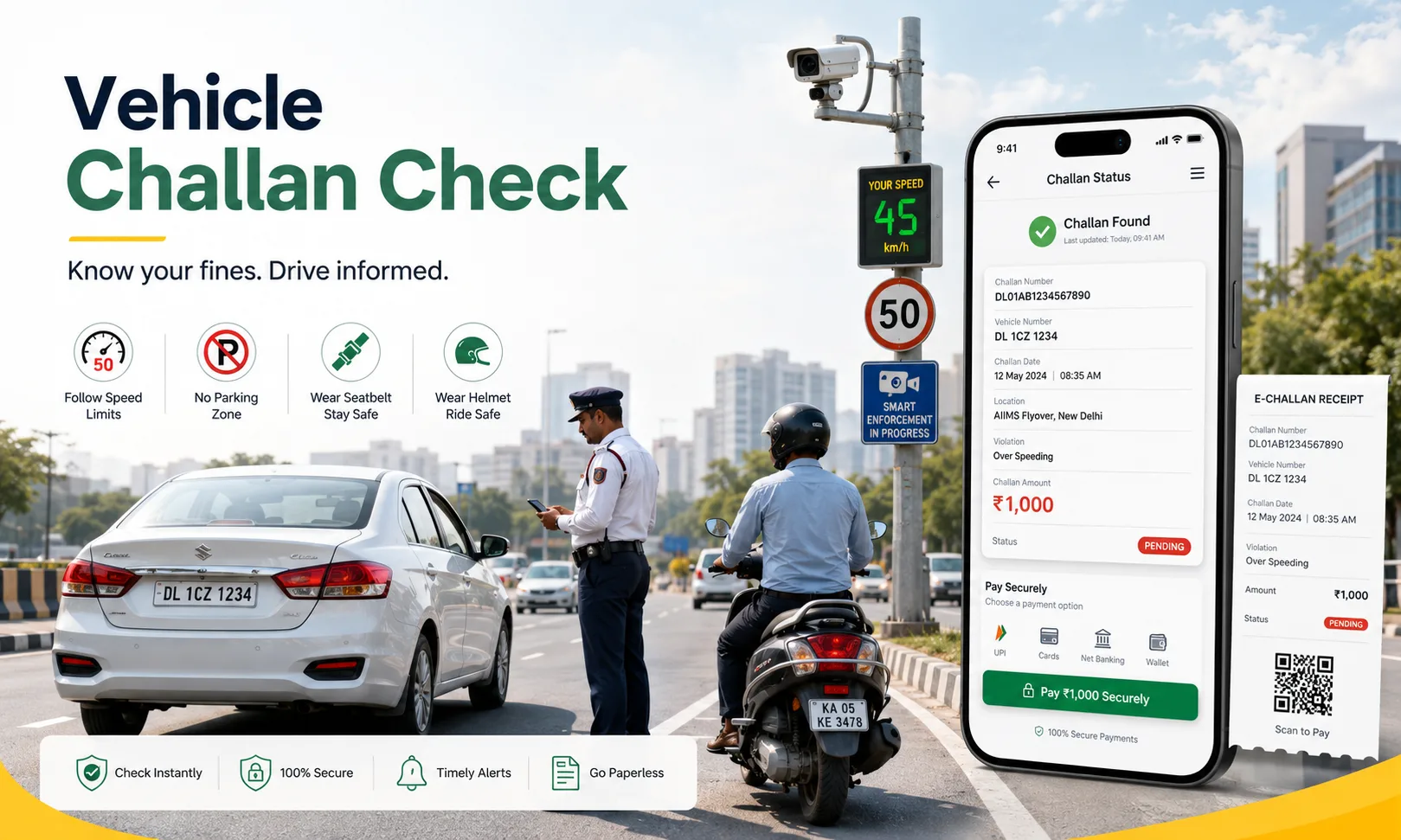
Most journeys leave behind more than memories. A morning commute, a delivery run, a school drop-off or a weekend drive can generate a trail of digital records, vehicle documents, parking transactions and traffic-related information. For many drivers, these records remain unnoticed until a problem arises.
Modern driving is increasingly connected to digital systems. Traffic cameras may record certain violations, electronic challans may be issued through applicable enforcement systems, and vehicle information can be checked through online services. This makes record awareness an important part of responsible vehicle ownership.
Driving Has Become a Data-Connected Activity
In the past, a driver might have thought about vehicle compliance mainly when renewing insurance, obtaining a pollution certificate or visiting a transport office. Today, digital enforcement has changed how some traffic-related information is generated and accessed.
Depending on the location and applicable system, a vehicle's registration number may be associated with an electronic challan or an enforcement record. Drivers should therefore avoid assuming that a journey has left no administrative consequences simply because they were not stopped by a traffic officer.
This does not mean every camera captures every violation or that every alert is necessarily accurate. It means vehicle owners should understand how to check relevant records and respond when something requires attention.
Why Small Records Deserve Attention
Consider a driver who receives a notification about a traffic challan but postpones checking it. The message may be genuine, mistaken, incomplete or fraudulent. Ignoring it does not help establish which possibility is correct.
A more useful response is to verify the information through an appropriate source, confirm the vehicle details, review the alleged violation and identify the available next steps. If the record appears incorrect, the driver should examine the applicable correction or grievance procedure instead of making assumptions.
The same principle applies to vehicle documents. An expired insurance policy, an outdated pollution certificate or an incomplete ownership record can create avoidable difficulties when the information is needed urgently.
Build a Personal Record System
A simple digital folder can make vehicle administration easier. Keep accessible copies of relevant documents, including the registration certificate, insurance policy, pollution certificate and ownership-transfer paperwork where applicable.
Maintain a separate record of important dates, such as policy expiry and certificate renewal. If a challan is issued, retain its reference number, payment receipt or dispute acknowledgement. These records help distinguish between an unresolved matter and one that has already been addressed.
Drivers should protect personal information while storing documents. Registration details, identification records and payment information should not be shared casually through unknown links or unverified messaging accounts.
Where Digital Services Fit In
Platforms can help drivers organise the process of understanding vehicle-related issues. ChallanPay can be considered when checking traffic-challan information and exploring available resolution steps. Users should verify the information presented and confirm payment or dispute procedures before proceeding.
Lawyered can be relevant when a traffic-related matter raises legal questions that require professional guidance. The appropriate approach depends on the circumstances, the nature of the allegation and the process available under the applicable rules.
LOTS247 Sarathi can be included in a broader digital vehicle-compliance routine, alongside careful document management and verification through appropriate transport-related channels. Drivers should confirm the specific services available before relying on any platform for a particular task.
No digital service removes the need to check details carefully. A vehicle number, challan reference, amount and issuing authority should be reviewed before taking action.
Turn Record-Keeping Into a Routine
Vehicle administration does not need to become a complicated project. A short monthly review can help drivers check upcoming document renewals, organise receipts and look into any outstanding notifications. Before selling a vehicle, the owner should also review relevant records and complete the applicable transfer process.
The goal is not to collect paperwork for its own sake. It is to make important information available when it matters.
A More Informed Driver
Responsible driving involves more than steering, braking and following road signs. It also includes understanding the administrative trail connected with a vehicle. Digital records can help clarify what has happened, but only when drivers verify them and maintain accurate documentation.
By combining safe road behaviour with organised records and reliable verification, motorists can reduce uncertainty and handle vehicle-related responsibilities with greater confidence. In a connected transport environment, a well-maintained paper trail is not outdated administration; it is a practical tool for informed ownership.