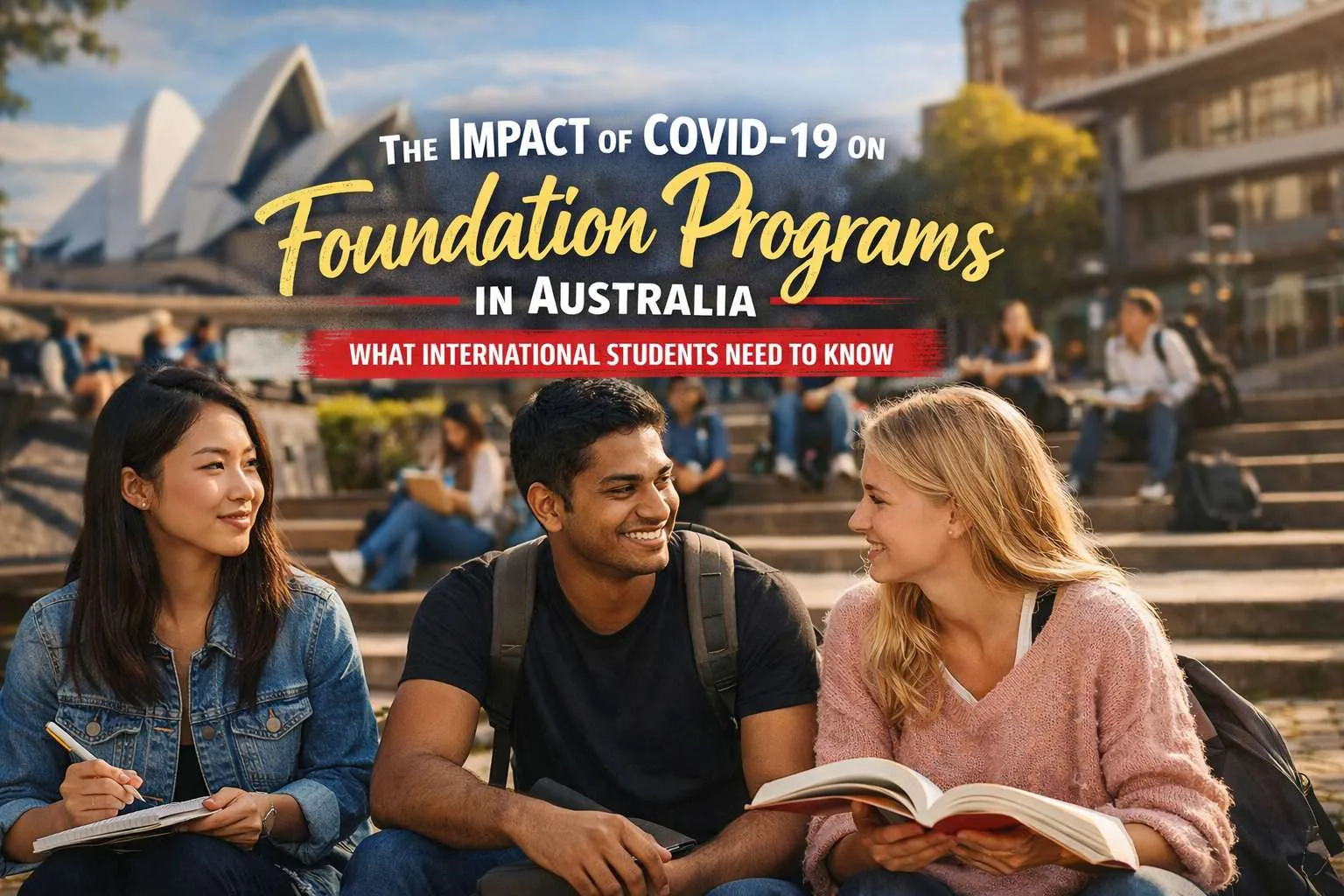
Covid-19 changed foundation programs in Australia in plain, real ways. It pushed classes online fast, delayed travel, changed assessment rules, and made student support a much bigger part of study life. That shift still matters now, even though many foundation programs have gone back to campus-based teaching.
Students looking at Foundation Courses in Australia for International Students need more than course fees and entry scores. They need to know how classes run, what support shows up in the first few weeks, what happens when plans go wrong, and how the visa side works today. That’s where the post-Covid story still matters most.
Why foundation programs felt the shock so much
A foundation program is not just another course. It is the step between school and a bachelor’s degree, and that step can feel big for international students. UQ College says its Foundation Program is designed to help international students meet the entry requirements for their chosen undergraduate program, which shows how closely these courses tie into degree plans from day one.
That setup made Covid-19 hit harder for this group than many people expected. Foundation students often need help with academic English, writing, research, study habits, and settling into a new system at the same time. When campus life stopped or slowed, students did not just lose classroom time. Many lost structure, quick access to teachers, and the social side of learning that helps new students feel steady.
What changed during the Covid period
The first major change was the move to online learning. TEQSA says Australian higher education providers had to shift teaching and assessment online very quickly so students could keep moving through their studies. That change happened across the sector, and foundation students were part of it.
The second change was travel disruption. Border closures left many international students unable to enter Australia on time, and the Australian Government brought in temporary visa support during that period because students were stuck between study plans and travel rules. That created stress before classes even began.
The third change was day-to-day student life. TEQSA found that students often struggled with isolation, lower motivation, weaker class interaction, IT issues, and changes to assessment. That may sound like a list of small problems, but put them together and they can throw a student off track fast.
How student life changed in real terms
Before Covid, many foundation students learned by being around other people. They asked short questions after class, studied with classmates, and picked up course habits by watching how other students worked. Online study kept courses running, but it cut out a lot of those natural moments.
That changed the feel of learning. Students had to manage time better, follow digital systems more closely, and speak up earlier when they were confused. For some students, that worked well. For others, it made the first stage of university preparation feel much harder than it should have been.
Wellbeing became part of academic success too. Students dealing with stress, money pressure, illness, or loneliness often found it harder to focus, attend, or finish work on time. That’s one reason support services now sit much closer to the center of student life than they once did.
What stayed after Covid and what changed back
Some Covid changes stayed. TEQSA says the pandemic sped up the move toward blended and online delivery in Australian higher education. That means many providers now use digital tools, online materials, and backup study plans more naturally than they did before 2020.
At the same time, students should not assume foundation study in Australia is now mostly online. UQ College says its Foundation Program and English Language Programs are designed mainly for on-campus, face-to-face delivery. That tells you something useful right away: many pathway providers still see campus study as the core model, even after Covid.
So what’s the real answer here? Covid did not turn foundation programs into permanent remote study. It left behind more flexibility, more digital support, and more backup planning, but the main goal still stays the same. Students are there to prepare for a degree and adjust to university study in Australia.
What international students should check before they apply
A lot of students still ask the wrong first question. They ask, “Can this course lead me to a bachelor’s degree?” That matters, of course, but it is only part of the picture. A better question is, “What happens to me in this program if I struggle, get sick, arrive late, or need help early?”
Students now need to check the delivery model with care. They should look at whether the course is face to face, mixed mode, or built around both live teaching and online work. They should also check how attendance works, how assessments are handled, and how fast staff step in when a student starts falling behind.
Support matters just as much as course structure. Study Australia says international students in Australia can get help with health, safety, and wellbeing, and local support pages point students to advisers, clubs, mental health help, learning support, and student groups. A provider may talk a lot about progression rates, but students also need to know how people are supported before progress slips.
The questions smart students ask now
Post-Covid students and parents tend to think more carefully, and that’s a good thing. They are less likely to trust broad promises and more likely to ask what the real student experience looks like. That habit can save a lot of stress later.
A few questions can tell you a lot about a provider:
- How are classes taught each week, and how much of the course happens on campus?
- What happens if I miss class because of illness or late travel?
- What help can I get in the first month if my grades drop?
- Who do I contact for mental health support or study help?
- What grades and subjects do I need for my target degree?
Those questions may sound simple, but they get to the heart of student success. A good pathway is not only about getting in. It is about staying on track once the course begins.
Health cover and student support now matter more
Support is no longer something students think about only after a problem starts. Study Australia says international students can access health, wellbeing, and local support services through education providers and other support channels in Australia. That includes counselling, student groups, advisers, and help with settling into life on campus.
Health cover is part of that planning. Study Australia says overseas students must maintain Overseas Student Health Cover for the full period of their stay in Australia. That cover can include GP visits and some other care, which makes it something students should understand before they arrive, not after they get sick.
This is one of the biggest lessons from the Covid years. Students do better when they know where to go for help, who to talk to, and what services they already have. That takes pressure off when life gets messy, and for many students, life does get messy at some point.
What students need to know about visas now
Students should be careful not to build 2026 plans around old Covid-era visa settings. Home Affairs says the Genuine Student requirement applies to student visa applications lodged on or after 23 March 2024, and applicants must show that studying in Australia is the main reason for applying for the visa. That is the current rule, and it matters more than any temporary setting used during the pandemic years.
There is another current detail worth checking. The Subclass 500 student visa page says evidence levels for several South Asian countries changed on 8 January 2026. That does not change the basic message for every student, but it does show why applicants need to use current official rules and not older advice copied from blog posts or forums.
Did Covid make foundation programs easier or harder?
The honest answer is both. Some students liked recorded materials, online access, and the extra flexibility that came with digital teaching. Those things gave students more ways to keep up with classes and review lessons in their own time.
But many students found the experience harder. TEQSA found problems with isolation, motivation, interaction, and online learning itself. Foundation students can feel those problems more strongly because they are still building confidence, study habits, and language skills at the same time.
So no, the Covid period did not simply make foundation study better or worse. It exposed what students need most. Clear teaching, quick support, stable routines, and early help make a huge difference, especially in the first stage of study.
How students can do well now
Students who do well in foundation programs today usually do a few simple things early. They learn how the course platform works, attend orientation, ask questions fast, and keep track of progression rules from the start. That sounds basic, but those early habits often decide how smooth the rest of the program feels.
They also use support before a problem turns into a bigger one. A student who talks to an adviser or teacher after the first bad week is in a much better spot than a student who waits until finals are close. The same goes for health support, counselling, and help with study skills.
And one more thing. Students should keep their target degree in mind from the start. A foundation course is a bridge, not the finish line, so every subject choice and every grade matters for what comes next.
Final thoughts
Covid-19 changed foundation programs in Australia, but not in the way many students first assume. The biggest change is not just online teaching. The bigger change is that support, flexibility, health planning, and clear communication now matter much more when students compare Foundation Courses in Australia for International Students.
Students who look beyond fees and entry scores usually make better choices. They ask how the course runs, what help shows up early, how progression works, and what happens when life gets off track. That is what international students need to know now, and it is the part of the Covid story that still counts most.