When a trucking accident occurs, the aftermath is rarely simple. Victims often face catastrophic injuries, life-altering limitations, and long-term financial consequences. For attorneys representing these individuals, the challenge is not only proving fault but demonstrating the full scope of damages in a way that courts and juries can understand.
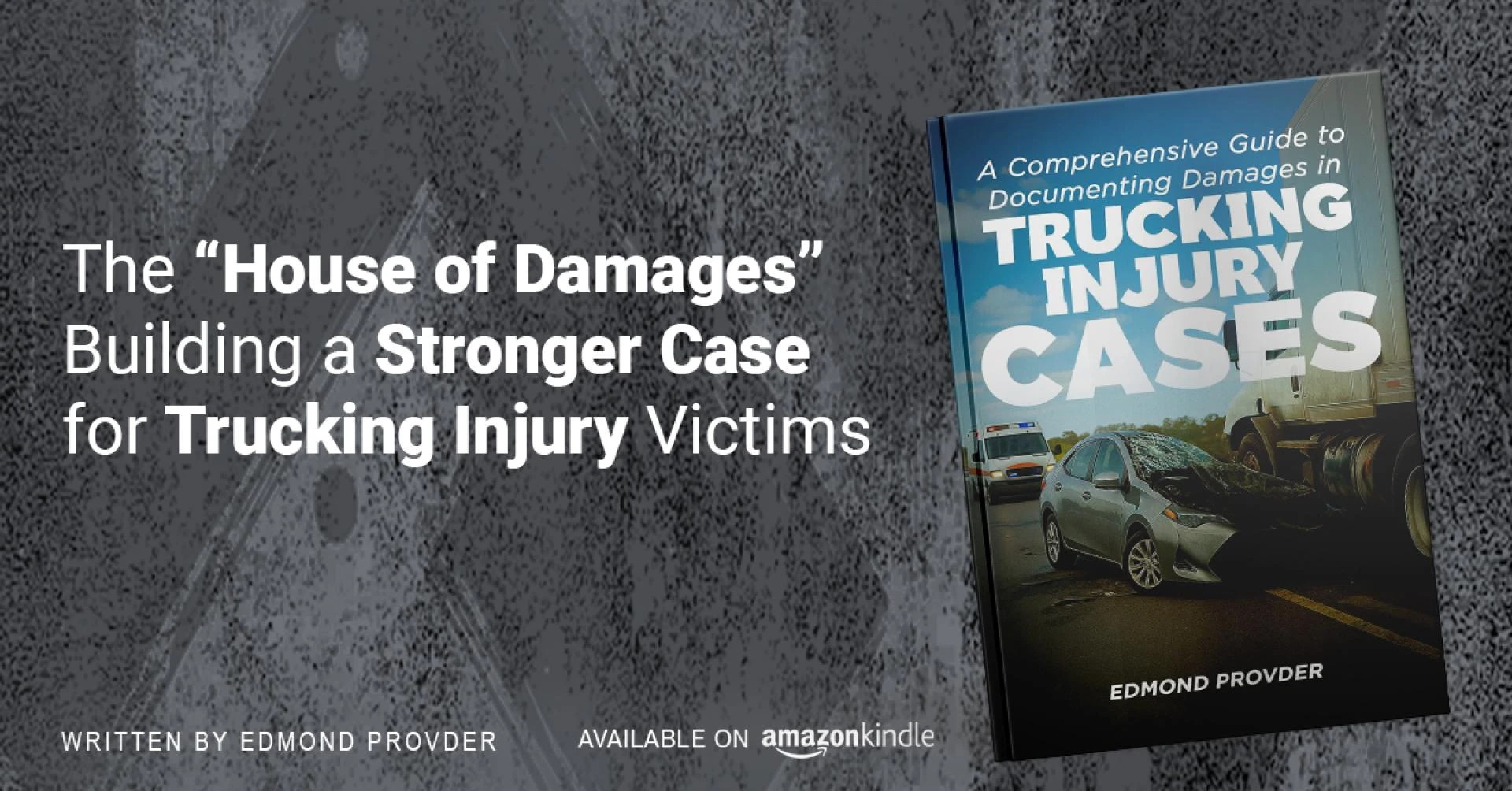
This is where Edmond Alan Provder’s A Comprehensive Guide to Documenting Damages in Trucking Injury Cases introduces a powerful concept: the “House of Damages.” It is a framework designed to bring clarity, structure, and persuasive power to the often-complex process of documenting and presenting damages.
A Blueprint for Success
The “House of Damages” is more than a metaphor—it’s a blueprint. Just as a house needs a strong foundation, sturdy walls, and a secure roof to stand, a damages case needs interconnected components that reinforce one another. Without this structure, cases risk collapsing under scrutiny.
· The Foundation: Vocational Analysis
The base of any damages case is determining the injured person's vocational capacity. Can they return to work? If not, what employment opportunities remain? A vocational expert evaluates job skills, education, physical limitations, and the labor market to show how the accident reshaped the client's career path.
· The Walls: Life Care Planning
If vocational losses form the base, life care planning builds the walls. This stage identifies the individual's long-term medical, rehabilitative, and supportive needs. From physical therapy and medications to assistive technology and home modifications, the life care plan provides a comprehensive roadmap of what it will take for the person to live with dignity post-injury.
· The Roof: Economic Assessment
The roof of the house comes from economists, who translate vocational losses and life care needs into financial terms. By calculating lost wages, reduced earning capacity, and future medical expenses, the economist creates a clear, quantifiable picture of damages that courts and juries can rely on.
Together, these elements form a structure that is not only defensible but compelling.
Why Integration Matters
What makes the “House of Damages” approach so effective is its integration. Too often, vocational experts, life care planners, and economists work in isolation, producing reports that fail to connect. Provider emphasizes that their findings must reinforce each other, creating a unified narrative.
For example, a vocational expert may determine that a client cannot return to their previous occupation due to physical limitations. The life care planner then identifies ongoing therapies required to maintain mobility. Finally, the economist quantifies the lifetime cost of both lost wages and ongoing care. Each piece strengthens the other, making the damages case nearly unshakable.
Making Damages Human
The “House of Damages” is not just about numbers—it is about people. Provder reminds readers that damages should be presented in ways that highlight human impact. Documenting that a client can no longer work is important, but showing that they also need assistance with household chores, childcare, or hobbies creates a fuller picture of loss.
These details resonate with juries because they move beyond abstract figures. They show the daily consequences of injury, making the damages real and relatable. The framework ensures that the legal argument is not just technical but deeply human.
A Tool for Attorneys and Experts
For attorneys, the “House of Damages” provides a roadmap to organize evidence and expert testimony. For vocational experts and life care planners, it clarifies how their roles fit into the bigger picture. For economists, it ensures their calculations rest on solid ground.
By following this framework, legal teams can present cases that are not only factually accurate but emotionally compelling—cases that withstand cross-examination and persuade judges and juries alike.
Conclusion: Building Justice One Case at a Time
In trucking injury litigation, justice is often determined by how well damages are documented and communicated. The “House of Damages” offers a practical, structured, and human-centered way to build stronger cases.
Edmond Alan Provder’s A Comprehensive Guide to Documenting Damages in Trucking Injury Cases gives attorneys and experts the blueprint they need: a foundation in vocational losses, walls built from life care needs, and a roof that captures economic reality. When combined, they form more than a house—they form a powerful case for justice.
Amazon Link: A Comprehensive Guide to Documenting Damages in Trucking Injury Cases