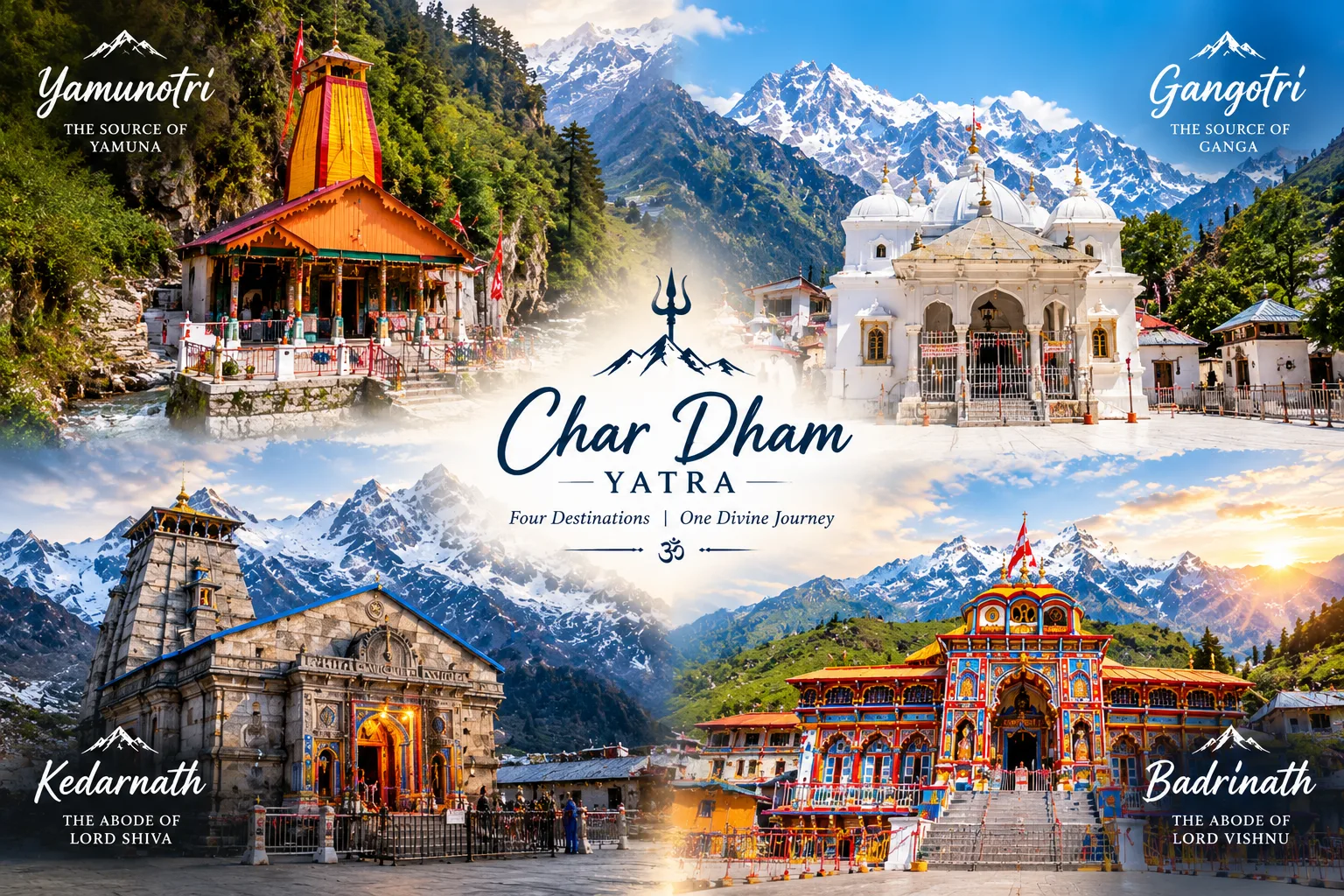
The Hidden Stories Behind Char Dham: Legends Every Pilgrim Should Know
The Char Dham Yatra of Uttarakhand is often described as a journey to four sacred temples—Yamunotri, Gangotri, Kedarnath and Badrinath. But if you look beyond the temple gates, you discover something deeper: centuries-old stories, sacred rivers, ancient beliefs and Himalayan traditions that have shaped the identity of these places.
For pilgrims, these stories add another layer of meaning to the journey. The mountains are not simply scenery, the rivers are not just waterways, and the temples are not merely destinations. Each place carries a story that has been passed down from one generation to the next.
Here are some of the most fascinating legends and traditions associated with the Char Dham of Uttarakhand.
1. Yamunotri: The Story of Goddess Yamuna
Yamunotri is dedicated to Goddess Yamuna, the river traditionally regarded as sacred in Hindu tradition.
According to Hindu mythology, Yamuna is associated with Surya, the Sun God, and is considered the sister of Yama, the deity associated with death. This connection has given Yamuna a special place in religious belief.
One traditional belief says that bathing in or offering prayers to Yamuna is associated with purification and protection from the fear of death.
The landscape around Yamunotri also contains another fascinating feature—the hot springs near the temple. Pilgrims traditionally use the naturally heated water for religious purposes, and rice or other offerings may be cooked in it.
Why this story matters to pilgrims
Yamunotri represents more than the beginning of a mountain journey. It introduces pilgrims to the idea of the sacred river as a source of life, faith, and spiritual renewal.
2. Gangotri: The Descent of the Ganga
Few stories are as famous in Indian mythology as the descent of the River Ganga from heaven to Earth.
According to the traditional story, King Bhagiratha performed intense penance to bring Ganga to Earth so that the souls of his ancestors could attain liberation.
However, the force of the descending river was believed to be too powerful for the Earth to withstand. Lord Shiva therefore received Ganga in his matted hair and allowed the river to descend gradually.
This story is one reason why the Ganga holds such an important position in Indian spiritual traditions.
Gangotri is therefore not simply a temple destination. It is connected with a story about devotion, determination, and divine intervention.
A place where mythology meets nature
Standing beside the river in the Himalayan landscape makes the story feel closely connected with the geography around you. The rushing water, enormous mountains,s and quiet surroundings create an atmosphere that has attracted pilgrims for centuries.
3. Kedarnath: The Pandavas and the Search for Shiva
Kedarnath has one of the most well-known legends associated with the Mahabharata tradition.
According to popular belief, after the Kurukshetra war, the Pandavas wanted to seek Lord Shiva's blessings and forgiveness. Shiva, however, did not want to meet them easily and is said to have taken the form of a bull.
The Pandavas eventually recognised him. When Shiva attempted to disappear into the ground, different parts of the bull were believed to have appeared at different locations.
This tradition is connected with the Panch Kedar temples of Uttarakhand.
Kedarnath is considered the most prominent among them, while the other four are traditionally associated with Tungnath, Rudranath, Madhyamaheshwar, and Kalpeshwar.
Why Kedarnath feels different
The legend is only one part of the experience. The temple's remote Himalayan setting, the Mandakini valley, and the surrounding peaks have made Kedarnath one of the most powerful pilgrimage landscapes in Uttarakhand.
For many visitors, the journey to Kedarnath is as meaningful as reaching the temple itself.
4. Badrinath: The Meditation of Lord Vishnu
Badrinath is associated with Lord Vishnu, who is worshipped here in the form of Badrinarayan.
One popular tradition says that Lord Vishnu meditated in this Himalayan region. Another well-known legend connects the area with Lakshmi, who protected Vishnu from the harsh Himalayan conditions by taking the form of a berry tree.
The name “Badrinath” is traditionally connected with Badri, a term associated with the berry tree.
The region also has a strong connection with ancient sages and spiritual practices, which adds to its importance as a centre of pilgrimage.
5. Mana: Where Mythology Meets the Himalayas
Near Badrinath lies Mana, a village associated with several stories from the Mahabharata tradition.
Local attractions include Vyas Gufa, Ganesh Gufa, Bheem Pul, and the Saraswati River. According to traditional beliefs, these places are connected with episodes involving the Pandavas and Sage Vyasa.
Bheem Pul is particularly interesting. Local tradition associates the natural rock formation with Bhima, who is believed to have placed a large stone across the river to help Draupadi cross it.
Whether approached as mythology, local tradition,n or cultural heritage, these stories make the area around Badrinath much more than a stop on a pilgrimage route.
6. The Sacred Rivers Behind the Char Dham
The Char Dham experience is closely connected with rivers.
Yamunotri is associated with the Yamuna.
Gangotri is associated with the Ganga.
Kedarnath lies in the Mandakini valley.
Badrinath is situated beside the Alaknanda.
These rivers have shaped the geography, culture, and settlements of Uttarakhand for generations.
For pilgrims, they also represent different aspects of the sacred Himalayan landscape—purification, devotion, life and continuity.
7. The Forgotten Side of Char Dham: Winter Traditions
One of the lesser-known aspects of Char Dham is what happens when winter arrives.
The high-altitude temples face severe winter conditions and normally close for the season. But worship does not simply disappear.
Religious traditions associated with the four Dhams continue at lower-altitude winter seats.
Ukhimath is associated with the winter worship of Kedarnath.
Kharsali is associated with Yamunotri.
Mukhba is associated with Gangotri.
Pandukeshwar is associated with the Badrinath tradition.
This winter cycle shows that the Char Dham tradition is not limited to a few months of pilgrimage. It continues through the seasons.
8. Char Dham Is More Than Four Temples
A common mistake is to think of Char Dham as simply a checklist:
Yamunotri ✔
Gangotri ✔
Kedarnath ✔
Badrinath ✔
The deeper experience lies in everything around these temples—the villages, rivers, legends, mountain communities and centuries-old traditions.
The journey also introduces travellers to places such as Harsil, Guptkashi, Ukhimath, Mana and the Panch Prayag region, each with its own cultural and geographical identity.
This is why two people can complete the same Char Dham route and still return with completely different experiences.
9. Why These Legends Still Matter Today
Ancient legends may seem far removed from modern travel, but they continue to influence how people experience Uttarakhand.
They explain why certain rivers are revered, why particular temples became pilgrimage centres, and why local communities continue traditions connected with the Dhams.
For a modern traveller, knowing these stories can change the way a destination is seen.
A river becomes more than a photograph.
A mountain becomes part of a story.
A temple becomes part of a living tradition.
And a journey becomes more meaningful than simply reaching the destination.
How to Experience Char Dham Differently
If you are planning your Char Dham Yatra, take some time to understand the places you are visiting rather than rushing from one temple to another.
Talk to local people respectfully, learn about the history of the villages you pass through, visit important nearby cultural sites where practical, and leave enough time to appreciate the Himalayan landscape.
Most importantly, remember that Char Dham is a living pilgrimage—not a sightseeing checklist.
Plan Your Char Dham Journey With Chaukhamba Travel
A meaningful Char Dham journey requires more than transportation between four destinations. It requires thoughtful planning around the route, travel time, accommodation, weather,r and the needs of the people travelling with you.
Chaukhamba Travel can help travellers plan Uttarakhand pilgrimage journeys with practical itineraries and travel support.
Before booking, discuss your preferred travel dates, group size, accommodation requirements, and transportation options with your travel provider.
For official and current pilgrimage information, travellers should also check the Uttarakhand Tourism and Tourist Care Uttarakhand portals before starting their journey.
Useful official resources:
Final Thoughts
The Char Dham Yatra becomes much more meaningful when you know the stories behind the places you visit.
From the story of Yamuna and the descent of Ganga to the Pandavas' connection with Kedarnath and the legends surrounding Badrinath and Mana, every destination carries a different chapter of India's spiritual and cultural heritage.
You may begin the journey as a traveller, but the stories of the Himalayas can make you pause, reflect,t and experience the pilgrimage in a completely different way.
Char Dham is not only a journey across the Himalayas. It is a journey through stories, faith, culture, and generations of tradition.