
Workday is undeniably one of the most powerful finance tracking systems available to enterprise teams today. By unifying accounting, planning, analytics, and compliance into a single cloud-native platform, it has rightfully earned its reputation as a leader in enterprise finance.
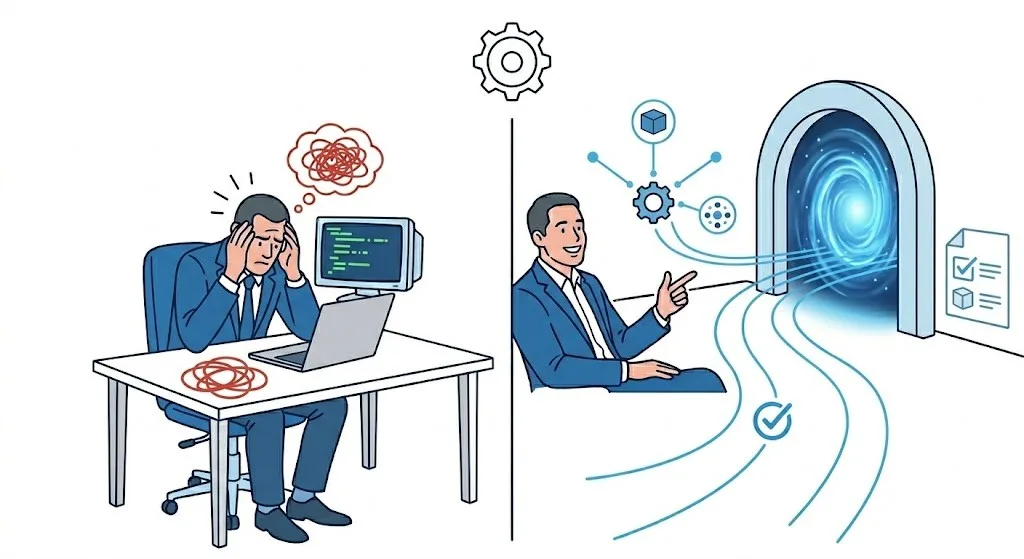
But talk to any CFO who has recently gone through a major ERP overhaul, and they will tell you a hard truth: Workday cannot fix data that arrives broken. Disconnected legacy systems, unreconciled subledgers, and manual upstream workarounds create the perfect storm for reconciliation failures, delayed month-end closes, and severe audit exposure. To get the continuous accounting and real-time anomaly detection Workday promises, enterprises must first solve the data mess happening before that data ever hits the general ledger.
Here is a look at why upstream data reconciliation remains the biggest roadblock for modern finance teams, and how AI-driven orchestration is finally bridging the gap.
The Real Account Reconciliation Challenges
Workday is exceptional at solving reconciliation inside its own ecosystem. The problem is that most enterprises don’t run a single system. Data flows in from legacy ERPs, payment processors, localized banking platforms, and custom applications.
When you rely on manual processes to bridge these systems, the friction points multiply:
Data Silos: Source systems never speak the same language. A legacy banking platform and a modern payment processor use completely different formatting, reference IDs, and timing conventions.
Manual Matching Errors: Relying on human analysts to match transactions across spreadsheets is a losing battle. In fact, human-driven matching produces error rates as high as 45%.
Month-End Bottlenecks: Because of these manual workarounds, over half of enterprise finance teams still take six or more days to close their books. Discrepancies are caught at the end of the month, rather than when they happen.
- Exception Backlogs: Unresolved discrepancies pile up in source systems and arrive in Workday already aged, forcing analysts into a frantic game of catch-up.
Accelerating Legacy System Migration
These upstream data issues become glaringly obvious during a Workday implementation. As with many major ERP migrations, transitioning from a legacy accounting system typically takes months. Data must be painstakingly extracted, mapped, transformed, and validated before it can be trusted in the new platform.
Teams that attempt to do this manually introduce errors, extend project timelines, and risk running expensive parallel systems for much longer than initially planned.
This is where the paradigm is shifting from Robotic Process Automation (RPA) to Agentic AI.
Enter the Finance Operations AI Worker
Rather than building rigid, breakable API scripts to force legacy data into Workday, forward-thinking finance teams are deploying AI agents—like Engini’s Finance Operations Worker—to act as the intelligent connective tissue.
An AI worker sits between your existing systems and Workday. It connects to your source data (whether that's a modern Stripe account or a legacy AS/400 mainframe), and automatically cleans, normalizes, and reconciles that data before routing it into Workday.
The impact of this intelligent middleware spans all core reconciliation types:
Bank Reconciliation: AI automatically ingests bank feeds, matches transactions, and flags gaps instantly.
Subledger Reconciliation: It syncs AR, AP, and fixed assets to the Workday GL in real-time.
Legacy Migration: AI maps legacy fields directly to Workday’s dimensional model, continuously validating balances across systems during cutover so that migrations take days, not months.
When an exception does occur, the AI doesn't just log an error; it uses agentic workflows to automatically route an approval request or cross-department alert to the right human instantly.
The Bottom Line
Workday customers who successfully automate their evidence collection and validation report a 50% reduction in external audit requests and a massive reduction in ledger accounts. But you can only achieve those numbers if your data foundation is rock solid.
Workday is the right finance tracking system for the future. But it performs best when the data it receives is already clean, structured, and reconciled. By deploying AI agents to handle the upstream mess, finance teams can stop spending their days wrestling with spreadsheets and start using their ERP for what it was built to do: strategic planning, real-time analytics, and confident, lightning-fast closes.
Frequently Asked Questions
Q: What is the main cause of reconciliation errors during a Workday migration?
The primary cause of errors is the "manual hand-off" between disconnected legacy systems (like AS/400 mainframes or localized banking portals) and the new ERP. When data translation relies on human entry or spreadsheet matching, it creates data latency and introduces error rates as high as 45%.
Q: How does Agentic AI differ from traditional RPA in financial operations?
Unlike Robotic Process Automation (RPA), which relies on rigid, breakable click-scripts, Agentic AI can read, contextually understand, and map non-standard legacy data. Instead of just recording clicks, AI workers actively reason through exceptions in 3-way matching and bank reconciliation just like a human analyst would.
Q: Can AI connect directly to legacy mainframe accounting software?
Yes. Modern AI orchestration platforms, like Engini, act as intelligent middleware. They can translate legacy formats (such as RPG logic or EBCDIC encoding) and deliver it as clean, structured, API-ready data into Workday’s dimensional model without requiring a massive IT infrastructure overhaul.
Q: Will automating upstream data reduce our month-end close time?
Absolutely. By moving from end-of-month manual sampling to continuous, full-population AI auditing, finance teams catch discrepancies the moment they occur. This eliminates the month-end exception backlog, allowing teams to close their books in days rather than weeks.
Ready to stop wrestling with legacy data and start trusting your Workday ledger?
See how Engini’s AI workers can bridge your legacy systems to Workday in days, not months. Get your Free ROI Audit at Engini.ai today and discover how much margin you can recover by eliminating manual data entry.