
India is often celebrated as a land of diverse cuisines. Every few hundred kilometers, the food changes, bringing new spices, cooking methods, and traditions to the table. Yet, despite this incredible diversity, one region continues to remain surprisingly unexplored by much of the country. That region is Northeast India.
Ask someone to name famous Indian cuisines, and you'll likely hear Punjabi, Gujarati, Bengali, South Indian, or Rajasthani. Very few people mention Manipur, Nagaland, Mizoram, Meghalaya, Assam, Arunachal Pradesh, Sikkim, or Tripura. This is not because the food lacks flavour or history. In fact, it is quite the opposite.
Northeast India's cuisine is one of India's best-kept culinary treasures, shaped by generations of indigenous traditions, local ingredients, and recipes that have stood the test of time.
A Region Rich in Food Traditions
Food in Northeast India is deeply connected to nature. Seasonal vegetables, wild herbs, fermented ingredients, bamboo shoots, local chillies, freshwater fish, and hand-picked spices form the foundation of everyday meals.
Unlike many commercial food trends, these recipes were never created for restaurants or social media. They were passed down from grandparents to parents and then to the next generation. Every family has its own methods of preserving ingredients, balancing flavours, and preparing meals during different seasons.
This strong connection between food and culture is what makes Northeast cuisine so unique.
Why Is Northeast Cuisine Still Underrepresented?
The answer lies in history, geography, and awareness.
For decades, Northeast India remained geographically distant from major commercial markets. Local delicacies were enjoyed within communities but rarely reached supermarket shelves across the country.
Marketing also played a role. Popular regional cuisines invested heavily in restaurants, packaged foods, and nationwide expansion. Traditional recipes from the Northeast largely remained local.
Another reason is that many people simply have not had the opportunity to taste these foods. You cannot appreciate a cuisine you have never experienced.
Fortunately, this is beginning to change.
Today, regional food brands and local entrepreneurs are introducing authentic Northeast flavours to homes across India while staying true to their roots.
The Story Behind Traditional Manipur Achar
Among the many culinary gems of the region, traditional Manipur achar deserves special attention.
Unlike many commercially produced pickles that rely heavily on artificial preservatives or excessive oil, Manipuri pickles focus on preserving the natural taste of locally sourced ingredients.
Recipes often feature fresh vegetables, aromatic spices, indigenous herbs, fermented ingredients, and some of India's most distinctive chillies.
Every jar carries a story of family traditions, seasonal harvests, and recipes that have been carefully preserved over generations.
For many people from Manipur, these pickles are more than condiments. They are a reminder of home.
The Bold Identity of North East Chilli Pickle
If there is one flavour that instantly represents the region, it is its chillies.
A North East chilli pickle is not simply about heat. It delivers layers of flavour that range from smoky and tangy to earthy and aromatic.
Many varieties use indigenous chillies that grow naturally in the hills, creating a taste profile that cannot be replicated elsewhere.
These pickles are enjoyed with rice, dal, noodles, snacks, and even simple home-cooked meals. A small spoonful can completely transform an ordinary plate of food.
For spice lovers, they offer an authentic experience that goes beyond the familiar flavours found in mainstream Indian pickles.
Authentic North East Achar Is More Than a Side Dish
Across India, pickle is often considered an accompaniment. In Northeast households, it is much more than that.
An authentic North East achar reflects local farming, seasonal ingredients, community traditions, and culinary identity.
Every ingredient has a purpose. Every recipe tells a story.
Some pickles are mildly tangy, while others are intensely spicy. Some use fruits, while others feature fish, bamboo shoots, soybeans, or locally grown vegetables.
This incredible variety showcases the diversity of the region itself.
Why More People Are Discovering Pickles from the Northeast
Consumers today are increasingly looking for authentic regional foods instead of mass-produced products.
They want ingredients with a story.
They want recipes that have cultural significance.
They want flavours they cannot find everywhere else.
This growing curiosity has encouraged more people to explore pickles from the North East, bringing regional culinary traditions into kitchens across the country.
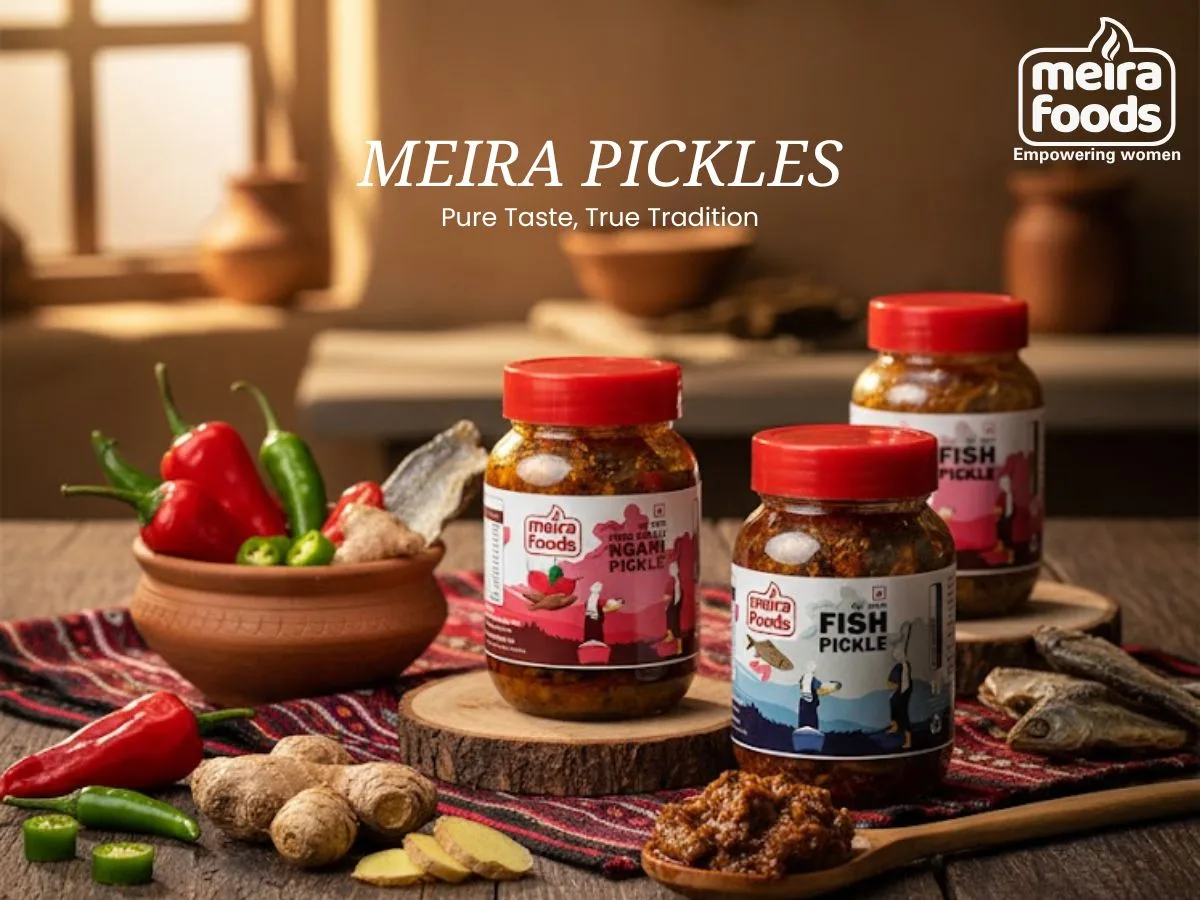
Brands like Meira Foods are helping preserve these traditional recipes by working closely with local communities and making authentic Manipuri products accessible to a wider audience. Instead of changing recipes to suit mass production, the focus remains on celebrating the original flavours that make Northeast cuisine so special.
The Hidden Food Map Is Finally Being Discovered
India's food story is far bigger than the cuisines that dominate restaurant menus.
The Northeast has always had extraordinary flavours, unique preservation techniques, and recipes rooted in culture and tradition. What it lacked was visibility.
Today, more people are beginning to discover this hidden culinary map, one meal at a time.
Exploring Northeast cuisine is not just about trying something new. It is about experiencing a part of India's heritage that has quietly existed for generations, waiting to be appreciated.
Whether it is a homemade meal, a bowl of steamed rice with pickle, or the unmistakable taste of a traditional Manipuri recipe, these flavours remind us that some of the country's greatest food stories are still waiting to be told.