
The sale price is the number most people remember. It is the number friends ask about. It is the number that shows up in texts, calls, and quick congratulations. But the surprise often comes later. The final amount a seller keeps can feel very different once cleanup, repairs, closing charges, credits, taxes, and timing pressure start pulling at it from different directions.
That is why understanding the hidden costs of selling a house matters so much. A house can sell at a strong price on paper and still leave a seller feeling caught off guard. The goal is not fear. The goal is clarity before decisions start moving fast.
Key Takeaways
- The sale price is only the headline, not the final result.
- Small costs often hurt most when they arrive late.
- Seller credits, repairs, moving, and taxes can all change the true net.
- A calm review usually saves more money than a rushed decision.
What Are The Hidden Costs Of Selling A House?
The hidden costs of selling a house are the expenses that sit behind the sale price and quietly reduce what the seller actually keeps. They are often not hidden because someone is being dishonest. They are hidden because many sellers focus on the offer first and the full net later.
That matters even in a strong market. The National Association of REALTORS® says sellers over the past year typically sold their property at 100 percent of their asking price. Even then, the amount a seller walks away with can still shrink once the rest of the transaction is fully counted.
Which Costs Show Up Before The House Even Closes?
Some of the first costs appear long before closing day.
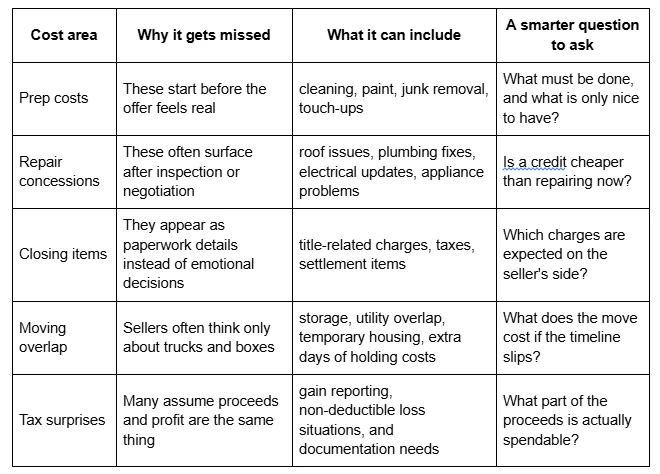
A seller may need to clear out old furniture, repaint tired walls, deep clean the home, handle yard work, replace broken fixtures, or fix small issues that suddenly look bigger once photos and showings begin. None of those expenses feels dramatic on its own. Together, they can change the math quickly.
This is where people often get tripped up. They think in terms of one big transaction, but selling usually works more like a string of smaller decisions. A little hauling here. A repair visit there. Utility overlap for a few extra weeks. A storage bill that did not seem important at first. The money rarely leaves all at once. It leaks.
What Tends To Appear At The Closing Table?
This is where the process starts to feel official, and also where many sellers finally see how many line items can affect the outcome.
The CFPB explains that closing-related charges can include title insurance, government taxes, and prepaid property costs. The agency also notes that when sellers agree to credits for a buyer’s closing costs or repairs, that does not make the cost disappear. It still changes the seller’s side of the deal and can reduce the true value of the offer.
That is why a higher offer is not always a better offer. If the higher number comes with credits, repair concessions, or timing pressure, the seller may not end up ahead in the way it first appeared.
A Practical Breakdown Sellers Can Use
Can Taxes Change The Final Number?
Yes, and this is one of the easiest areas to underestimate.
The IRS says some home sellers may qualify to exclude all or part of the gain on the sale of a main home, but not everyone will qualify in the same way. The IRS also states that a loss on the sale of a main home is not deductible. That means a seller should not assume every dollar left after closing is simple profit, and should not assume a disappointing sale automatically creates a tax benefit.
That point matters more than it sounds. People often think of the sale price as the finish line. In reality, the finish line is the net after payoff, transaction costs, move-related expenses, and any tax consequences that apply.
What Most People Get Wrong
Most people do not underestimate one giant fee. They underestimate the cumulative effect of ordinary things.
A seller may budget for the obvious items and still miss the softer ones. Time off work. Repeat cleaning. Lawn upkeep while the home stays listed. Small fixes requested late. A utility bill that lasts longer than expected. The second housing payment overlaps for just a little too long.
The bigger mistake is not ignorance. It is optimism without a system.
A simple way to stay grounded is the NET method:
Number
Look past the contract price and ask what the seller is actually keeping.
Extras
List every credit, repair, cleanup, moving, and closing item that can chip away at that number.
Timing
Ask what happens if the move, the closing, or the next housing step takes longer than expected.
That method is not flashy. It is just useful.
A Short Reminder Worth Keeping
Benjamin Franklin is widely credited with saying, “An investment in knowledge always pays the best interest.” It fits home selling well because the calm seller usually is not the one who guessed best. It is the one who understands the full picture before signing.
Do This, Not That
Do this
- Ask for the likely net, not just the sale price
- Separate must-do costs from cosmetic extras
- Review credits and concessions slowly
- Think about moving costs as part of the sale, not a separate problem
- Treat timing as money
Not that
- Assume the highest offer is automatically the best one
- Wait until closing papers to think about seller-side charges
- Treat repair credits like free solutions
- Assume taxes will sort themselves out
- Forget the cost of delay
A Familiar Real-World Moment
Picture a seller standing in a house that already feels half gone. Some boxes are packed. The walls look a little emptier. There is relief in finally having an offer, and a strong urge to move forward quickly.
Then the smaller numbers begin to arrive.
A cleaning invoice. A repair request. A credit discussion. Another week of utilities. A moving change. A tax question that no one wanted to think about earlier.
This is why the hidden costs of selling a house matter. Not because the process is broken, but because the emotional pace of selling makes it easy to stare at the headline number and miss the quieter ones.
Bringing It All Together
The hidden costs of selling a house are not always dramatic, but they are powerful because they stack. Prep costs, concessions, closing items, timing pressure, and taxes can all narrow the distance between what a home sells for and what the seller actually keeps.
For anyone planning the next housing step in Shawnee after a sale, Moth Properties offers remodeled, move-in-ready rental homes with direct owner communication. The smartest move is not to fear the process. It is to measure it honestly.
FAQs
What makes a good estimate of net proceeds?
A good estimate includes credits, closing items, moving costs, cleanup, and likely taxes, not just the sale price.
What are the best practices for avoiding surprise selling costs?
Track expenses early, review concessions carefully, and treat timing delays as real costs.
How to compare two offers when one looks higher?
Compare the real net, the credits requested, the repair terms, and the timeline, not just the top line number.
What services does this local Shawnee rental company offer after a sale?
It offers remodeled rental homes with direct owner communication for people who need a clear next step.
When should someone contact this local owner-led housing company?
It makes sense to reach out when a seller wants move-in-ready housing lined up before or after closing.