Healthcare organizations are under increasing pressure to serve more patients, process more data, and deliver better care experiences without compromising performance. As patient demand continues to rise, many hospitals, clinics, and digital health platforms are turning to Product Engineering services to build scalable healthcare ecosystems that can grow without introducing operational bottlenecks. The challenge isn't simply accommodating more users it's ensuring that every patient interaction, workflow, and system process remains reliable as volumes multiply.
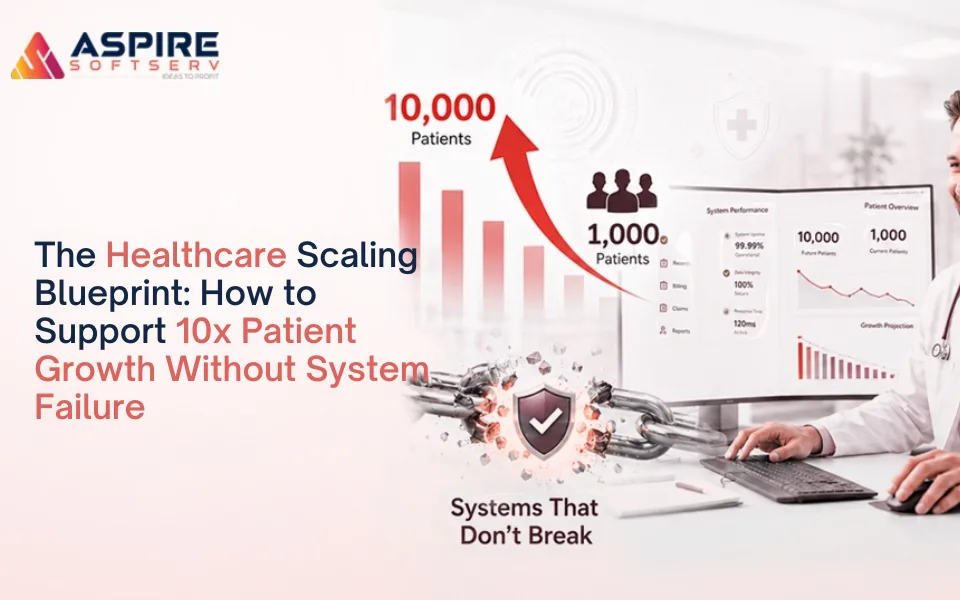
A healthcare platform that comfortably manages 1,000 patients today may begin showing signs of strain when that number reaches 10,000. Appointment scheduling slows down, patient records take longer to load, support teams become overwhelmed, and infrastructure costs start increasing faster than expected.
These issues rarely stem from a lack of resources. More often, they result from architectural decisions made early in the platform's lifecycle. Systems designed for immediate functionality rather than long-term scalability eventually encounter limits that infrastructure upgrades alone cannot solve.
This article explores why healthcare systems struggle as they grow, what separates scalable platforms from fragile ones, and how healthcare organizations can prepare their technology foundations for sustained patient growth.
Why Healthcare Platforms Struggle as Demand Increases
Growth is usually viewed as a positive indicator of success. However, in healthcare technology, growth often exposes weaknesses that remained hidden at lower volumes.
A hospital may initially operate efficiently with manageable patient loads. Appointment booking systems function smoothly, emergency department workflows remain organized, and clinical staff can access information without delay.
As patient volume increases, however, organizations often begin experiencing:
- Longer patient wait times
- Slower application performance
- Delays in accessing medical records
- Scheduling conflicts and missed appointments
- Increased operational costs
- Frequent outages during peak demand
The underlying problem is rarely the volume itself. Instead, it is the inability of the existing architecture to absorb additional workload efficiently.
Many healthcare systems were built using monolithic architectures, where every feature and function operates within a single application. While effective in the early stages, this structure creates dependencies that become difficult to manage as demand grows.
When one component becomes overloaded, the impact can spread throughout the entire platform.
Understanding Scalable Healthcare Architecture
Scalable healthcare architecture is designed to accommodate increasing patient demand without sacrificing performance, reliability, or operational efficiency.
Rather than relying on a single application to perform every task, modern healthcare platforms distribute responsibilities across independent services that can scale individually.
A scalable healthcare system typically incorporates:
- Cloud-native infrastructure
- Microservices architecture
- Event-driven communication
- Real-time monitoring
- Distributed data management
- Automated deployment processes
This approach allows organizations to scale specific functions based on demand rather than expanding the entire platform unnecessarily.
The result is improved flexibility, lower operational risk, and better long-term cost efficiency.
The Business Impact of Poor Scalability
When healthcare systems begin struggling under increased demand, the consequences extend far beyond technical performance.
Operational disruptions can affect every aspect of patient care and business performance.
Common impacts include:
- Delayed patient treatment
- Lower patient satisfaction
- Increased administrative workload
- Billing and revenue cycle inefficiencies
- Regulatory compliance risks
- Reduced staff productivity
Healthcare organizations often attempt to address these issues by investing in additional infrastructure. While this may provide temporary relief, it rarely resolves the root cause.
Without addressing architectural limitations, operational complexity continues to increase as patient volume grows.
Over time, scalability challenges become both a clinical and financial concern.
Why Cloud-Native Infrastructure Is Essential
Healthcare demand is rarely predictable. Seasonal surges, public health events, telemedicine adoption, and population growth can dramatically alter patient volumes.
Traditional infrastructure often lacks the flexibility required to respond efficiently.
Cloud-native environments provide a foundation that can scale dynamically as demand changes.
Modern healthcare platforms commonly leverage:
- Kubernetes-based orchestration
- Containerized applications
- Auto-scaling infrastructure
- Serverless computing
- Continuous integration and deployment pipelines
These technologies help healthcare organizations maintain performance during peak demand periods while controlling operational costs.
Most importantly, they reduce the likelihood of service disruptions that can negatively affect patient care.
Moving Beyond Monolithic Systems
One of the most significant barriers to healthcare scalability is legacy application design.
Monolithic systems combine multiple operational functions—including scheduling, billing, reporting, patient management, and notifications—within a single codebase.
This creates several challenges as organizations grow:
- Updates become slower and riskier
- Infrastructure costs increase unnecessarily
- Development cycles become more complex
- One failure can impact multiple services
Microservices architecture addresses these challenges by separating functionality into independent services.
This allows healthcare organizations to:
- Scale scheduling independently of billing
- Expand patient intake capacity during peak periods
- Release updates more frequently
- Improve overall system resilience
Rather than treating the platform as one large application, organizations can optimize each service according to its specific workload requirements.
Event-Driven Systems Enable Faster Patient Workflows
Healthcare operations depend on the rapid movement of information.
In traditional systems, processes often occur sequentially. A patient check-in may trigger multiple downstream actions that must complete one after another.
As demand increases, this creates delays.
Event-driven architecture improves responsiveness by allowing systems to process activities simultaneously.
When a patient checks in, multiple actions can occur at the same time:
- Updating medical records
- Alerting clinical staff
- Assigning treatment rooms
- Triggering patient notifications
- Updating operational dashboards
This parallel processing model dramatically improves efficiency and reduces bottlenecks.
For organizations managing thousands of daily patient interactions, real-time workflows can significantly improve throughput and operational visibility.
Building a Data Strategy That Supports Scale
Healthcare platforms generate enormous amounts of data, from clinical records and appointment information to billing transactions and operational analytics.
Managing all of this information through a single database often creates performance challenges.
Modern healthcare platforms adopt specialized data architectures that match workloads to the most appropriate storage technologies.
Common approaches include:
- Relational databases for transactional records
- Search engines for rapid information retrieval
- Distributed databases for high-volume data streams
- In-memory caching systems for frequently accessed information
This strategy improves performance while ensuring healthcare teams have immediate access to critical information.
Effective data architecture is often one of the most overlooked aspects of healthcare scalability.
How AI Improves Scheduling and Resource Allocation
Scheduling becomes increasingly complex as patient volume grows.
Healthcare providers must balance appointment availability, clinician schedules, cancellations, emergency visits, and resource utilization simultaneously.
Traditional scheduling systems rely on static rules that struggle to adapt in real time.
Artificial intelligence provides a more dynamic approach.
Modern AI-driven scheduling systems can:
- Predict patient no-shows
- Identify peak demand periods
- Optimize appointment allocation
- Prioritize urgent care needs
- Improve provider utilization
By analyzing historical and real-time operational data, AI helps healthcare organizations reduce wait times and improve efficiency across the patient journey.
Signs Your Healthcare Platform May Not Be Ready for Growth
Scalability issues rarely appear all at once. Instead, organizations typically experience gradual operational friction that worsens over time.
Warning signs often include:
- Slower application performance
- Increasing patient wait times
- Frequent infrastructure upgrades
- Delayed feature releases
- Rising maintenance costs
- Difficulty integrating new systems
If multiple symptoms are occurring simultaneously, the platform may already be approaching its architectural limits.
Identifying these issues early provides an opportunity to modernize before operational disruptions become critical.
How Product Engineering Drives Sustainable Healthcare Growth
Scaling healthcare technology successfully requires more than adding infrastructure or hiring additional engineers.
Organizations need a structured approach that aligns technical decisions with business objectives and patient care outcomes.
This is where Product Engineering services play a critical role.
A comprehensive product engineering strategy helps healthcare organizations:
Design for Future Growth
Architect systems that can support significantly higher patient volumes without major redesigns.
Improve Operational Efficiency
Optimize workflows and interfaces that healthcare professionals use every day.
Modernize Without Disruption
Introduce new technologies gradually while maintaining continuity across existing systems.
Reduce Long-Term Technical Debt
Address architectural weaknesses before they become expensive operational problems.
Healthcare organizations that scale successfully typically view scalability as a strategic investment rather than a reactive technical project.
A Practical Roadmap for Scaling Healthcare Platforms
Healthcare modernization is most effective when approached incrementally.
Phase 1: Assess Current Systems
Begin by identifying existing bottlenecks and performance limitations.
Key evaluation areas include:
- Application performance
- Infrastructure utilization
- Database efficiency
- Recovery and uptime metrics
- Peak-load behavior
Phase 2: Modernize Core Services
Focus on critical operational functions such as:
- Patient intake
- Scheduling
- Queue management
- Data synchronization
Introduce cloud-native infrastructure and event-driven communication models.
Phase 3: Optimize for Scale
Implement advanced capabilities such as:
- AI-powered scheduling
- Automated infrastructure scaling
- Predictive monitoring
- Performance testing at high volumes
This phased approach minimizes disruption while creating a platform capable of supporting future growth.
Conclusion
Healthcare organizations can no longer afford to treat scalability as a future concern. Patient expectations, digital transformation initiatives, and growing operational complexity demand systems that can adapt continuously.
The difference between a healthcare platform that struggles under growth and one that thrives often comes down to architecture, infrastructure, and engineering decisions made long before demand reaches critical levels.
By investing in scalable architecture, cloud-native technologies, intelligent automation, and Product Engineering services, healthcare organizations can create systems capable of supporting thousands—or even tens of thousands—of patients without compromising performance.
Growth should be an opportunity, not a source of operational risk. The organizations that prepare for scale today will be the ones best positioned to deliver exceptional patient experiences tomorrow.
Frequently Asked Questions
1. What is a scalable healthcare platform?
A scalable healthcare platform is a technology system designed to handle increasing patient volumes and operational workloads without experiencing performance degradation or service interruptions.
2. Why do healthcare systems fail during periods of growth?
Most failures occur because legacy architectures cannot efficiently support increased traffic, real-time workflows, and expanding data requirements.
3. How does microservices architecture help healthcare organizations?
Microservices allow different healthcare functions to scale independently, improving flexibility, reliability, and system performance.
4. Can healthcare platforms scale without a complete rebuild?
Yes. Many organizations modernize incrementally by upgrading critical services while maintaining existing operations.
5. Why are Product Engineering services important for healthcare scalability?
Product Engineering services help organizations design scalable systems, modernize legacy infrastructure, improve workflows, and build technology foundations that support long-term growth.