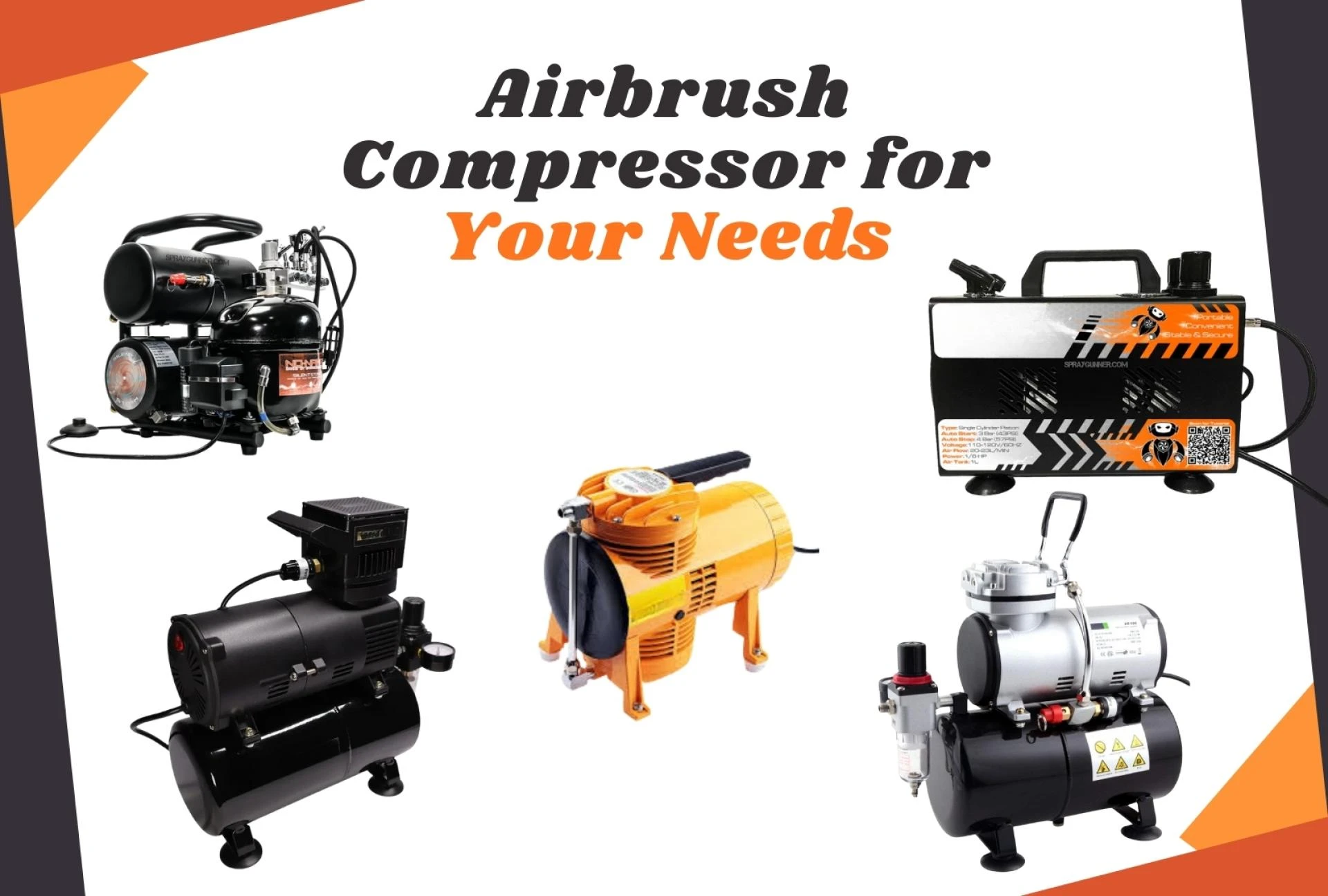
Airbrushing looks effortless when it’s done well: smooth fades, clean lines, even coverage, and details that don’t turn into a speckled disaster. The part people underestimate is the compressor. It’s the air source that drives atomization, and the stability of that air supply is a major factor in how consistently your airbrush can break paint into a controllable fine mist. When pressure is unstable, you’re not “improving technique” anymore, you’re fighting your equipment.
That’s why compressor choice matters for every skill level. A setup that can deliver steady, adjustable pressure helps you keep spray patterns predictable across fine lines, soft gradients, and broader coverage. It also reduces common finish problems caused by inconsistent airflow and contamination, especially moisture. Even small amounts of water carried through the airline can interfere with clean paint application and can ruin an otherwise solid paint job, which is why moisture control (through traps/filters and good habits) is treated as essential in many airbrush setups.
This guide breaks the compressor decision into practical, real-world choices: the key specs (PSI control, tank vs tankless behavior, noise, portability, duty cycle, and moisture management), how different compressor types compare (piston, diaphragm, and oil-free designs), plus brand and retailer recommendations so you can buy confidently and get back to making clean, professional results instead of collecting new problems.
Why Choosing the Right Airbrush Compressor Matters
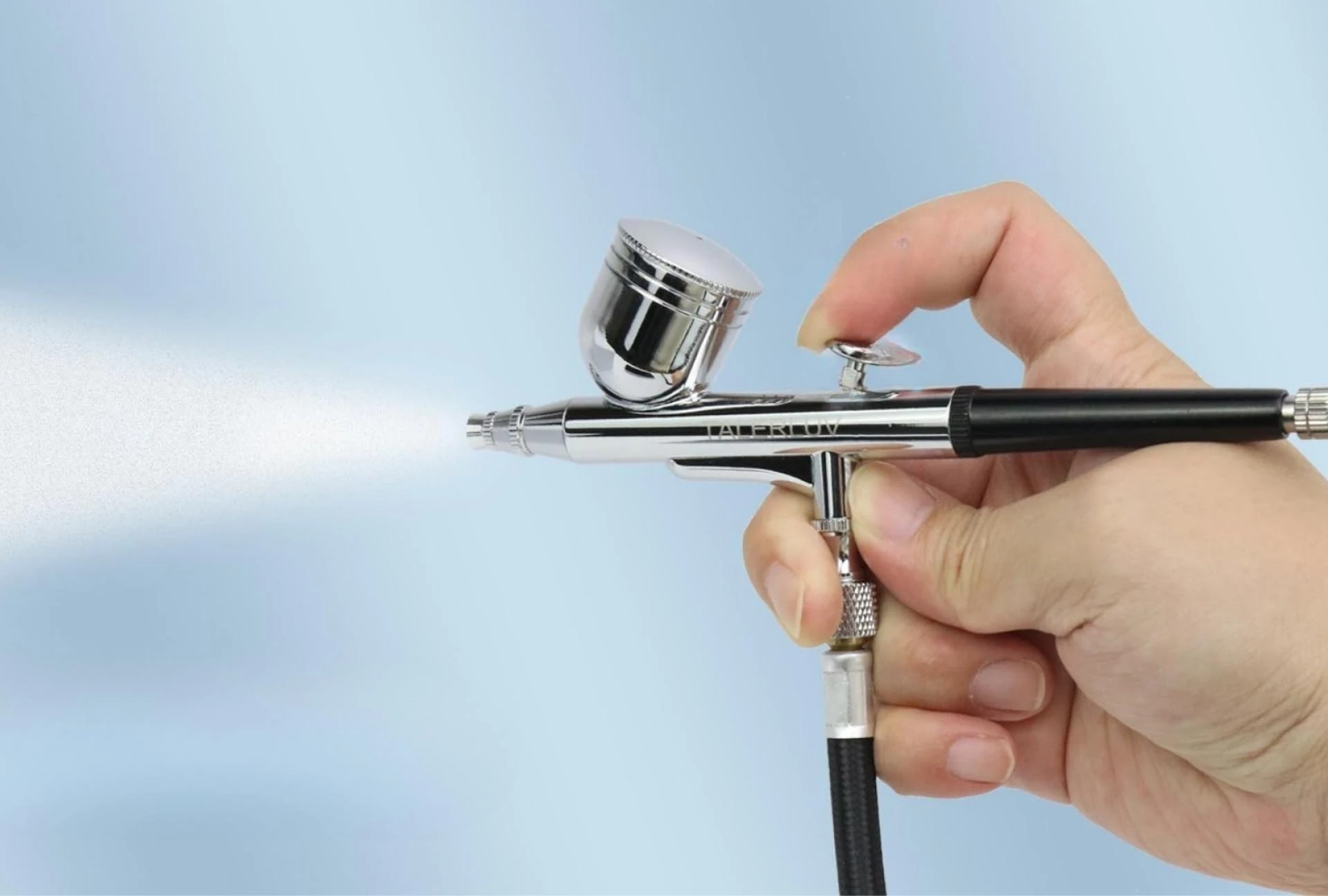
An airbrush compressor isn’t just another tool. It is the engine that drives the entire airbrushing process by supplying a controlled, pressurized stream of air. That air pressure is what forces paint through the airbrush, atomizing it into ultrafine droplets that create smooth, even coverage on the surface you’re working on. If the compressor delivers inconsistent or inadequate air pressure, the quality of the paint application drops dramatically. This can mean blotchy coverage, uneven lines, and unpredictable spray patterns that undermine precision work. A compressor that matches your needs ensures that your airbrush performs reliably and consistently, so your artistic intent comes through in the final result rather than equipment issues.
The Precision of Atomization Depends on Consistent Pressure
Airbrushing works by using pressurized air to break paint into tiny particles in a process called atomization. The size of these particles and their spray pattern are directly influenced by how stable and consistent the compressed air supply is. If the compressor cannot maintain a steady pressure, the atomization becomes uneven. This leads to visible spray irregularities such as overspray, blotches, or inconsistent color density, making it extremely difficult to achieve smooth blends or fine detail. Stable air supply is essential whether you’re doing delicate gradients or covering wider areas.
Impact on Spray Quality and Artist Control
The right compressor enhances control, which is central to professional airbrushing. When air pressure fluctuates, it becomes harder to predict how paint will leave the nozzle, forcing you to constantly adjust technique mid‑spray. Consistent pressure gives you predictable airflow and paint output, which lets you focus on your composition rather than chasing unpredictable results. An appropriately chosen compressor helps keep line edges crisp, gradients smooth, and layers balanced all vital for both beginners and skilled artists alike.
Matching Compressor Output to Your Techniques and Materials
Different airbrushing applications call for different pressure characteristics. For example, fine detail work typically requires lower PSI settings to keep lines sharp and paint delivery delicate, while broader coverage may need higher PSI. A compressor that supports adjustable pressure and steady airflow gives you the flexibility to switch between tasks without downgrading performance. The wrong compressor might either flood your piece with too much air or starve the airbrush of pressure, both of which lead to sub‑par finishes.
Benefits of Choosing the Right Compressor
Selecting an airbrush compressor that fits your specific needs doesn’t just “make your equipment work.” It enhances multiple aspects of the airbrushing experience, from overall output quality to tool longevity and even your working comfort.
Consistent Pressure for Smooth, Even Coverage
A high‑quality compressor regulates airflow so that pressure remains stable even as you work across different spray patterns and surfaces. This consistent output prevents interruptions in atomization and helps maintain uniform paint thickness. For detailed pieces or layered effects, this consistency is critical because small pressure dips can cause visible defects in the finish that are difficult or impossible to correct later.
Reduced Paint Splattering and Overspray
When airflow is unstable, the paint droplets become irregular: some are too large, others too sparse, leading to splattering and uneven texture on the surface. A reliable compressor minimizes these issues by delivering a smooth and uninterrupted air stream that helps create a fine mist instead of scattered blobs. This makes the difference between a professional‑grade result and a piece that looks amateur.
Improved Control for Intricate and Detailed Work
Intricate designs demand precision control. A compressor that allows fine tuning of PSI and delivers stable airflow gives you better control over paint flow, enabling sharper lines, subtle gradients, and a more refined finish. Whether you’re airbrushing miniatures, cosmetic designs, or automotive graphics, this level of control ensures that your vision isn’t limited by your equipment.
Tool Protection and Longer Equipment Life
A well‑matched compressor protects your airbrush by reducing mechanical stress on its internal parts. Irregular or excessive pressure can strain seals, needles, and valves, accelerating wear and leading to malfunctions over time. A compressor that supplies clean, consistent pressure reduces this strain, prolongs the life of your airbrush, and lowers maintenance costs. Many reliable units also include built‑in moisture traps and regulators that help prevent internal corrosion or paint contamination.
Key Features and Technical Specifications You Must Consider
When evaluating airbrush compressors, each specification affects how the compressor performs with different tasks, paint types, and work environments. Understanding these elements helps you make a smarter choice that aligns with your artistic goals.
1. PSI (Pounds per Square Inch): Air Pressure and Control
PSI measures how much air pressure the compressor can deliver. For airbrushing, this determines how forcefully paint is atomized and how finely you can control the spray.
• Working PSI Range: Most airbrush projects fall within a range of roughly 15 to 60 PSI, depending on the thickness of your paint and the level of detail you need. Lower pressures around 15–30 PSI are ideal for fine detail work and delicate gradients, while more robust applications, such as broad coverage or heavier media, may call for pressures up to 60 PSI.
• Regulated Output Pressure: The compressor often supplies a higher maximum pressure than what your airbrush uses. A built‑in pressure regulator lets you dial down the pressure to suit your technique, ensuring better control and smoother paint flow.
Because airbrushes respond differently with each adjustment in PSI, compressing air to the correct working pressure is crucial for achieving clean, consistent atomization without overspray or blotching.
2. Tank Size: Consistent Air Supply and Smooth Flow
Tank size refers to the volume of compressed air the unit can store, which directly influences airflow stability:
• With a Tank: A compressor with an air tank acts as a reservoir. The stored air smooths out the pressure output and reduces pulsing or fluctuations that can occur when the compressor runs without a tank. This results in more even paint lay‑down, especially useful for long sessions or larger surfaces.
• Tankless Models: Some compressors operate without a tank. These are typically more compact and quieter but can produce pulsed airflow. They’re excellent for portability and light tasks but may not deliver the same smooth pressure for extended or highly detailed work.
Overall, a larger tank usually provides more consistent output and better performance during longer sessions because it lessens the frequency at which the unit must cycle on and off.
3. Noise Level: Comfort and Environment
Noise level, measured in decibels (dB), is an important feature, particularly if you are working in a shared studio, a home environment, or during long airbrushing sessions.
• Quiet Models (40–50 dB): Compressors that operate in this range are considered quiet and comfortable for home or indoor use without disrupting others. Some premium units include vibration dampening and motor insulation to reduce sound further.
• Standard Noise (50–70 dB): Many hobby compressors fall in this range. While louder, they still offer dependable performance and are suitable if noise isn’t a critical concern.
Noise impacts not only comfort but also your ability to focus on fine details. Lower noise compressors make extended creative sessions more pleasant.
4. Portability: Where You Work Matters
Portability is a practical consideration based on how and where you plan to use your compressor:
• Lightweight, Compact Units: Smaller compressors are easier to transport between studios, classes, or client sites. They are ideal for hobbyists or professionals who travel.
• Stationary Models: Larger compressors, often with a bigger tank and higher PSI capacity, are designed to stay in one location. They offer higher performance and airflow but are less convenient to move around.
When mobility is important (for workshops, outdoor projects, or multi‑location work), prioritize portability without sacrificing the key specs you need.
5. Duty Cycle: Continuous Use and Heat Management
The duty cycle defines how long the compressor can run before it needs to cool down. It’s expressed as a percentage of time over a ten‑minute period or as continuous run capability.
• High Duty Cycle: Compressors with higher duty cycles can operate longer without breaks, which is essential for extended projects like murals or automotive detailing.
• Lower Duty Cycle: Good for short sessions or quick tasks. If you plan frequent long airbrushing sessions, consider models designed for extended operation, as they are typically more robust and reliable.
This feature impacts heat buildup and overall compressor longevity, so it’s worth matching duty cycle to how often you expect to work.
6. Moisture Trap: Clean, Dry Air for Flawless Painting
Moisture traps are devices that collect and remove water vapor from compressed air before it reaches the airbrush. This is vital because moisture in the air stream can:
• Cause paint contamination, leading to drips, uneven texture, or poor adhesion.
• Reduce the overall quality of atomization, especially with water‑based paints.
Moisture traps can be built into the compressor or added externally. Regularly draining them prevents accumulated water from entering your paint flow, safeguarding consistent results and extending the life of your airbrush.
Types of Airbrush Compressors
Airbrush compressors vary in how they generate and deliver compressed air, and each type has strengths and trade‑offs. Understanding these differences helps you choose a compressor that matches the kind of work you do; whether that’s detailed illustration, general hobby painting, or heavy‑duty professional tasks.
Piston Compressors
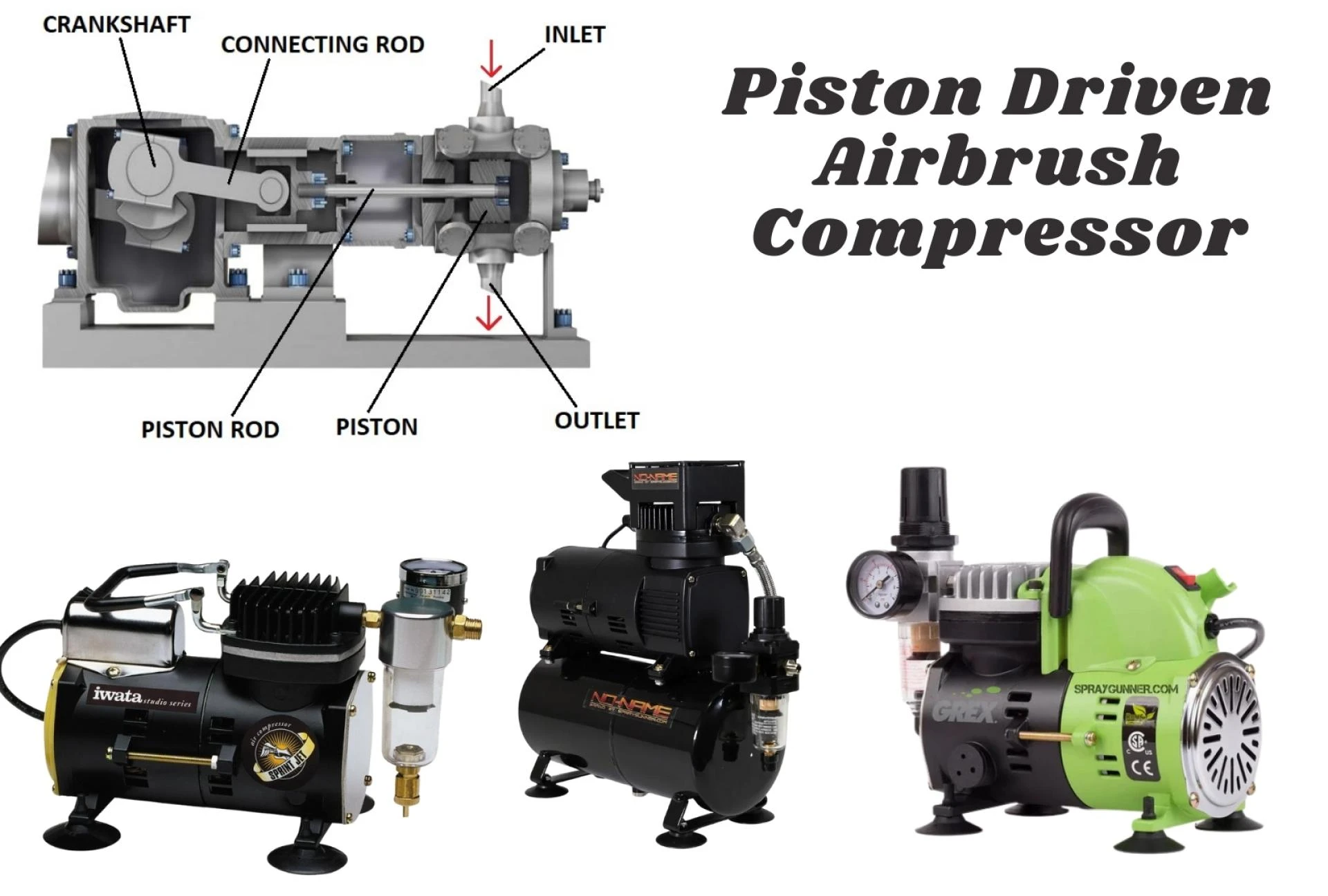
Piston compressors use one or more reciprocating pistons to compress air and push it to your airbrush. They are among the most common types for airbrushing because they balance power, airflow stability, and versatility.
How They Work
Inside a piston compressor, a cylinder houses a piston that moves up and down. During the downward stroke, air is drawn in; during the upward stroke, that air is compressed and forced into a storage tank or directly to the hose. Compressors with tanks deliver smoother, more continuous flow, while tankless versions cycle more frequently to maintain pressure.
- Strong air output: Piston compressors can generate higher pressures and greater airflow than many other types, making them suitable for a wide range of projects from fine art to automotive surfaces.
- Steady airflow: Many piston models include automatic shut‑off when pressure reaches a set level, then restart as needed; giving you reliable on‑demand power and reducing wear.
- Longevity: Built with robust mechanisms, piston compressors tend to have a long working life if maintained properly.
- Noise and vibration: The mechanical motion of pistons can produce more noise and vibration than quieter types like diaphragms. Everything
- Size and weight: Models with larger tanks and twin pistons are heavier and less portable than compact alternatives.
Piston compressors are a solid choice if you want versatility and raw performance across different airbrushing tasks.
Diaphragm Compressors
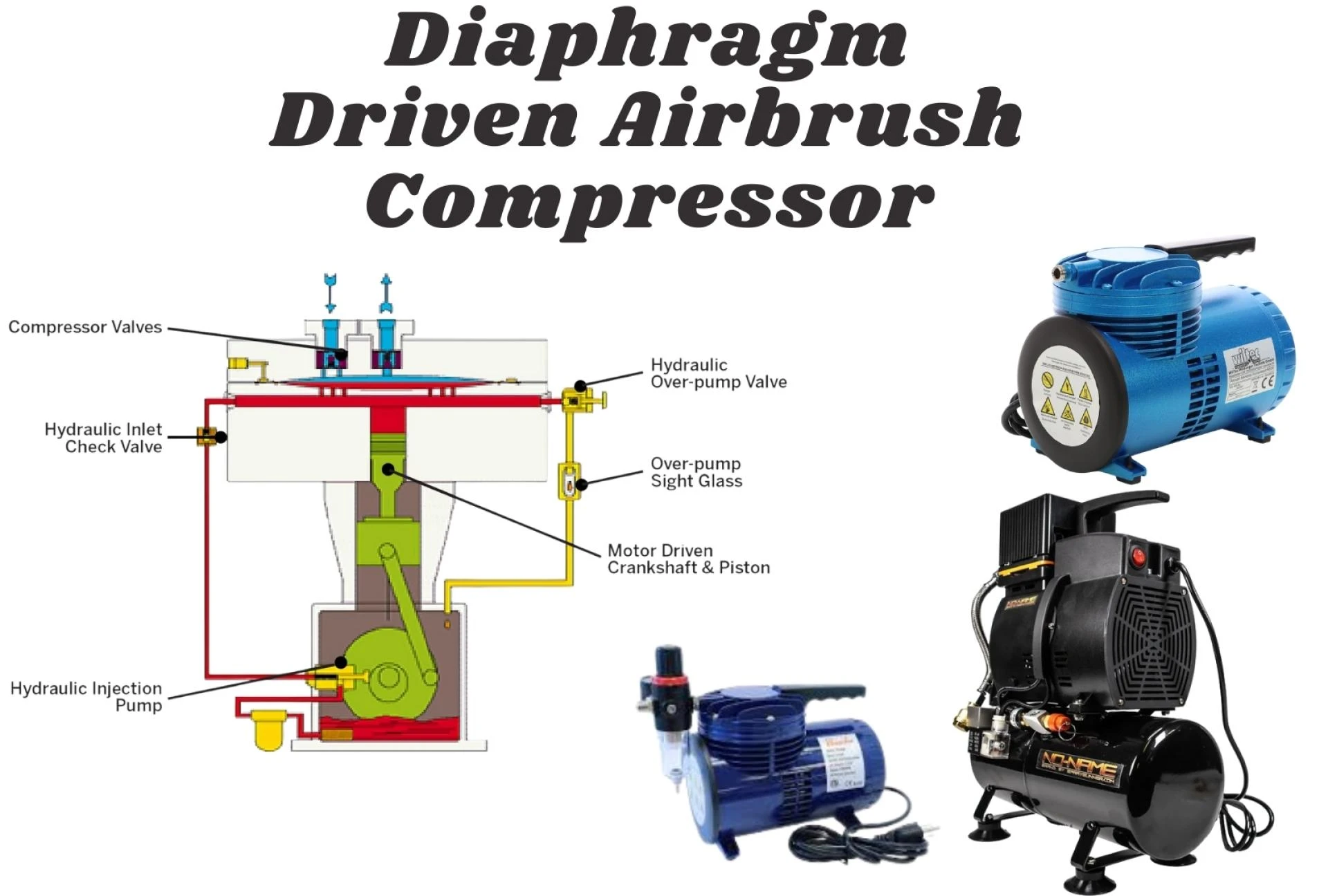
Diaphragm compressors generate air pressure using a flexible diaphragm that moves back and forth, pushing air with each cycle. They are known for quieter operation and simpler mechanical structure.
How They Work
Instead of a piston, a diaphragm unit uses a flexible membrane driven by a motor. As the diaphragm flexes inward and outward, it draws air in and forces it out through the compressor outlet. This design often eliminates the need for lubrication or oil, simplifying maintenance.
Advantages- Quieter performance: Diaphragm compressors tend to run with noticeably less noise, often under typical piston levels, making them ideal for home or studio environments where silence matters.
- Compact and lightweight: Their smaller footprint makes them easier to move or fit into limited workspaces.
- Ideal for light and precision work: These compressors are sufficient for fine art, makeup application, cake decorating, and similar detailed tasks.
- Lower maximum pressure: Diaphragm models generally don’t reach the high pressures piston compressors can, which can limit their use in heavy applications.
- Potential pulsing: Because the diaphragm’s movement creates a natural cycle of compression, some units may produce slightly pulsed airflow rather than a perfectly smooth stream unless paired with a tank.
Overall, diaphragm compressors shine when quiet, clean operation and ease‑of‑use take priority.
Oil‑Free Compressors
Oil‑free compressors are not a strictly separate category like piston or diaphragm, but rather a design choice applied to many piston or small compressors. These units are engineered to compress air without lubricating oil in internal components, which has specific advantages and limitations for airbrushing.
How They Work
An oil‑free compressor uses materials and seal designs that eliminate the need for oil lubrication. Instead of oil reducing friction, parts are engineered with coatings or special bearings that allow smooth movement without contaminating air with oil.
Advantages- Cleaner air output: With no oil in the compression chamber, there’s no risk of tiny oil droplets entering the airhose and affecting paint quality. This is especially valuable when working with delicate finishes or water‑based paints.
- Low maintenance: No oil means no oil changes, filters, or lubrication checks; reducing upkeep time and complexity.
- Good portability: Many oil‑free compressors are compact and lighter, which is convenient for mobile artists or small workspaces.
- Lower pressure efficiency: Compared to lubricated piston compressors, some oil‑free models may produce less pressure or airflow, making them better suited for hobby or intermediate use.
- Shorter service life under heavy use: Without oil reducing mechanical wear, parts can experience faster degradation with constant heavy workload.
Oil‑free compressors are ideal for beginners, casual users, or anyone who values simplicity, cleanliness, and portability in their airbrush setup.
Comparing the Types
There isn’t a single “best” compressor universally; it depends on your priorities:
- Need maximum power and versatility for varied tasks: A well‑built piston compressor with a tank is often the preferred choice.
- Working in quiet, confined spaces or doing delicate detail work: Diaphragm compressors are a solid fit.
- Want low maintenance and clean air for hobby or indoor use: An oil‑free compressor delivers simplicity and convenience.
By aligning the compressor type with your specific workflow and priorities, you ensure a smoother, more efficient airbrushing experience without sacrificing the quality of your results.
How to Choose the Right Compressor for Your Needs
Consider the following when selecting a compressor:
- Project Type: Match the compressor to the demands of your projects. For general airbrushing tasks, a smaller, portable model may suffice. For detailed work, such as fine art or automotive detailing, a more powerful compressor is necessary.
- Frequency of Use: For occasional use, a basic, compact model may be enough. For regular, extended sessions, opt for a compressor with a larger tank and higher PSI.
- Budget: Budget plays a role in your choice. Entry-level compressors are affordable and sufficient for light work, while high-end models offer more control and durability for professional use.
Brand Recommendations For Airbrush Compressors
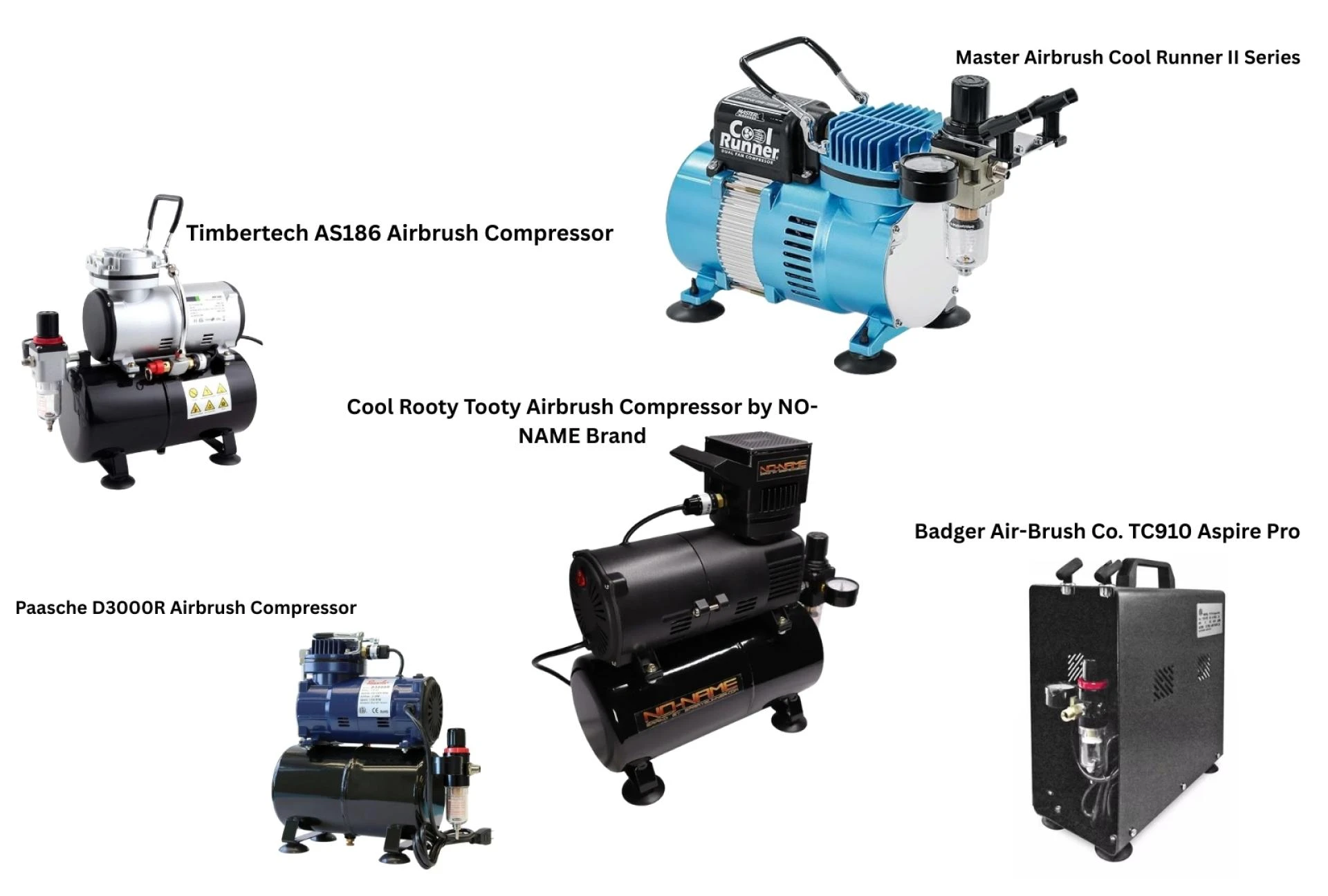
Below are several highly-rated, dependable airbrush compressors that work especially well for cake decorating, ranging from beginner-friendly picks to pro-level tank models.
1. Master Airbrush Cool Runner II Series
The Master Airbrush Cool Runner II Series is widely recognized for steady airflow and overall reliability. It includes dual cooling fans designed to prevent overheating, helping the unit maintain smooth, continuous performance during long decorating sessions. Suitable for both beginners and professionals, it also comes with the necessary accessories to support an optimal airbrushing experience.
2. Timbertech AS186 Airbrush Compressor
The Timbertech AS186 is an oil-free, compact compressor that’s easy to carry, making it a practical option for decorators who need portability. It features a pressure regulator and moisture trap to support smooth and consistent airflow, while remaining relatively quiet at 47 dB. Although it isn’t built for extended use like larger models, it offers strong value for hobbyists and those just getting started.
3. Paasche D3000R Airbrush Compressor
Built for more demanding work, the Paasche D3000R includes a ¾-gallon tank, which helps smooth airflow and maintain consistent pressure throughout longer decorating sessions. It’s an excellent choice for decorators working on larger cakes or needing uninterrupted coverage for detailed designs. A built-in moisture trap is also included to help keep the airbrush clog-free.
4. Badger Air-Brush Co. TC910 Aspire Pro
Badger’s TC910 Aspire Pro uses an oil-less design and includes automatic shutoff, making it a convenient, low-maintenance compressor for regular decorating use. It runs quietly, which is helpful in settings where noise matters. The unit is also easy to clean and operate, delivering solid performance for both beginners and experienced decorators.
5. Cool Rooty Tooty Airbrush Compressor NO-NAME Brand
The Cool Rooty Tooty by NO-NAME Brand is an upgraded version of a well-known tankless airbrush compressor. Released in late 2021, it was designed to stay cooler during longer use, featuring a fan mounted on the cylinder head. It’s well-suited for light to medium-duty tasks such as cosmetics, nail art, tattoo designs, hobbies, and modeling. While it is tankless, pairing it with a coiled air hose can help reduce the pulsation sometimes associated with tankless compressors.
Recommended Trusted Online Stores to Buy Airbrush Air Compressors
When it comes to purchasing an airbrush air compressor, choosing the right retailer is almost as important as choosing the right model. Buying from a trusted online store ensures that you receive authentic products, clear technical specifications, warranty support, and reliable shipping options. Below is a curated list of reputable online sellers where artists, hobbyists, and professionals commonly shop for airbrush compressors.
1. U.S. Art Supply
U.S. Art Supply offers a wide range of airbrush compressors, kits, and accessories from well‑known brands. Their catalogue includes units suitable for beginners through to studio‑level artists, with options that offer moisture traps, regulators, and tanks for steady airflow. The site also provides clear descriptions and often free shipping promotions on arts supplies.
Why it’s trusted
- Dedicated art supply retailer with a long history of serving artists.
- Clear product information and multiple compressor types available.
- Often includes bundles and extras tailored to airbrush setups.
2. Blick Art Materials
Blick is one of the most established art retailers in the U.S., selling a wide selection of airbrush compressors and related accessories. They carry respected brands and often provide educational resources about equipment compatibility and features, which is helpful when selecting a compressor that fits specific artistic needs.
Why it’s trusted
- Large art retailer with many years in business.
- Offers accessories such as regulators and hoses alongside compressors.
- Good return policy and customer support for art tools.
3. Airbrush Depot at Rex Art Supplies
Airbrush Depot is a specialized section of Rex Art Supplies focusing exclusively on airbrushing tools and compressors. They stock products from major airbrush brands and often include customer reviews, technical specs, and free shipping deals on qualifying orders.
Why it’s trusted
- Expert focus on airbrush equipment and supplies.
- Strong customer ratings and clear product listings.
- Helpful support options for questions about models and features.
4. Hobby Wholesale
Hobby Wholesale offers a broad selection of airbrush compressors and related finishing tools, including brands like Paasche and Iwata. This site is a good option for those who want a dedicated tools‑and‑hobby supplier with a variety of compressor options and accessories available in one place.
Why it’s trusted
- Focus on hobby tools including airbrush compressors and accessories.
- Easy browsing of multiple brands and models.
- Reliable shipping and customer service for hobbyist tools.
5. Michaels Arts & Crafts
Michaels is a large arts and crafts retailer that also stocks airbrush compressors and kits online. Their inventory frequently includes portable and beginner‑friendly models, and shoppers can often find seasonal deals and promotions.
Why it’s trusted
- Well‑known arts and crafts chain with a solid online presence.
- Offers both compressors and airbrushing kits.
- Frequent discounts and bundles for beginner setups.
6. SprayGunner
SprayGunner is a specialized online retailer known for its extensive selection of airbrush systems, compressors, parts, and accessories. Whether you're a beginner or a professional, they offer curated choices from top brands like Iwata, Badger, and Createx, providing options from budget‑friendly models to premium airbrush setups.
Why it’s trusted
Beyond just products, SprayGunner also shares its expertise in airbrush painting, offering guidance for hobbyists and professionals alike. Their platform is user‑friendly, with resources and contests that help foster a community of artists. Whether you’re looking for compressors to match your specific needs or simply want expert advice, SprayGunner is a trusted choice for airbrush enthusiasts.
Tips for Buying Online Safely
When buying an airbrush compressor online, keep these tips in mind:
- Check seller reviews and product ratings before purchasing.
- Confirm warranty and return policies in case the product doesn’t meet expectations.
- Compare shipping costs and delivery times so you aren’t surprised at checkout.
- Review technical specifications carefully to match the compressor with your airbrushing needs (PSI, tank size, duty cycle).
Conclusion
Choosing the right airbrush compressor is not a minor shopping decision. It directly determines how well your airbrush can atomize paint, how consistent your spray pattern stays, and how much control you have over fine detail and smooth gradients. When air pressure is stable and adjustable, you get predictable paint flow, cleaner blends, and fewer defects like splattering or uneven coverage.
A smart compressor choice comes down to matching specifications to your real workflow. PSI control and a pressure regulator matter because “working pressure” is what your airbrush actually uses while spraying. Airbrush Tank size affects airflow stability and can reduce pulsing and constant motor running, which is especially valuable for longer sessions and consistent finishes. Moisture management is equally critical, since water in the airline can ruin a finish, and a moisture trap/filter helps keep your airflow clean and dry.
Understanding compressor types helps you buy with fewer regrets. Piston compressors are a strong all-rounder for power and versatility, diaphragm compressors suit quieter environments and lighter precision tasks, and oil-free designs reduce maintenance while helping avoid contamination risk. To keep your purchase reliable, stick to established brands (like the ones listed in your draft) and buy from reputable retailers that provide clear specifications, warranty/returns, and airbrush-focused support.