Most security problems in commercial buildings do not start with a break-in. They start with a door that was never properly locked down. Can you say with confidence who accessed every area of your building in the last 48 hours?
Here is a scenario most business owners would rather not admit happens too often. An unauthorized visitor slips into a restricted zone past working hours. Nothing is visibly broken. No alarm sounds. HR has no record of who was there or why. The only reason it came to light was a coincidence — a manager who stayed late, or a camera pointing the right way.
That is the real problem with weak access control in commercial buildings. It is not always dramatic. It is quiet. Gradual. The damage often occurs before anyone notices the problem.
Physical security has moved much higher up the corporate priority list for this precise reason. You need to understand how the latest hardware options look in practice. Then your business can evaluate critical factors before choosing a permanent system.
The Business Climate Has Changed. Security Needs to Keep Up.
Ten years ago, a reception desk and a front-door lock covered most of what a typical business needed. That is genuinely no longer the case.
Buildings today carry more risk than they used to. Sensitive data lives on-site. Equipment is expensive. Teams are larger and more transient. Contractors come and go. And with hybrid work, there are often fewer people around to notice when something is off.
Three things in particular are pushing more companies toward proper commercial building security setups.
Hybrid Work Created New Blind Spots
Hybrid work models create major physical blind spots for growing companies. Unfamiliar faces are much easier to miss when floors remain half empty. Automated tracking systems log every entry automatically. This digital approach removes the need to rely on staff members spotting a stranger.
The Threat Is Often Internal
This fact makes corporate leaders uncomfortable. Security incidents frequently involve staff members who already possess building credentials. A former employee whose access was never revoked. A contractor who wandered beyond their assigned area. Someone who borrowed a colleague's card.
Strong workplace access management shuts those gaps down fast. It ties access to identity, not to a plastic card that can be shared or lost.
Compliance Audits Are Getting Tougher
Operating in finance or healthcare requires compliance with strict physical security rules. Government-adjacent businesses must also follow these heightened protection standards. Auditors want proof, not promises. A documented access control system gives you that proof.
What These Systems Actually Look Like
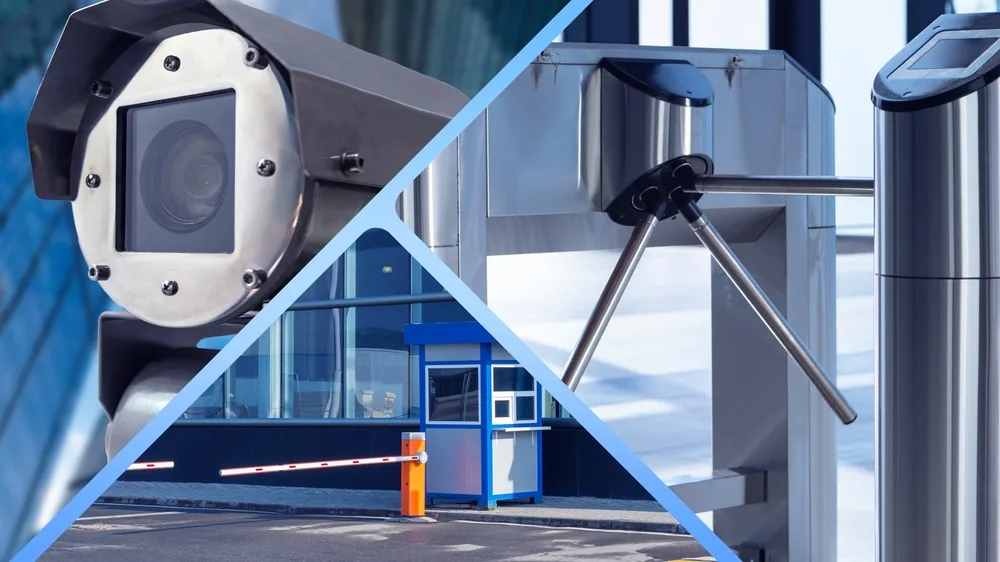
Many people mistakenly view access control as a single card reader installed at the front door. Modern commercial building security is a lot more than that.
Biometric Entry
Modern fingerprint scanners and face recognition terminals are affordable access control systems for mid-sized operations. These biometric systems verify identity at the main entrance door. This technology eliminates buddy punching completely. Owners receive clean, time-stamped records of building movement.
Turnstiles
Smart turnstiles block unauthorized visitors from following authenticated staff through secure barriers. Industrial facilities and data centers deploy full-height models for maximum defense. Corporate offices install half-height options in busy lobbies to maintain an inviting atmosphere.
Cards and PINs
Key cards are not going away. They are fast, familiar, and easy to manage in bulk. The important thing is that your system lets you revoke access instantly. When someone leaves the company, their card should stop working within the hour, not the week.
Cloud Management
Most modern systems connect to a cloud dashboard. Managers view live entry logs and instantly update permissions for specific staff. Additionally, the system sends immediate alerts when someone tries to access a restricted zone. No dedicated server room required.
Integrated biometric and cloud-based access control systems allow full building control from a single dashboard. This software combines entry management and attendance tracking into one platform. Security teams monitor live alerts from a central interface.
Why the Numbers Actually Make Sense
Security spending is always a hard sell internally. So let's put it in practical terms.
- Internal theft drops. Restricted zones mean fewer people near high-value equipment and assets. Opportunity drives many workplace thefts.
- Insurance gets cheaper. Documented physical security systems often qualify businesses for lower premiums. Ask your provider.
- Payroll gets cleaner. When attendance data comes from biometric logs rather than paper timesheets, disputes drop and accuracy increases.
- Emergency response gets faster. A real-time headcount during a fire or evacuation is not a nice-to-have. It saves lives.
- Liability shrinks. Detailed access logs put companies in a far better legal position after an incident. Consequently, businesses with proper tracking protect themselves much better than organizations with no data.
Consider the financial impact: One severe security breach costs far more than maintaining a modern protection system for years. These costly liabilities typically start when unauthorized visitors gain physical access to secure zones. Similarly, missing equipment from a secure area destroys the corporate budget.
It Looks Different Depending on Your Building
Offices
A 10-person startup and a 300-person corporate office have very different needs, but the principle is the same. Reception is open. The server room is not. Payroll and HR files sit behind an extra layer. Layered permissions by floor or department are the standard approach for anything above a single-room setup.
Factories and Warehouses
Here, access control crosses into health and safety territory. Untrained workers operating near heavy machinery or hazardous materials create a massive compliance liability. Biometric terminals and turnstiles at zone entry points ensure only cleared personnel get through.
Healthcare
Medication storage, ICU access, and patient record systems all need hard restrictions. In most markets, this is a regulatory requirement, not a choice. Getting it wrong carries fines and, more importantly, real risk to patients.
Schools and Shared Workspaces
High footfall, mixed user groups, and rotating memberships make workplace access management genuinely complex here. A well-configured system handles it without creating long queues at the door.
What Is Happening in Pakistan Right Now
Demand for commercial building security technology in Pakistan has grown noticeably over the last few years. Businesses in Karachi, Lahore, and Islamabad are moving away from manual registers and basic lock setups toward biometric and face recognition systems.
What changed? Partly awareness, partly cost. Local providers now offer scalable packages for commercial buildings, making advanced security accessible to smaller enterprises that previously could not justify the investment. The payback is usually quick, often within the first year, when you count reduced losses and the HR time saved on attendance disputes.
Five Things Worth Checking Before You Buy
Not every system will suit your situation. When evaluating access control options for commercial buildings, specific factors determine operational success once management begins running the system day-to-day.
- Will it scale? Opening a second office or adding a floor should not mean replacing the whole system.
- Does it connect to your other tools? HR software, payroll, CCTV — integration multiplies the value of each component.
- Can your team actually use it? A confusing dashboard means staff will find workarounds. Simplicity is not a small thing.
- Who supports it locally? Hardware fails. The vendor's response time when something breaks matters more than their sales pitch.
- What does the audit trail look like? Compliance and incident reviews both depend on clean, searchable logs. Check this before you sign anything.
Buying on price alone is tempting. Try to resist it. A poorly supported system that your team works around is more expensive than a well-priced one that actually gets used.
Conclusion
Weak access control does not announce itself. It just sits there quietly until something goes wrong, and by then, the question is no longer whether to fix it but how much the delay costs you.
Smart entry systems are not a complicated concept. True control means knowing exactly who occupies the building and where they are allowed to go. Furthermore, modern tracking systems maintain a flawless digital record of all movement. The technical tools to manage this process are more accessible now. Consequently, implementing a robust setup is more affordable than ever.
Take a hard look at your current setup. If you cannot answer basic questions about who has access to what, that is your starting point.
The right access control system for commercial buildings does more than just protect your building. Advanced security protects the enterprise you spent years building inside the facility.
FAQs
What is access control in commercial buildings?
Access control manages entry into a building or specific areas. Common setups use biometric readers and key cards alongside cloud software. This technology replaces passive locks with a system that logs and restricts movement.
Why should business owners care about access control?
Uncontrolled access creates a direct financial and legal risk for any operation. Businesses face insider theft and unauthorized data access when buildings lack proper management. Similarly, compliance failures occur when facilities lack proper entry tracking. Strong commercial building security addresses all three.
What makes workplace access management different from just having a security guard?
Workplace access management creates a permanent, verifiable record of who went where and when. A security guard cannot provide that. The system also works at 2 A.M. on a Sunday, which a lone guard often cannot cover effectively.
How much will a commercial access control system cost?
Costs vary significantly depending on scale, but most SMEs start with modular systems that expand over time. A single-entry biometric setup costs far less than a multi-floor cloud-managed installation. The only way to obtain an accurate figure is through a professional site assessment, where a provider scopes the system around actual requirements rather than catalog pricing.
How do I start with access control in commercial buildings?
Walk through your building and list every area that should have restricted entry. Then think about who needs access to each one and when. That simple exercise usually reveals the gaps quickly. Providers specializing in commercial access control can match hardware and software directly to specific operational needs.