Introduction
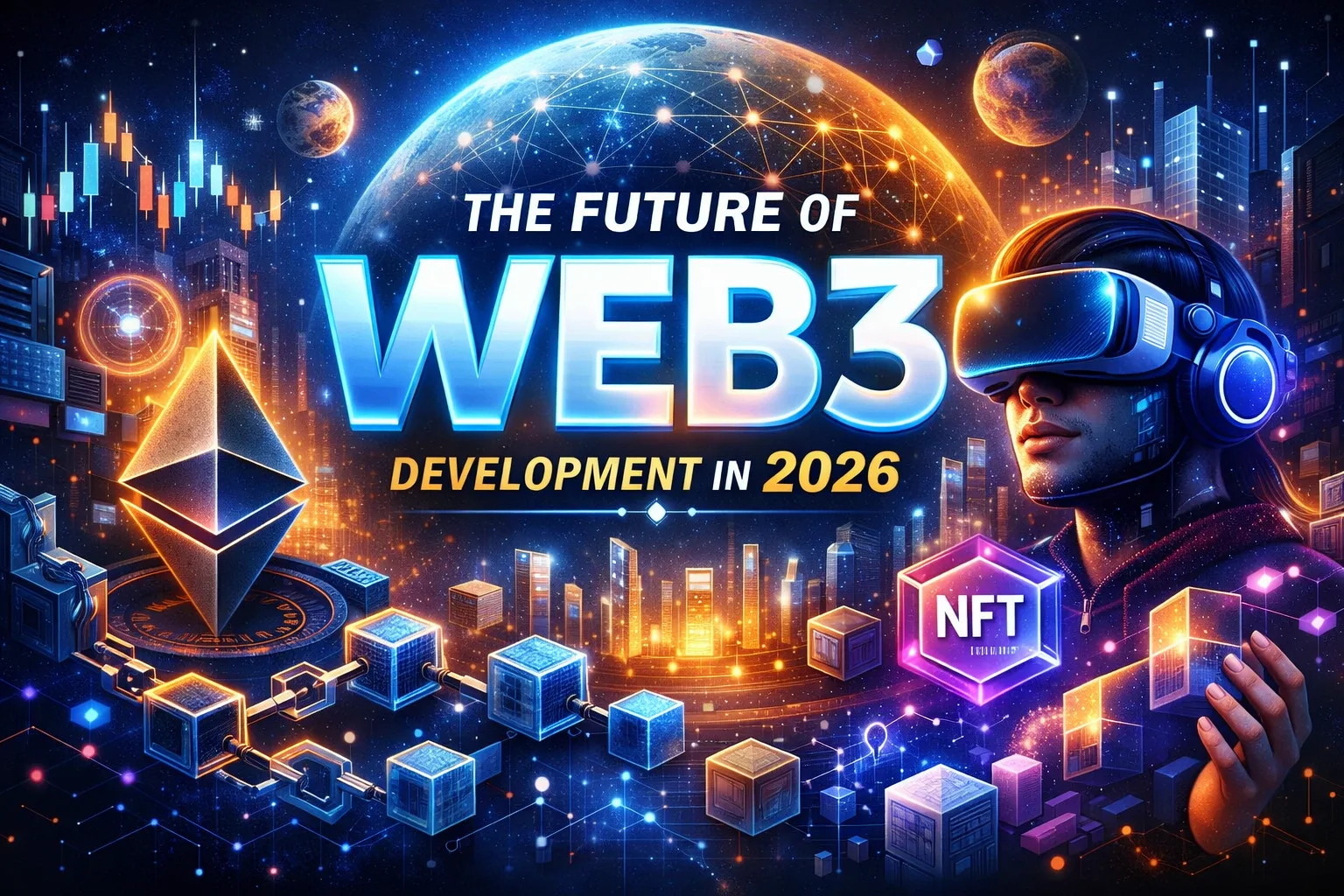
The internet is evolving faster than ever before. From static websites in Web1 to interactive platforms in Web2, we are now entering a new era known as Web3. This next generation of the internet is powered by blockchain technology, decentralization, and user ownership of data.
In 2026, Web3 is no longer just a buzzword—it is becoming a real ecosystem transforming industries like finance, gaming, healthcare, supply chain, and digital identity. Businesses across the world are now exploring Web3 development to build secure, transparent, and user-controlled applications.
But what exactly is driving this transformation? And why are companies investing heavily in Web3 development solutions?
Let’s explore in detail.
🌐 What is Web3 Development?
Web3 development refers to building decentralized applications (dApps) using blockchain technology. Unlike traditional applications controlled by centralized servers, Web3 applications operate on peer-to-peer networks.
Key components of Web3 include:
- Blockchain networks (Ethereum, Solana, BNB Chain)
- Smart contracts
- Decentralized storage systems
- Cryptographic security
- Digital wallets
These technologies enable users to interact directly without intermediaries, ensuring transparency and security.
🔥 Why Web3 is Becoming So Important in 2026
Web3 is not just a technological upgrade—it is a complete shift in how digital systems operate.
1. Data Ownership Returns to Users
In Web2 platforms, user data is controlled by centralized companies. Web3 changes this by giving users full ownership of their data.
2. Enhanced Security
Blockchain-based systems reduce the risk of hacking, data leaks, and manipulation due to decentralized architecture.
3. Transparency in Transactions
Every transaction on a blockchain is recorded and cannot be altered, ensuring complete transparency.
4. Elimination of Middlemen
Web3 enables direct peer-to-peer interaction, removing unnecessary intermediaries in industries like finance and real estate.
📊 Top Web3 Development Trends in 2026
The Web3 ecosystem is rapidly expanding. Here are the key trends shaping its future:
🔹 1. Rise of Decentralized Finance (DeFi)
DeFi platforms allow users to borrow, lend, and trade assets without banks. In 2026, DeFi is expected to become more regulated and user-friendly.
Popular use cases:
- Crypto lending platforms
- Decentralized exchanges (DEX)
- Yield farming systems
🔹 2. NFT 2.0 Evolution
NFTs are no longer limited to digital art. The new wave includes:
- Real estate NFTs
- Gaming assets
- Identity verification NFTs
- Ticketing systems
NFT 2.0 focuses more on utility than just ownership.
🔹 3. Metaverse Integration
Web3 and Metaverse are merging rapidly. Virtual worlds now use blockchain for:
- Asset ownership
- Virtual economies
- Digital identity systems
Businesses are creating immersive experiences for customers using Metaverse platforms.
🔹 4. DAO-Based Organizations
Decentralized Autonomous Organizations (DAOs) are replacing traditional company structures.
Benefits include:
- Community governance
- Transparent decision-making
- Token-based voting systems
🔹 5. Cross-Chain Interoperability
One of the biggest challenges in blockchain was isolated networks. Now, cross-chain solutions allow seamless interaction between different blockchains.
💼 Real-World Applications of Web3
Web3 is not limited to theory—it is already being used in multiple industries.
✔ Finance
- Crypto payments
- DeFi lending platforms
✔ Gaming
- Play-to-earn models
- In-game asset ownership
✔ Healthcare
- Secure patient data storage
- Blockchain-based medical records
✔ Supply Chain
- Transparent product tracking
- Fraud prevention systems
✔ Digital Identity
- Self-sovereign identity systems
- Secure login without passwords
⚙️ Challenges in Web3 Adoption
Despite its potential, Web3 still faces some challenges:
- High development complexity
- Scalability issues
- Regulatory uncertainty
- User adoption barriers
- Energy consumption concerns (for some blockchains)
However, continuous innovation is solving these problems gradually.
📈 Future of Web3 Development
The future of Web3 looks extremely promising. By 2030, we may see:
- Fully decentralized social media platforms
- Blockchain-based government systems
- Universal digital identity networks
- AI + Web3 integration
- Mass adoption of decentralized finance
Web3 is expected to become the foundation of the next digital revolution.
🧠 Final Thoughts
Web3 development is reshaping the internet into a more transparent, secure, and user-driven ecosystem. Businesses that adopt Web3 early will have a significant competitive advantage in the coming years.
From decentralized finance to NFT ecosystems and Metaverse integration, the opportunities are endless. However, success in this space requires deep technical expertise and strategic implementation.
As we move further into 2026, one thing is clear:
👉 The future of the internet is decentralized.